
Custom Neoprene Wetsuits & Diving Gear Guide: Thickness, Fit and Care
A custom neoprene wetsuit is a close-fitting suit made from closed-cell chloroprene foam that traps a thin layer of water against the skin, keeping the diver warm in cold water. This guide covers the grades and thicknesses for diving, surfing and swimming, how to get the fit right, and how to make a suit last.
What Is a Neoprene Wetsuit?
A neoprene wetsuit is a close-fitting suit made from closed-cell chloroprene rubber foam, laminated with fabric on one or both faces. The foam is full of tiny sealed gas bubbles. Those bubbles trap a thin layer of water against the skin, and the body warms that layer — that is how a wetsuit keeps a diver warm. The suit must fit close to the body: a loose suit lets cold water flush through and defeats the insulation. A good wetsuit is warm, flexible and tough at the knees and seat, where it wears first. A bad one is stiff, cold and torn at the seams after one season.
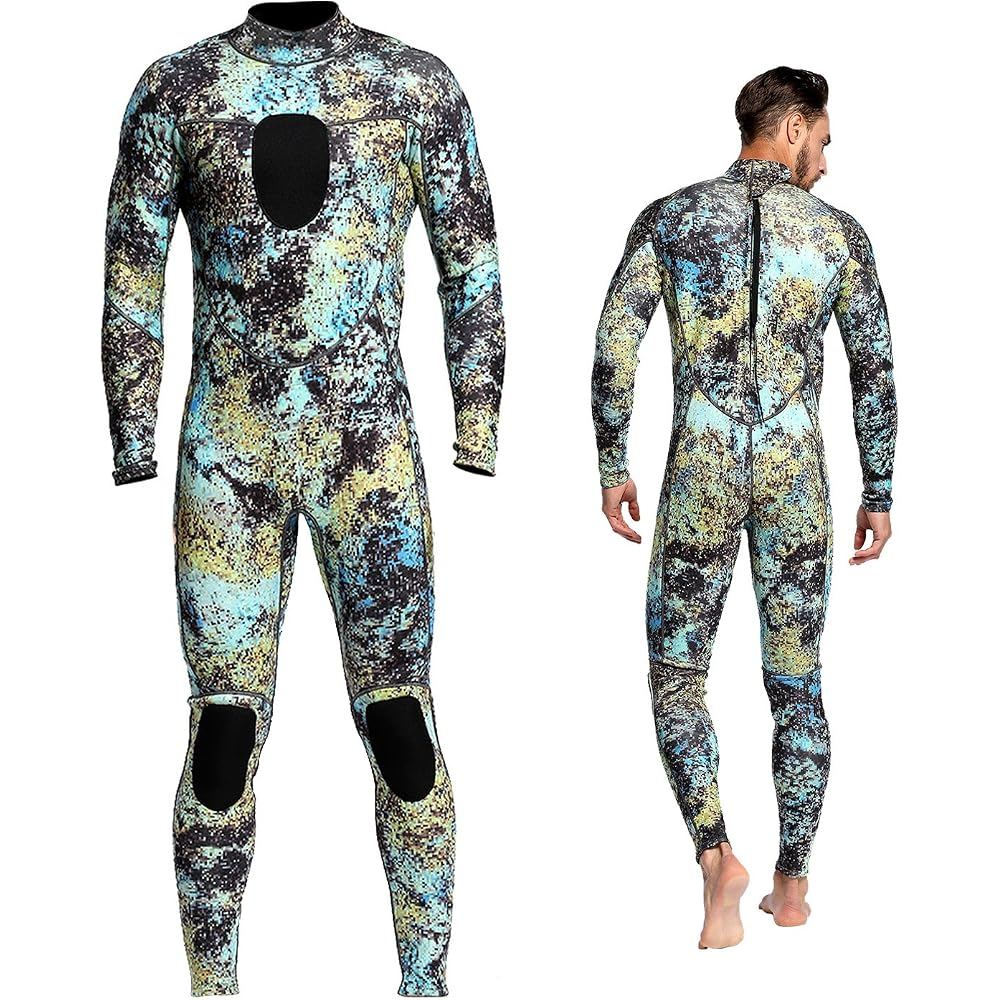
A camouflage neoprene wetsuit, front and back — knee pads, back zip and a close, flexible fit.
The same foam runs through all our dive gear. Our custom neoprene diving boots use it to keep feet warm and protect them on rocks, our custom neoprene scuba tank covers use it to protect cylinders, and our custom neoprene swim caps use it to keep the head warm in open water. Bulk buyers are dive shops, surf brands, swim schools and rental fleets. One size range covers a whole school or shop.
How Thick Should a Wetsuit Be?
Pick thickness by water temperature, not by brand. In warm water above 24°C, 2–3 mm is enough and keeps the suit flexible. In temperate water of 18–24°C, 3–5 mm is the standard. In cold water of 12–18°C, 5 mm is the minimum, with a hood, boots and gloves to match. Below 12°C, 7 mm is the usual choice, and many divers switch to a dry suit. A suit that is too thin leaves the diver cold and shortens the dive. A suit that is too thick is stiff, tiring and hard to put on. For most dive shops, 3 mm and 5 mm are the volume products.
| Water Temperature | Thickness | Best For | Accessories |
|---|---|---|---|
| Above 24°C | 2–3 mm | Tropical diving, surfing, swimming | Swim cap, rash guard |
| 18–24°C | 3–5 mm | Temperate diving, snorkelling | 3 mm boots, light hood |
| 12–18°C | 5 mm | Cold-water diving | 5 mm boots, hood, gloves |
| Below 12°C | 7 mm | Winter diving, deep dives | 7 mm boots, hood, gloves |
See our best neoprene thickness for tropical diving guide for warm-water choices, and our 5 mm neoprene wetsuit guide for the most common all-round thickness.
CR vs SBR for Wetsuits
For wetsuits, CR is the right grade. CR (chloroprene rubber) is firmer, resists heat, oil, ozone and salt water, and holds its shape longest — it is the grade for any suit that lives in the sea. SBR is softer and lower cost, and it suits swim caps, rash guards and rental suits where price matters more than lifespan. SCR sits between the two. The grade matters less than the seams: a wetsuit lives or dies by its stitching. Blind stitching is the standard for a warm suit — the needle does not pass all the way through, so water cannot leak in. Flatlock stitching is cheaper and cooler, and it suits warm-water suits. Glued and blind-stitched seams with taped edges are the warmest and the most durable.
Ask your supplier which foam and which stitching they use — and ask for the data sheet, not just a claim. Our CR vs SBR wetsuit guide compares the two grades, and our wetsuit material guide for brands explains how to specify a suit for your own line.
How Should a Wetsuit Fit?
A wetsuit should fit like a second skin — close everywhere, with no baggy pockets of air. Measure chest, waist, hips, height and weight, then match the size chart — never guess from a T-shirt size. The shoulders should sit flat with no pulling. The neck should seal without choking. The knees should bend freely. A suit that is too big lets cold water flush through the neck and wrists. A suit that is too small restricts breathing and tears at the seams. For a dive shop or a school, order the size range, not one size: a rental fleet needs at least five sizes to fit most customers.
Small details decide whether a suit lasts. Reinforced knee pads stop the suit wearing through on rocks and boat decks. A back zip is the easiest to put on alone; a chest zip seals better and flexes more. A smooth skin chest panel cuts wind chill on a boat. Our custom neoprene aqua socks and our diving boots with vulcanized soles show how the same fit rules apply to the accessories.
Diving Accessories: Boots, Hoods, Gloves and Tank Covers
A wetsuit is only the start. Diving boots protect the feet on rocks and in fins — 5 mm with a vulcanized sole is the standard for cold water, 3 mm for warm water. A hood stops heat loss from the head, which is where a diver loses warmth fastest. Gloves protect the hands on wrecks and ropes — 3 mm for dexterity, 5 mm for cold water. A tank cover protects the cylinder from dents and stops it clanking on the boat. And a swim cap keeps the head warm for open-water swimming. Each accessory uses the same CR foam and the same stitching as the suit, so order them together and the colours and grades match.
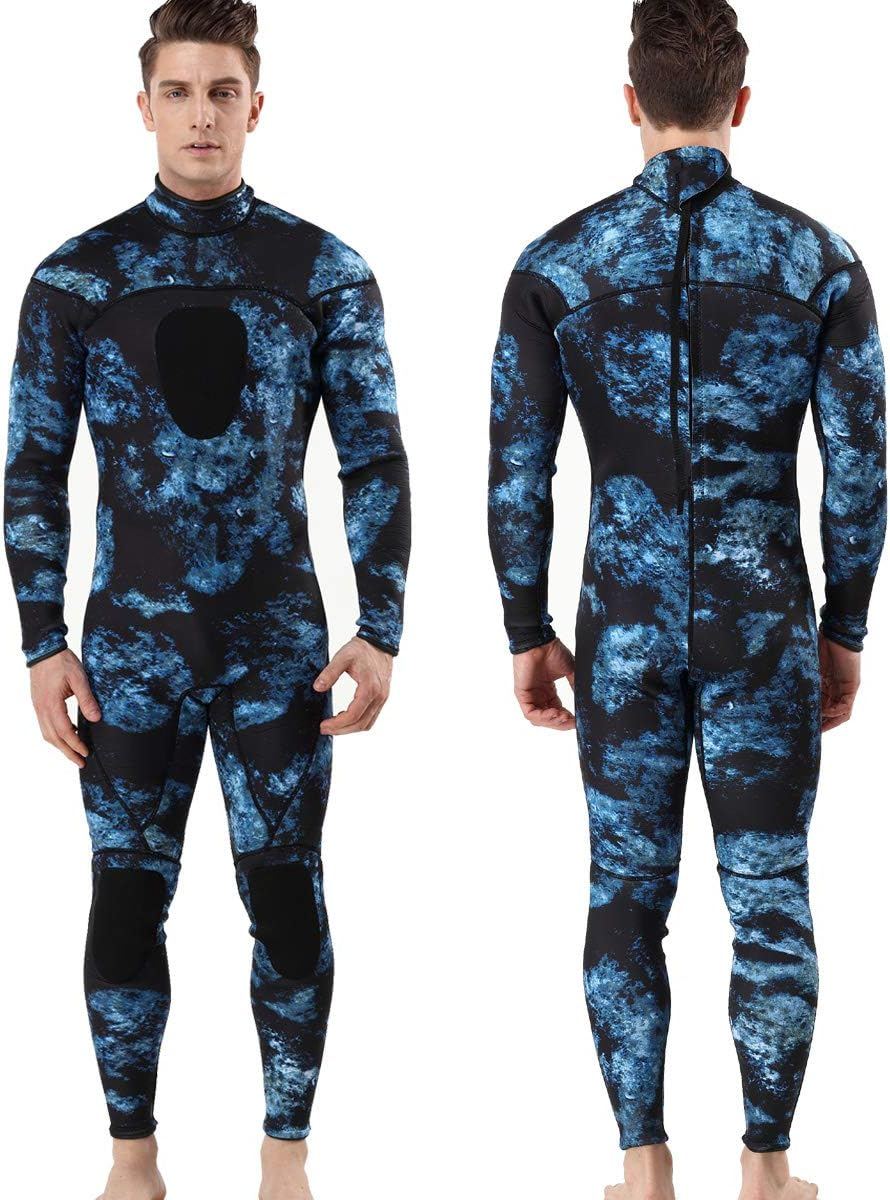
A blue camouflage neoprene wetsuit, front and back — the same CR foam and stitching as the accessories.
Care matters as much as fit. Rinse the suit and accessories with fresh water after every dive, dry them in the shade, and never hang a wetsuit by the shoulders — fold it or hang it on a wide hanger. Our how to wash a neoprene wetsuit guide walks through the full care routine, and our neoprene for diving wetsuits guide explains the material behind it all.
Explore Our Wetsuit and Diving Guides
Our site holds 248 articles about neoprene wetsuits and diving gear. These twelve are the best place to start — the thickness guides, the fit guides and the accessory guides buyers ask for most.
- Custom Neoprene Diving Boots — size, sole and thickness for dive boots.
- Custom Neoprene Scuba Tank Covers — protecting cylinders on the boat and in the shop.
- Custom Neoprene Swim Caps — warmth and fit for open-water swimming.
- Custom Neoprene Aqua Socks — warm feet for diving, surfing and beach use.
- 5 mm Neoprene Wetsuit — the most common all-round thickness.
- How to Wash a Neoprene Wetsuit — the full care routine, step by step.
- Best Neoprene Thickness for Tropical Diving — warm-water choices.
- Neoprene for Diving Wetsuits — the material behind the suit.
- Wetsuit vs Drysuit for Cold Water — which suit for which water.
- CR vs SBR Wetsuit — the two grades compared.
- Custom Neoprene Wetsuit Material: A Brand's Guide — specifying a suit for your own line.
- Custom Neoprene Diving Boots: Vulcanized Soles — soles that survive fins and rocks.
Why Order Wetsuits From Our Factory
We are a specialized custom neoprene factory making wetsuits, diving boots, hoods, gloves, tank covers and swim caps for dive shops and brands worldwide. When you order from us, you get CR foam in 2–7 mm, blind stitching with taped seams, reinforced knee pads, Pantone-matched colours and full-colour print.
Do you want to launch your own line of wetsuits or dive gear? We accept custom OEM orders with full branding options, tailored sizes and low minimum order quantities.
- True CR closed-cell neoprene, 2–7 mm, with data sheets — not just a claim.
- Blind stitching with taped seams and reinforced knees — the details that keep a suit warm.
- Low Minimum Order Quantities (MOQ) for custom brand runs.
Learn more about our OEM production capabilities on our official website: https://source.neoprenecustom.com
Ready to design a custom wetsuit? Contact our team directly: kevin@neoprenecustom.com
Frequently Asked Questions (FAQ)
Q: What thickness wetsuit do I need?
A: Pick by water temperature: 2–3 mm above 24°C, 3–5 mm for 18–24°C, 5 mm for 12–18°C, and 7 mm below 12°C. For most dive shops, 3 mm and 5 mm are the volume products.
Q: CR or SBR for a wetsuit?
A: CR is the right grade for a wetsuit — it resists salt water, heat and ozone and holds its shape longest. SBR suits swim caps, rash guards and rental suits where price matters more than lifespan.
Q: How should a wetsuit fit?
A: Like a second skin — close everywhere, with no baggy pockets of air. Measure chest, waist, hips, height and weight and match the size chart. A suit that is too big lets cold water flush through; a suit that is too small restricts breathing.
Q: How do I wash a neoprene wetsuit?
A: Rinse it with fresh water after every dive, wash it with mild soap, and dry it in the shade. Never hang it by the shoulders — fold it or use a wide hanger.
Q: Can I order custom colours and logos on wetsuits?
A: Yes. Send your sizes, Pantone colours and logo file to kevin@neoprenecustom.com for a quotation. We print full-colour designs and match Pantone colours.