
Custom Neoprene Sheets & Fabric Guide: Grades, Thickness and How to Choose
A neoprene sheet is a closed-cell chloroprene foam sheet, laminated with fabric on one or both faces, sold in standard 51 x 130 inch sheets and split from 1.5 mm to 45 mm thick. This guide explains the CR, SCR and SBR grades, the fabric faces, and how to pick the right sheet for wetsuits, bags, supports and sports gear.
What Is a Neoprene Sheet?
A neoprene sheet is a sheet of closed-cell chloroprene rubber foam. The foam is full of tiny sealed gas bubbles. Those bubbles are what make neoprene warm, soft, water-resistant and springy: they trap air for insulation, cushion every touch, and stop water soaking in. A bare foam sheet has a smooth, matte rubbery face. A laminated sheet has fabric glued to one or both faces — nylon for stretch and strength, polyester for colour fastness, or a smooth skin face for low water drag. The sheet is the raw material for almost everything on this site: wetsuits, bags, supports, gloves, koozies and laptop sleeves all start as a sheet.
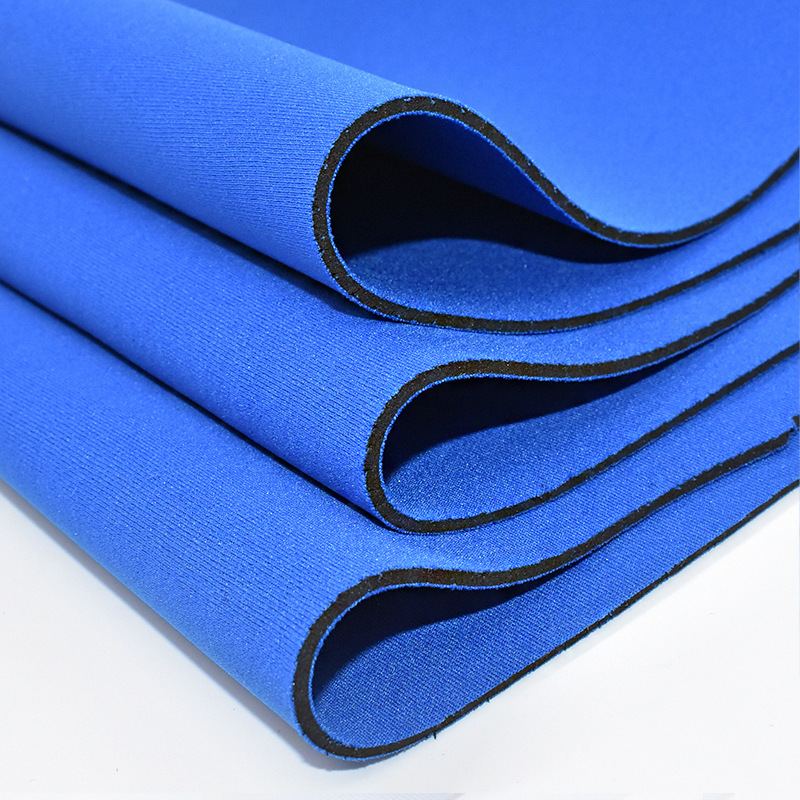
Folded bright blue neoprene sheets — the fabric face outside, the black foam core at the fold.
Our factory foams, splits and laminates sheet in-house, in the standard 51 x 130 inch size. Buying sheet is the starting point for any custom product: pick the grade, pick the thickness, pick the fabric face, and the cutting and sewing follow. See our ultimate guide to neoprene sheets for how the foam is made, and our neoprene sheet thickness guide for how to pick the right mm for any product.
CR vs SCR vs SBR: Which Grade Do You Need?
CR is the premium grade, SBR is the soft budget grade, and SCR sits between them. CR (chloroprene rubber) is firmer, resists heat, oil, ozone and salt water, and holds its shape longest — it is the grade for wetsuits, dive gear and any product that lives in the sea. SBR (styrene-butadiene rubber) is softer, stretchier and lower cost — it is the grade for sewn bags, sleeves, supports and promotional products. SCR is a blend of the two: softer than CR, tougher and more durable than SBR, and a good middle choice for sports gear and premium bags. The grade is the first line of any quotation, because it sets the price and the feel of the finished product.
Do not judge a grade by colour or by touch alone. Ask for the data sheet: density, hardness, tensile strength and elongation. Our SBR vs CR neoprene guide compares the two grades side by side, and our SBR 5–7° foam data sheet lists tensile strength 247 kPa and elongation 199% — the numbers that tell you how far the foam stretches before it breaks.
How Thick Should the Sheet Be?
Thickness is the second line of any quotation, after the grade. Below 2 mm, the sheet is a lining or a dust cover — it stops scratches but cushions nothing. At 2–3 mm, it is a sleeve, a cap or a light bag. At 3–5 mm, it is a wetsuit, a tool bag or a support. Above 5 mm, it is a diving boot, a thick knee sleeve or a heavy-duty pad. Our factory splits foam from 1.5 mm to 45 mm, so any thickness is possible — but the wrong thickness is the most common buying mistake, and it is expensive to fix after cutting.
| Product | Thickness | Grade | Why |
|---|---|---|---|
| Swim cap | 2–3 mm | CR / SBR | Thin enough to fit under a swim hood, thick enough to keep the head warm |
| Laptop / tablet sleeve | 2–3 mm | SBR | Slim enough to slide into a backpack, thick enough to stop scratches |
| Wetsuit | 3–5 mm | CR | Warmth and flexibility in balance; thicker for cold water |
| Tool bag / tote | 3 mm | SBR | Cushions edges and holds the bag's shape without getting stiff |
| Knee sleeve / support | 5–7 mm | SBR | Thick enough to hold warmth and compression around the joint |
| Diving boots | 5–7 mm | CR | Warmth for cold water plus a sole that survives fins and rocks |
Which Fabric Face: Nylon, Polyester or Smooth Skin?
Nylon stretches most, polyester holds colour best, smooth skin cuts water drag. A nylon face is the standard for wetsuits and supports: it stretches in every direction and feels soft on the skin. A polyester face is the standard for printed bags and retail products: it holds bright colours and resists fading in the sun. A smooth skin face — bare foam with no fabric — is the standard for swim caps and high-end wetsuit panels: it slides through water with less drag, but it tears more easily and needs careful handling. A mesh skin face is a middle choice: a fine fabric grid that grips less and dries faster. Pick the face for the job, not for the look — the wrong face is the second most common buying mistake.
Colour is part of the same choice. Dark colours hide scuffs and suit dive gear. Bright colours suit retail bags, sports gear and promotional products, and they photograph better on a shop page. Our colour matching and printing guide explains how we match Pantone colours and print full-colour designs on neoprene, and our understanding neoprene thickness guide explains how thickness and face work together.
How Lamination Works — and Why Glue Matters
Lamination is the step that glues fabric to foam. A good lamination is even, with no bubbles, no dry spots and no stiff patches. A bad lamination peels at the edges, bubbles in the sun, and fails at the seams. The glue matters as much as the foam: water-based adhesive is the cleaner choice, and it is what we use for products that touch the skin. Why glue matters in neoprene lamination explains the difference in detail, and the advantages of laminated neoprene fabrics lists what a good lamination adds to a product: strength, stretch control, colour and a printable face.
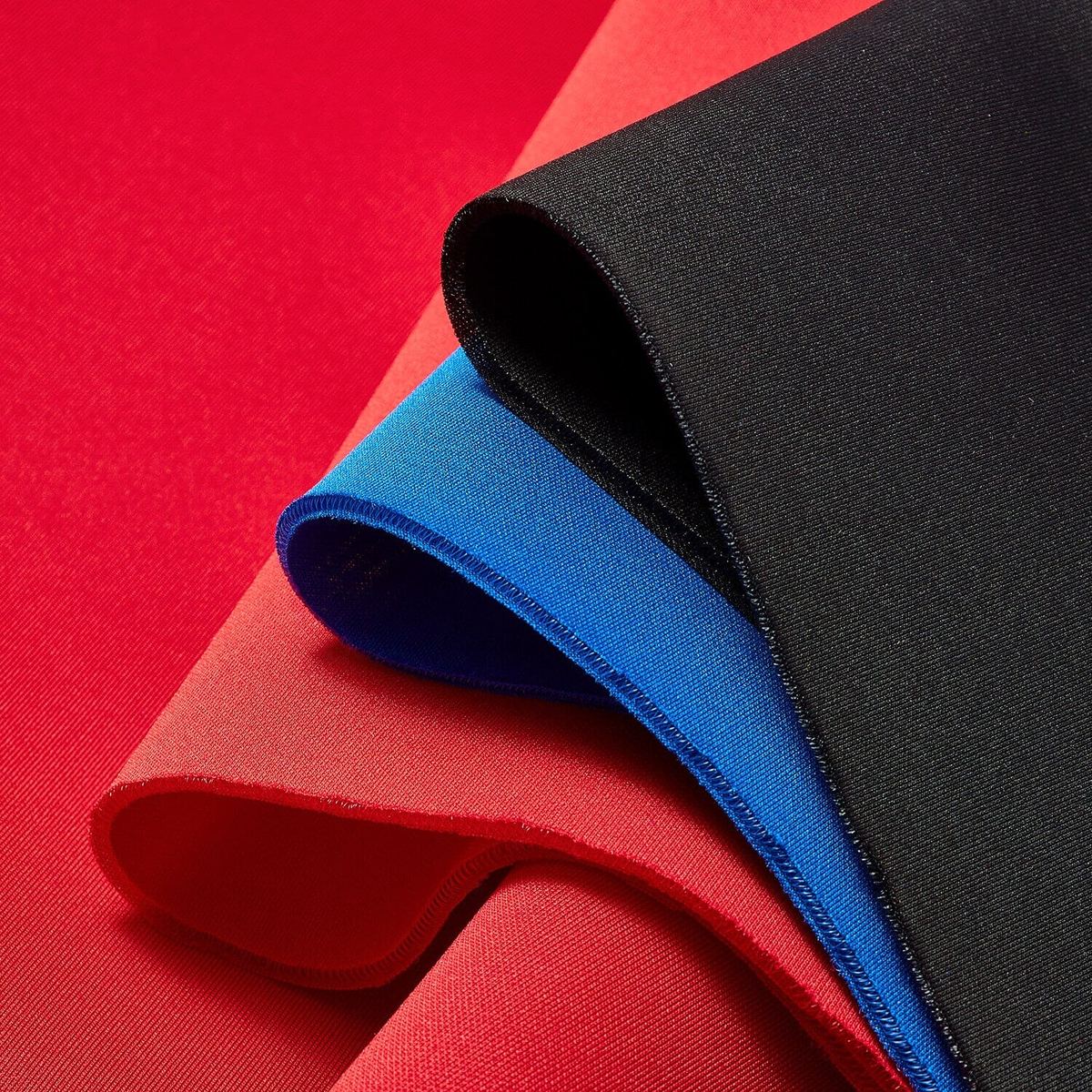
Rolled neoprene sheets in red, blue and black — the fabric face outside, the foam core at the roll.
When you order sheet, ask three questions: which grade, which thickness and tolerance, and which fabric face. Then ask for a sample in your exact specification. A sample shows you the real hand feel, the real colour and the real lamination quality — a photo cannot. Our sheet manufacturer thickness guide lists the tolerances we hold, and our buy neoprene sheets guide walks through the order step by step.
Explore Our Neoprene Sheet and Fabric Guides
Our site holds 316 articles about neoprene sheets, fabric and material. These twelve are the best place to start — the grade guides, the thickness guides and the buying guides buyers ask for most.
- The Ultimate Guide to Neoprene Sheets — how foam is made, graded and used.
- Neoprene Sheet Thickness Guide: How to Choose — picking the right mm for any product.
- Buy Neoprene Fabric — ordering fabric by grade, thickness and face.
- Buy Neoprene Sheets — the order step by step, from sample to bulk.
- SBR vs CR Neoprene — the two grades compared side by side.
- Understanding Neoprene Thickness — how thickness and face work together.
- Custom Neoprene Sheet Manufacturer Thickness Guide — the tolerances we hold.
- Custom Neoprene Rubber Sheets Material — the raw sheet behind every product.
- Advantages of Laminated Neoprene Fabrics — what a good lamination adds.
- Why Glue Matters in Neoprene Lamination — the adhesive behind the bond.
- 2–5 mm Black Stretch Neoprene Fabric — the workhorse fabric for sewn products.
- 51 x 130 Wholesale Neoprene Sheet Manufacturer — the standard sheet size, in bulk.
Why Order Sheets From Our Factory
We are a specialized custom neoprene factory foaming, splitting and laminating sheet for brands worldwide. When you order sheet from us, you get CR, SCR and SBR grades, 1.5–45 mm splitting, nylon, polyester, smooth skin and mesh faces, Pantone-matched colours and full-colour print, with a data sheet for every grade.
Do you need neoprene sheet for your next product? We accept custom orders with tailored grades, thicknesses and faces, and low minimum order quantities.
- True closed-cell CR, SCR and SBR foam, with data sheets — not just a claim.
- Standard 51 x 130 inch sheets, split from 1.5 mm to 45 mm.
- Low Minimum Order Quantities (MOQ) for custom sheet runs.
Learn more about our OEM production capabilities on our official website: https://source.neoprenecustom.com
Ready to order neoprene sheet? Contact our team directly: kevin@neoprenecustom.com
Frequently Asked Questions (FAQ)
Q: What is the standard size of a neoprene sheet?
A: Our standard sheet is 51 x 130 inches (about 130 x 330 cm). We split it from 1.5 mm to 45 mm thick, and we can cut it to your size on request.
Q: CR or SBR — which grade should I choose?
A: Choose CR for wetsuits, dive gear and anything that lives in salt water — it resists heat, oil and ozone. Choose SBR for sewn bags, sleeves and supports — it is softer, stretchier and lower cost. SCR sits between the two.
Q: What does laminated neoprene mean?
A: Laminated neoprene is foam with fabric glued to one or both faces. The fabric adds strength, stretch control and colour, and gives the sheet a printable face. Nylon stretches most, polyester holds colour best.
Q: How do I know the thickness is accurate?
A: Ask for the thickness tolerance in writing and check it on the sample with a caliper. Our sheet manufacturer thickness guide lists the tolerances we hold for each grade.
Q: Can I get a sample before a bulk order?
A: Yes. Send your grade, thickness, fabric face and size to kevin@neoprenecustom.com for a quotation. A sample shows the real hand feel, colour and lamination quality.