
How to Choose a Custom Neoprene Manufacturer: 10 Checks Before You Order
The right custom neoprene manufacturer is a factory that foams or sources its own sheet, splits and laminates in-house, and can show you material data sheets, samples and a clear price breakdown before you pay. This guide gives you ten checks — grade, thickness, sampling, MOQ, lead time and quality control — to compare suppliers with confidence.
What Does a Neoprene Manufacturer Actually Do?
A neoprene manufacturer turns raw foam into finished products. The work runs in five steps: foaming or sourcing the sheet, splitting it to thickness, laminating fabric to one or both faces, cutting the pattern, and sewing and finishing the product. A real factory does the splitting and laminating in-house — that is where quality is made or lost. A trader who buys finished sheet and only cuts and sews can still be a good partner, but they cannot control the foam, and they cannot fix a bad lamination. Ask where the sheet comes from and who splits it. The answer tells you more than any brochure.
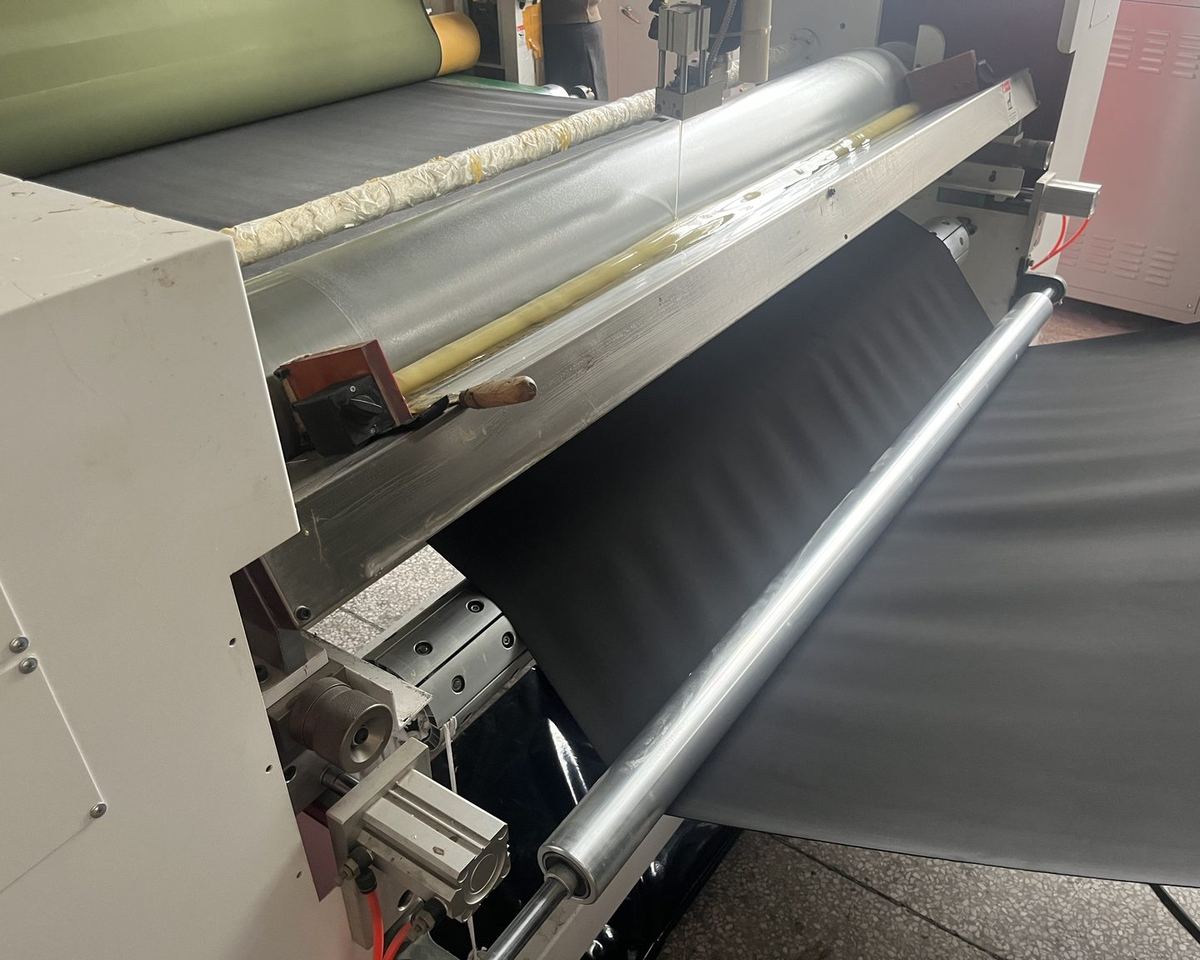
A lamination line in a neoprene factory — fabric and foam bonded into sheet before cutting.
Our factory foams, splits and laminates sheet in-house, in the standard 51 x 130 inch size, from 1.5 mm to 45 mm thick. That control is why we can show a data sheet for every grade and hold a thickness tolerance in writing. See our ultimate guide to neoprene sheets for how the foam is made, and our 10 pillars of the best custom neoprene manufacturers for the full picture of what a good factory looks like.
10 Checks Before You Order
Run these ten checks on every supplier, in this order. A supplier who fails the first three is not worth the rest of your time.
- 1. Grade in writing. The quotation must name the grade — CR, SCR or SBR — not just "neoprene". Ask for the data sheet: density, hardness, tensile strength and elongation.
- 2. Thickness and tolerance in writing. The quotation must state the thickness and the tolerance, for example 3 mm ± 0.3 mm. Check the sample with a caliper.
- 3. Closed-cell foam. Ask whether the foam is closed-cell. Open-cell foam absorbs water and oil and tears at the seams — it has no place in a bag, a wetsuit or a support.
- 4. Lamination quality. Ask who laminates the sheet and which adhesive they use. Water-based adhesive is the cleaner choice for products that touch the skin.
- 5. A real sample in your specification. A sample in your exact grade, thickness and colour — not a stock sample in another grade. Check the hand feel, the colour and the zipper.
- 6. Clear MOQ. Ask the minimum order per size and per colour. A factory that accepts low minimum order quantities suits a new brand; a factory that demands 1,000 pieces suits a retail chain.
- 7. Lead time in writing. Ask the lead time from sample approval to shipment, and what happens if it slips. A clear date beats a vague promise.
- 8. Print and colour matching. Ask how they match Pantone colours and whether they print in full colour. Ask to see a printed sample before you approve the bulk run.
- 9. Quality control. Ask what they check before shipment: thickness, stitching, zippers, print, and a final count. Ask for photos of the packed goods.
- 10. A price breakdown. Ask what the price includes: material, cutting, sewing, print, packing and shipping. A low price that excludes shipping is not a low price.
Our 10 questions to ask before choosing a neoprene manufacturer covers the same ground in question form, and our 7 red flags to watch for when selecting a neoprene manufacturer lists the warning signs — a supplier who will not name the grade, will not send a sample, or will not put the price in writing.
What Should a Quotation Include?
A good quotation answers every question on this table. If a line is missing, ask for it before you pay — a missing line is where the extra cost hides.
| Quotation Item | What to Check | Red Flag |
|---|---|---|
| Material grade | CR, SCR or SBR named, with a data sheet | "Neoprene" with no grade named |
| Thickness | Thickness plus tolerance, for example 3 mm ± 0.3 mm | Thickness with no tolerance stated |
| Fabric face | Nylon, polyester, smooth skin or mesh named | Face not named at all |
| Print and colour | Pantone numbers and print method in writing | "Colour as per sample" with no number |
| MOQ | Minimum per size and per colour | MOQ that changes after you order |
| Lead time | Date from sample approval to shipment | "About two weeks" with no date |
| Shipping | Shipping method, cost and packing stated | Shipping excluded with no estimate |
Price is the last thing to compare, not the first. A supplier who is 10% cheaper but ships the wrong grade costs more than a supplier who is 10% dearer and ships the right one. Our 5 factors affecting neoprene price explains what really moves the price, and our 5 key questions to ask your neoprene supplier before placing an order covers the questions that save the most money.
How Sampling Works
Sampling is the cheapest insurance in the whole order. Send your sizes, Pantone colours and logo file, and the factory makes a sample in your exact specification. Check the sample for four things: the hand feel of the foam, the true colour against your Pantone number, the quality of the zipper and stitching, and the fit against your measurements. Approve the sample in writing, and keep one sample yourself — it is the reference for the bulk run. A factory that rushes you past sampling is a factory that does not want you to look closely.
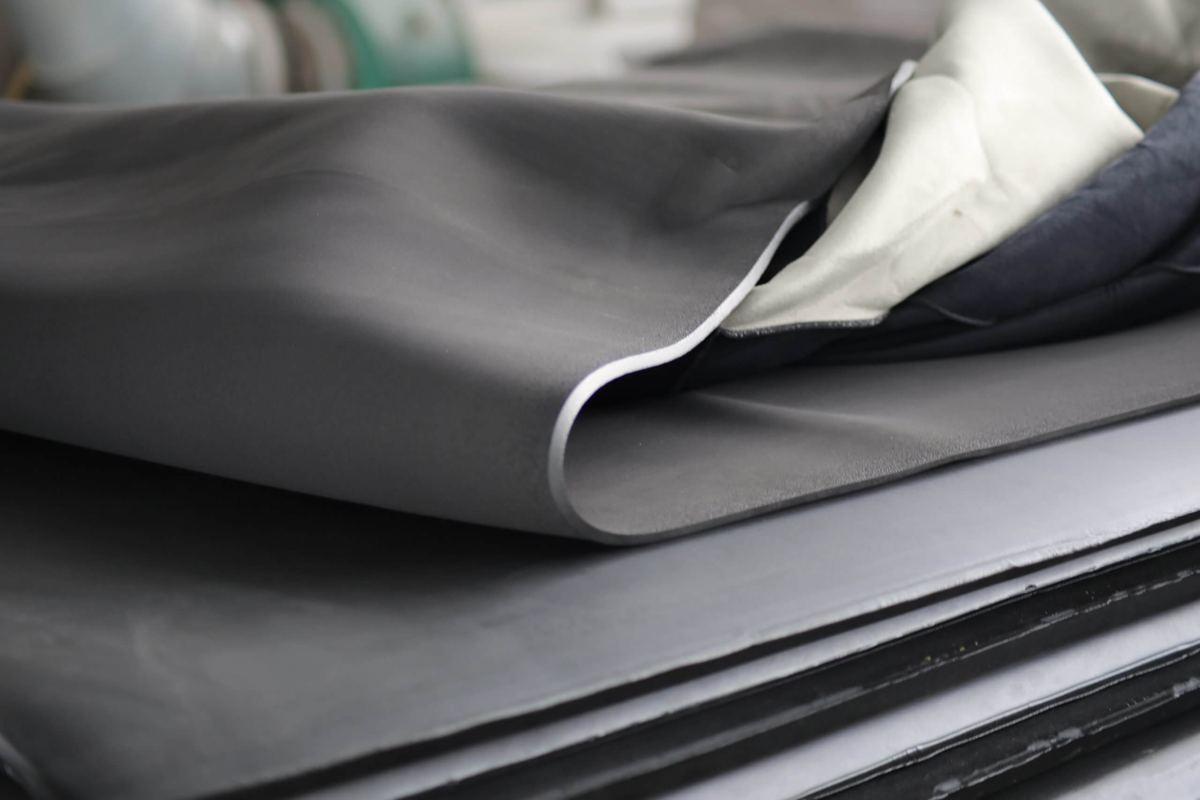
Stacked laminated neoprene sheets — the smooth skin face, the white foam core and the fabric backing.
Our flexible MOQ and lead time guide explains how we set minimums and dates for new brands, and our vetting process for partnerships explains how we work with a new customer from first sample to repeat order.
Factory-Direct or Trader: Who Should You Buy From?
Buy factory-direct when the material matters, and use a trader when the order is small and mixed. A factory-direct supplier controls the foam, the lamination and the price — you get the grade in writing, the data sheet and a sample from the same hands that make the bulk run. A trader buys finished goods from several factories and adds a margin: they are useful for a small mixed order across many product types, but they cannot change the foam, fix a lamination, or hold a thickness tolerance. If your product depends on the material — a wetsuit, a support, a dive bag — buy factory-direct. If you need ten different small items for one event, a trader may be faster. Our advantages of partnering with a factory-direct neoprene supplier guide lists the difference in detail, and our best OEM neoprene manufacturers guide explains how to judge a factory for your own brand.
Explore Our Manufacturer and Sourcing Guides
Our site holds 140 articles about choosing a neoprene manufacturer and sourcing neoprene. These twelve are the best place to start — the questions to ask, the red flags, and the price and MOQ guides.
- 10 Questions to Ask Before Choosing a Neoprene Manufacturer — the full checklist in question form.
- 10 Pillars of the Best Custom Neoprene Manufacturers — what a good factory looks like.
- 7 Red Flags to Watch for When Selecting a Neoprene Manufacturer — the warning signs.
- 5 Key Questions to Ask Your Neoprene Supplier Before Placing an Order — the questions that save the most money.
- 5 Factors Affecting Neoprene Price — what really moves the price.
- Best Neoprene Manufacturer — what "best" means for your order.
- Best OEM Neoprene Manufacturers — choosing a factory for your own brand.
- Custom Neoprene Manufacturer: Flexible MOQ and Lead Time — minimums and dates for new brands.
- Custom Neoprene Manufacturer: Vetting Process for Partnership — from first sample to repeat order.
- Advantages of Partnering With a Factory-Direct Neoprene Supplier — why direct beats a middleman.
- Buyer's Guide to Best Neoprene Manufacturers: Global Market — comparing factories across markets.
- A Sourcing Guide to the Best Neoprene Manufacturers in China — sourcing from China, step by step.
Why Work With Our Factory
We are a specialized custom neoprene factory foaming, splitting and laminating sheet in-house for brands worldwide. When you work with us, you get the grade in writing with a data sheet, the thickness and tolerance in writing, a sample in your exact specification before the bulk run, Pantone-matched colours and full-colour print, and a clear price breakdown with shipping.
Do you want a factory you can check before you order? We accept custom OEM orders with full branding options, tailored sizes and low minimum order quantities — and we answer the ten checks above before you pay.
- True CR, SCR and SBR closed-cell foam, with data sheets — not just a claim.
- Standard 51 x 130 inch sheets, split from 1.5 mm to 45 mm, laminated in-house.
- Low Minimum Order Quantities (MOQ) and lead times in writing.
Learn more about our OEM production capabilities on our official website: https://source.neoprenecustom.com
Ready to get a quotation? Contact our team directly: kevin@neoprenecustom.com
Frequently Asked Questions (FAQ)
Q: How do I know a neoprene manufacturer is real?
A: Ask for the grade and the data sheet, the thickness tolerance in writing, and a sample in your exact specification. A real factory answers all three; a trader who cannot name the grade or send a sample is a warning sign.
Q: What is the minimum order for custom neoprene?
A: It depends on the product, size and colour. We accept low minimum order quantities for custom brand runs — send your sizes and quantities for a quotation.
Q: Should I get a sample before a bulk order?
A: Yes, always. A sample in your exact grade, thickness and colour shows the real hand feel, colour and zipper quality. Approve it in writing and keep one as the reference for the bulk run.
Q: How long does a custom neoprene order take?
A: Ask for the lead time in writing, counted from sample approval to shipment. The exact time depends on the product, quantity and print — a clear date beats a vague promise.
Q: What should a neoprene quotation include?
A: The grade with a data sheet, the thickness and tolerance, the fabric face, the Pantone numbers and print method, the MOQ, the lead time, and the shipping cost. If a line is missing, ask for it before you pay.