
Custom Neoprene Kayak Seats: A Simple Buying Guide
A good custom neoprene kayak seat is a soft, padded seat made from closed-cell neoprene foam, with a shaped base and a backrest that clips to your kayak. It cushions long paddles, keeps your back straight, and stays grippy when wet. We make it to order in any size, thickness, and colour.
This guide explains what a kayak seat does, how to pick thickness and backrest height, and how to fit, clean, and order one.
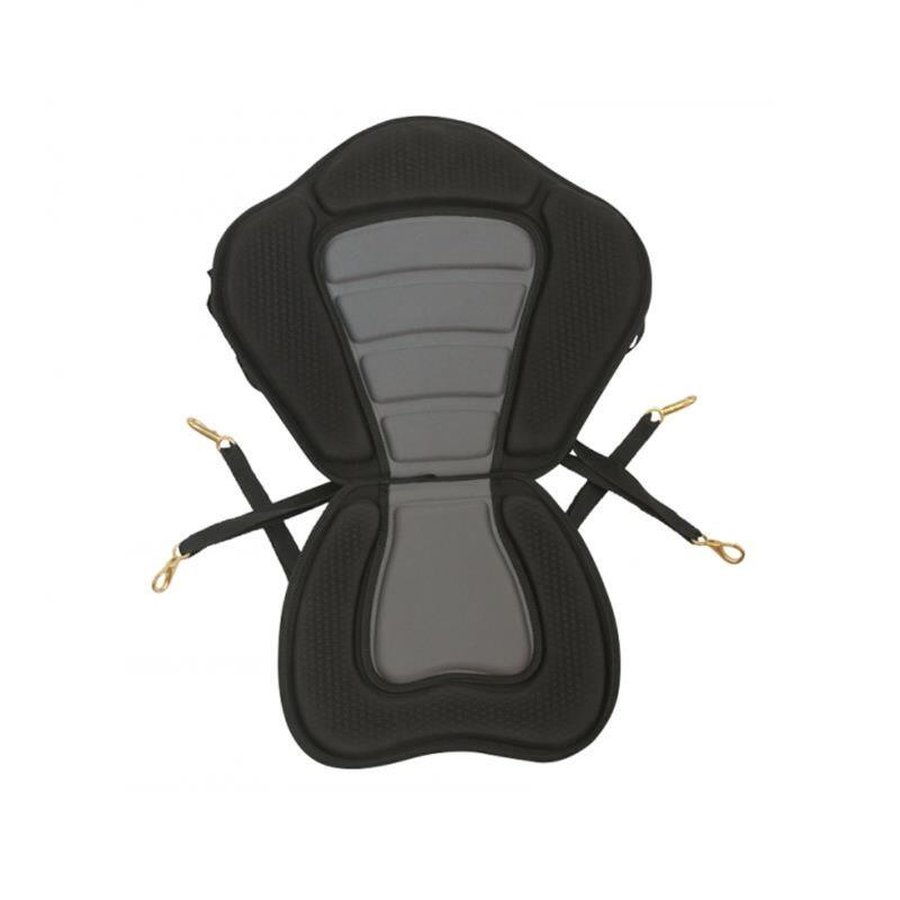
A black custom neoprene kayak seat with backrest — the smooth matte face, grey padded inserts, and side straps on white.
What Is a Neoprene Kayak Seat?
A kayak seat is a padded seat you strap into the cockpit or onto the deck of a kayak or paddleboard. It does three simple jobs. First, it cushions your hips and tailbone on long paddles. Second, its backrest holds your lower back upright, so you paddle with less strain. Third, its non-slip base keeps it in place when the deck is wet.
Most kayak seats are made from CR neoprene foam sheet, the durable grade that stands up to sun, water, and long days on the kayak, while SBR neoprene foam is the softer, lighter option that keeps the price down for everyday paddling gear. The foam is laminated with fabric on one or both faces. The fabric gives it colour and a soft feel; the foam gives stretch, cushion, and light insulation. See our ultimate guide to neoprene sheets for how the foam is made.
A full seat has two parts: a base cushion and a backrest, joined by a hinge or straps. A seat pad is just the base, with no backrest. Both types strap to the kayak with webbing straps and clips. The right one depends on how long you paddle and how much back support you need.
How Thick Should the Neoprene Be?
Thickness is the first choice to make. A thicker seat cushions more and holds its shape longer. A thinner seat feels lighter and packs smaller. There is no single best choice. It depends on how long you sit and how hard the seat below is.
| Thickness | Feel | Support | Best for |
|---|---|---|---|
| 3 mm | Light and flexible | Light support | Short trips, calm lakes |
| 5 mm | Snug and cushioned | Balanced support | Most paddling, the common choice |
| 7 mm | Thick and firm | Firm support | Long trips, rough water |
For most paddlers, 5 mm is the safe middle ground. It is thick enough to cushion a full day on the water and still light to carry. See our neoprene sheet thickness guide for how to pick the right mm for any product. For a soft, light seat we use a soft SBR grade — our SBR 5–7° foam is the soft grade for sewn accessories. If you paddle only short trips on calm water, 3 mm feels lighter. If you paddle all day, 7 mm is worth the extra bulk.
Think about the seat below too. A hard plastic kayak seat needs more cushion than a soft inflatable seat. Always test the seat on your own kayak before you order in bulk.
Seat Pad or Full Seat with Backrest?
A seat pad is a single cushion with no backrest. It is light, cheap, and easy to carry. It suits short trips, calm lakes, and paddlers who like to move freely. It adds comfort without changing how you sit.
A full seat adds a backrest. The backrest holds your lower back and stops it from aching on long paddles. It is the better pick for touring, fishing, and anyone with a sore back. Most kayak shops sell this style first, because it suits more paddlers.
The foam itself does not soak up water — our waterproof vs water-resistant guide explains the difference between the foam and the finished seat. If you are not sure which style to pick, ask how long your buyers paddle. Short trips do well with a pad. Long days need a backrest.
How to Pick the Right Size and Fit
A kayak seat should fit the cockpit, not just the paddler. A seat that is too wide will not sit flat. A seat that is too narrow will slide around when you paddle.
Measure your kayak before you order. Measure the width of the cockpit floor where the seat will sit, and the length from the back of the cockpit to the foot pegs. Compare both numbers with the size chart.
Here are a few fit tips that work for most people:
- Try it in the kayak. Sit in the seat and paddle a few strokes. The seat should stay put and not shift.
- Check the backrest. It should reach your lower back without pushing you forward. A backrest that is too tall gets in the way of your paddle stroke.
- Test the straps. Pull each strap snug and tug the seat. It should not move.
- Sit for ten minutes. Your hips should feel even pressure, with no hard edge digging in.
If you fall between two sizes, pick the larger base and pull the straps shorter. A base that is a little wide can be tucked in. A base that is too small will never stay in place.
Straps, Clips, and Drainage
Straps hold the seat to the kayak. Most seats have four straps, two on each side, with plastic buckles or metal clips. The straps run through D-rings or pad eyes on the kayak. Pull them snug before you launch.
Clips matter more than they look. A cheap clip can snap under load or rust in salt water. Ask for strong plastic buckles or stainless steel clips if you paddle in the sea. Quick-release buckles are worth it — they let you take the seat out fast at the end of the day.
Drainage keeps the seat dry. Small holes or mesh panels in the base let water run out instead of pooling under you. A seat that holds water gets heavy and cold. Check the base for drain holes before you order, and rinse the seat after salt water use.
How to Clean and Care for Your Kayak Seat
Salt water and sand are hard on neoprene. Rinse your seat in fresh water after every trip. Hose the straps and clips too — salt left on a buckle can seize it shut. Sand left in the seat will rub the fabric and wear the stitching.
Wash it by hand with mild soap and cool water. Do not use bleach. Do not put it in a washing machine. Do not dry it in direct sun or with heat. Heat can make neoprene stiff and crack over time. Air-dry it in the shade, with the backrest open so the air can reach both sides.
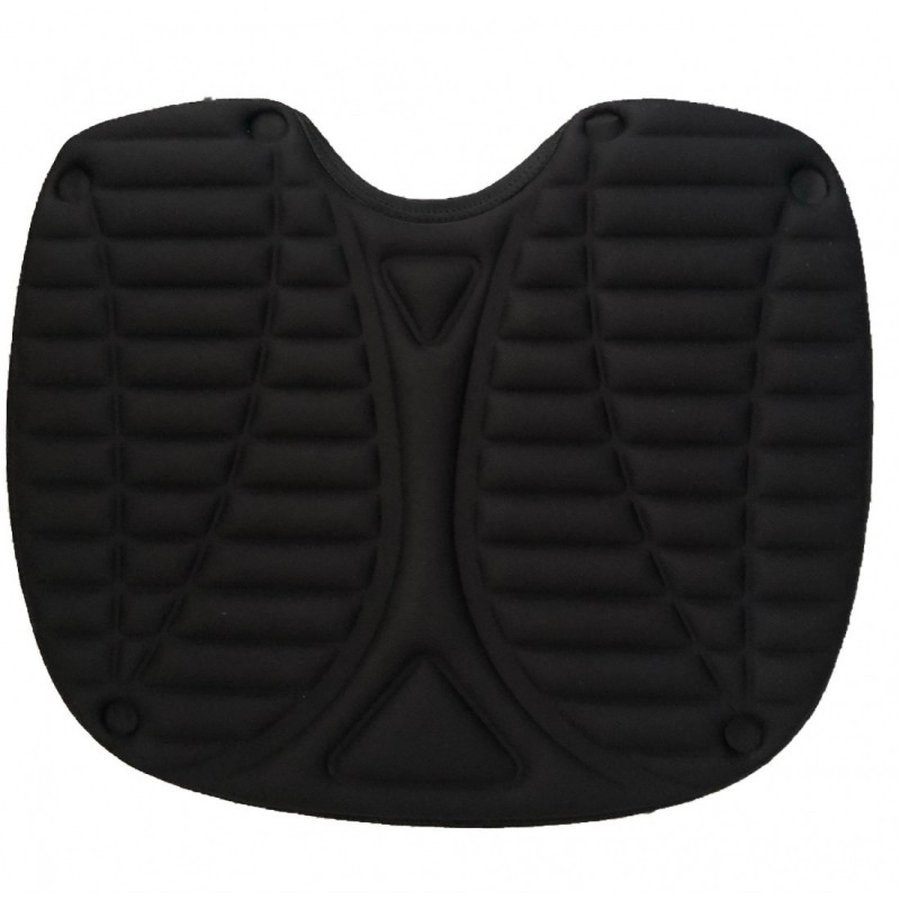
A black ribbed custom neoprene kayak seat pad — the quilted channels, matte face, and smooth centre spine on white.
Check the straps and seams before each trip. Store the seat in a dry place, away from sharp fins and hooks. You can see more neoprene water gear on our source site, where we list seats, pads, and other soft gear made from the same material.
Your Trusted Custom Neoprene Kayak Seats Manufacturer
A custom order starts with a few simple choices. First, pick the thickness and the style: 3 mm, 5 mm, or 7 mm, seat pad or full seat with backrest. Then pick the backrest height and the straps: low or high backrest, plastic buckles or metal clips. Then pick the colour. Black is the most popular, but many kayak shops add a bright trim colour so their rental seats are easy to spot.
Next, think about the logo. A printed logo on the backrest is the most common option. A woven label sewn on the side looks smarter and lasts longer. Our colour matching and printing guide explains how we match Pantone colours and print designs on neoprene.
When you are ready, visit www.neoprenecustom.com and send your size list, colour choice, and logo file.
Learn more about our OEM production capabilities on our official website: https://source.neoprenecustom.com
Ready to design a custom kayak seat? Contact our team directly: kevin@neoprenecustom.com
A good kayak seat is simple: soft neoprene, a firm backrest, and straps that stay put. Pick the right thickness, measure before you order, and rinse it after every trip.
Frequently Asked Questions (FAQ)
Q: What thickness kayak seat do I need for long trips?
A: Use 7 mm for long days on the water. For most paddling, 5 mm is enough. For short trips on calm water, 3 mm feels lighter and packs smaller.
Q: Do I need a backrest, or is a seat pad enough?
A: A seat pad is enough for short trips on calm water. For touring, fishing, or any paddle over an hour, a backrest is worth it — it holds your lower back and stops it from aching.
Q: How do I clean a kayak seat after salt water?
A: Rinse it in fresh water right after the trip, straps and clips included. Hand wash with mild soap and cool water, rinse well, and air-dry in the shade. No bleach, no machine wash, no dryer.
Q: Will the seat fit my kayak?
A: Measure the cockpit floor width and the length to the foot pegs, then compare both numbers with the size chart. If you fall between two sizes, pick the larger base and pull the straps shorter.
Q: Can I get my own logo on the seat?
A: Yes. Most custom orders add a printed logo on the backrest or a sewn woven label on the side. Send your logo file with your size and colour choices.
Q: How can we order custom colours and logos?
A: Send your seat sizes, Pantone colours, and logo file to kevin@neoprenecustom.com for a quotation.