
Custom Neoprene Surfboard Covers: A Simple Buying Guide
A custom neoprene surfboard cover is a soft, stretchy sleeve made from closed-cell neoprene foam that slips over your board and guards it against dings, wax rub, sun, and scratches. It fits your board's length and shape, comes in 2 to 5 mm foam, and we make it to order in any size, colour, and print.
This guide explains what a surfboard cover does, how to pick the foam and the thickness, and how to size, clean, and order one.
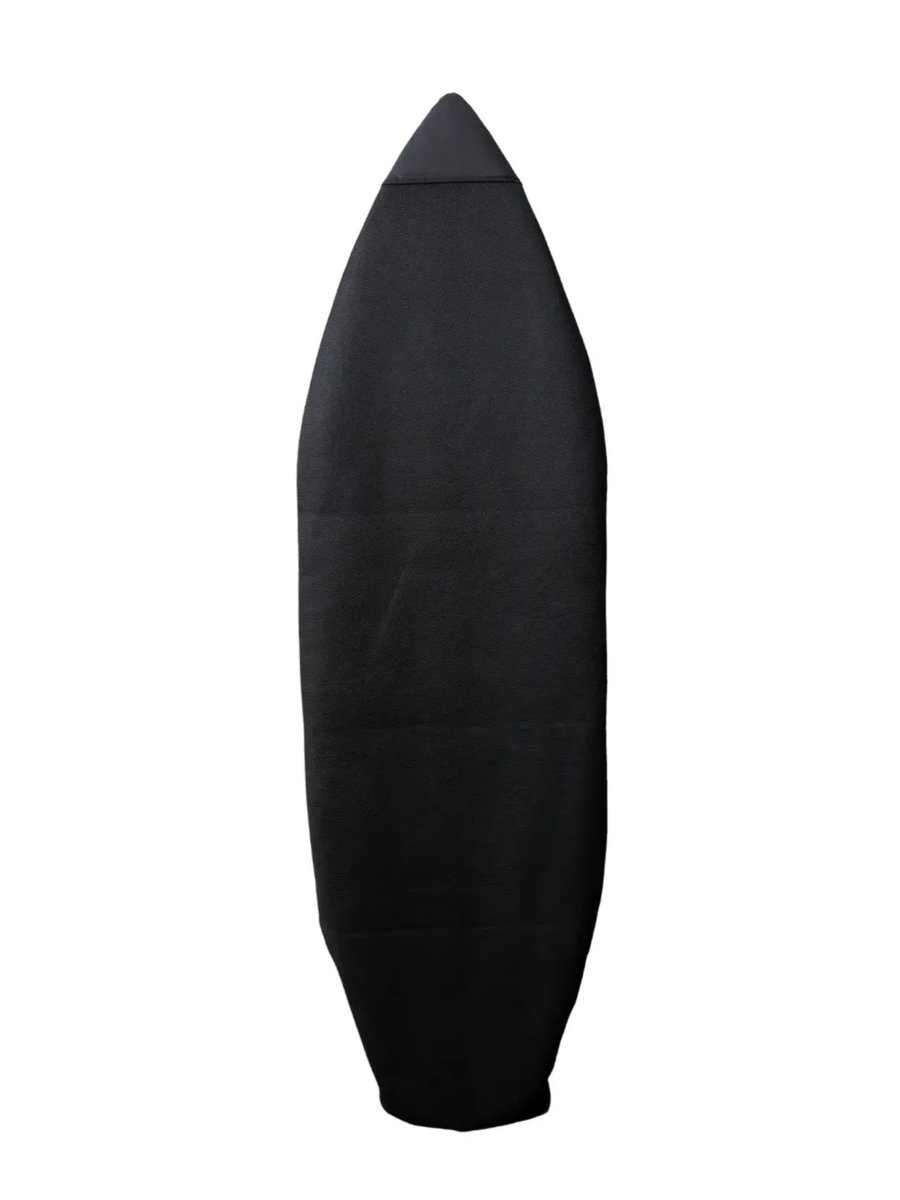
A black custom neoprene surfboard cover — the smooth matte face and reinforced nose panel on white.
What Is a Neoprene Surfboard Cover?
A surfboard cover is a soft sleeve that slides over the whole board, nose to tail. Most covers are made from CR neoprene foam sheet, the durable grade that stands up to sun, salt water, and daily use, while SBR neoprene foam is the softer, lighter option that keeps the price down for everyday covers. The foam is often laminated with fabric on one or both faces. The fabric gives it colour and a soft feel; the foam gives stretch, cushion, and light padding. See our ultimate guide to neoprene sheets for how the foam is made.
The cover guards the board on the way to the beach, in the car, and in storage. It stops the nose and tail from chipping, keeps wax off car seats, and blocks sun that yellows the board and ages the resin. A cover will not stop a hard knock against a rock, but it takes the small hits that add up over a season.
Most covers are open at the tail or have a zip for fast access. Some are plain socks with no zip. Others are padded bags with a handle and a shoulder strap. The right one depends on how far you travel and how much gear you carry.
SBR or CR: Which Foam Is Right?
Most surfboard covers are made from CR neoprene. It is durable, holds its shape, and resists sun and salt water, which is why most shops pick it for covers that live outdoors. For a soft, light cover we use a soft SBR grade — our SBR 5–7° foam is the soft grade for sewn accessories. SBR is the lighter, lower-cost pick when you want a soft cover for gentle, occasional use.
Both foams are closed-cell, so they do not soak up water. The difference is feel and price. SBR feels softer and bends more easily around the board's rails. CR feels firmer and springs back better after years of use. For a cover that lives in the car and gets used every weekend, SBR is the sensible choice. For a premium cover or a rental fleet that must last, CR earns its price.
The face fabric matters too. Nylon is tough and dries fast. Polyester holds colour well in strong sun. A smooth skin face sheds water but shows marks more easily. Tell us where you surf and we will match the fabric to your coast.
How Thick Should the Cover Be?
Thickness is the first choice to make. A thicker cover pads harder. A thinner cover weighs less and folds small. There is no single best choice. It depends on how you travel.
| Thickness | Feel | Padding | Best for |
|---|---|---|---|
| 2 mm | Light and stretchy | Light padding | Daily trips, short drives, storage at home |
| 3 mm | Snug and soft | Good padding | Most surfers, the common choice |
| 5 mm | Thick and firm | Heavy padding | Flights, long road trips, rough handling |
For most surfers, 3 mm is the safe middle ground. It pads the rails and nose well and still slips on fast. See our neoprene sheet thickness guide for how to pick the right mm for any product. If you only drive to a local beach, 2 mm saves weight. If you fly with your board, 5 mm is worth the extra bulk.
Sock, Padded Bag, or Hard Case?
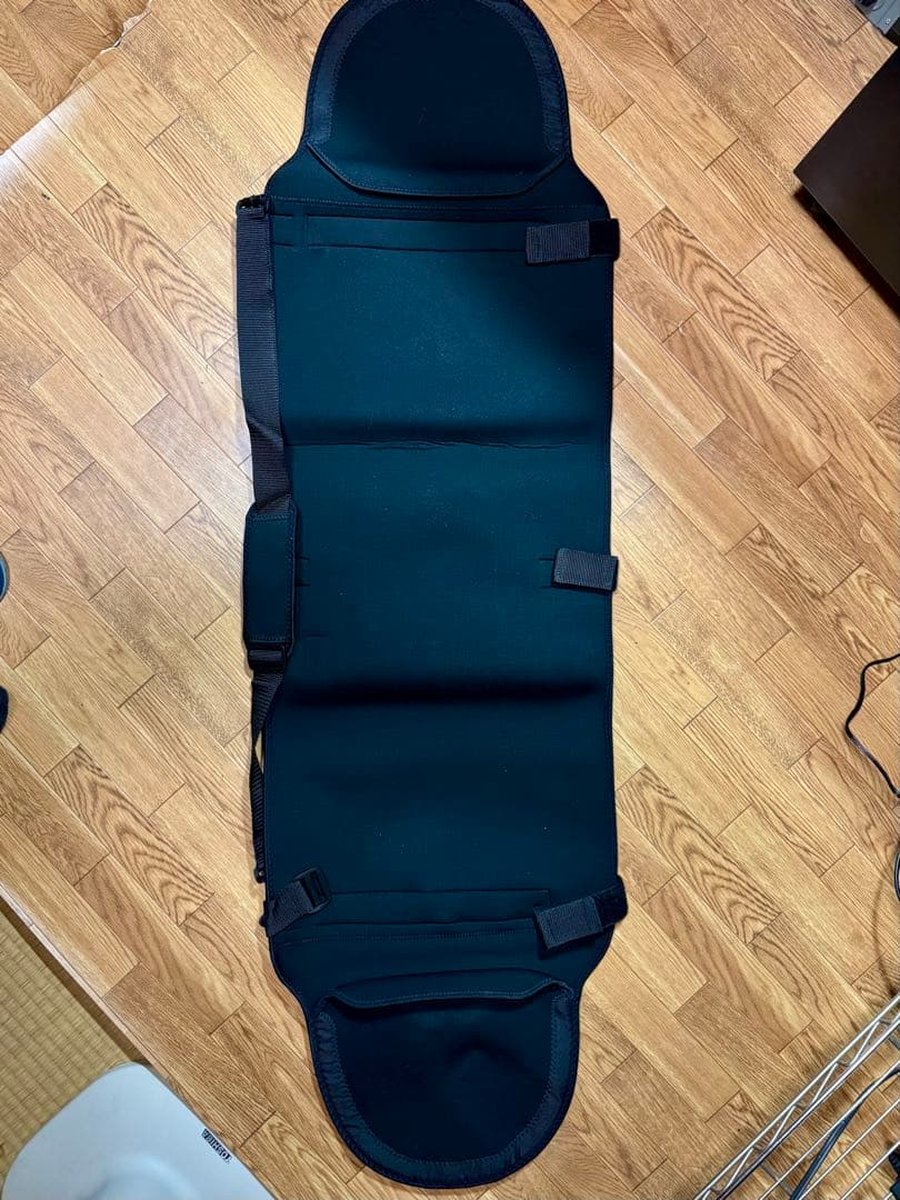
A padded neoprene surfboard bag with carry straps — extra foam and a handle for daily trips to the beach.
A sock is a simple stretch sleeve with no zip and no handle. It is light, cheap, and folds into a pocket. It suits a board that goes from home to a nearby beach.
A padded bag adds thicker foam, a zip, a handle, and often a shoulder strap. It suits daily use and longer drives. You can see more neoprene board bags on our source site, where we list covers, bags, and sleeves made from the same material.
A hard case is a rigid box with foam inside. It protects best on flights but weighs more and costs more. A padded 5 mm neoprene bag is the middle ground most travelling surfers pick: much lighter than a hard case, much safer than a bare sock.
How to Size a Cover — and Pick the Closure
Measure your board before you order: length from nose to tail, width across the widest point, and thickness at the centre. A cover made for a 6'0" shortboard will not fit a 7'6" funboard, and a cover for a thin performance board will be tight on a thick fish.
Tell the maker your board's outline too. A pointed nose, a round nose, a swallowtail, and a square tail all need a different cut. A good cover follows the outline with a little room to spare, so it slips on easily and does not press the fins.
Fins change the fit. If your fins stay on the board, the cover needs a fin slot or a wider tail opening. If you take the fins off, a plain closed tail is fine. Measure with the fins on if that is how you travel.
For a first custom order, most brands start with a full-length zipper and a carry handle. It is easy to use, easy to size, and easy to sell. A slip-on sock suits a light cover with no extras. A shoulder strap suits a padded bag that you carry across a car park.
The zip is the part that wears first, so pick a strong one. A large-tooth plastic zip resists sand and salt better than a fine metal zip. A storm flap over the zip keeps sand out of the teeth. Rinse the zip with fresh water after beach days and it will last far longer.
Colour and print come next. Black is the most popular, but many shops order bright colours so the board is easy to spot on a crowded rack. See our custom neoprene colour matching and printing guide for how we match your brand colour and print your logo on the cover.
How to Clean and Store Your Cover
Rinse the cover with fresh water after each beach trip. Salt left in the seams can dry into crystals that wear the stitching. Sand left inside will rub your board on the next trip. Shake the cover out, then rinse it inside and out.
Wash it by hand with mild soap and cool water when it gets dirty. Press it gently in the water. Do not scrub hard. Rinse it well until the soap is gone. Then press the water out with a towel. Neoprene is water-resistant, not fully waterproof, so a wet cover still needs air to dry. See our guide on waterproof vs water-resistant neoprene to know what to expect in heavy rain.
Dry it in the shade, away from sun, radiators, and dryers. Heat can make neoprene stiff and crack. Let it dry fully before you fold it away. Store it flat or loosely rolled, never folded hard at the same crease, and keep it away from sharp fins and wax combs.
Your Trusted Custom Neoprene Surfboard Covers Manufacturer
Stop buying plain covers that fit badly, wear out at the seams, or leave your board unprotected. We are a custom neoprene manufacturer, and we make surfboard covers to your board's size, shape, and brand. You can see more of our work on our source site, and you can reach us at www.neoprenecustom.com for a quote.
Send us your board length, width, thickness, and outline, plus your colour and logo files. We will confirm the foam, the thickness, and the size, then make a sample for you to check. To order, email us at kevin@neoprenecustom.com and we will reply with a quote.
Frequently Asked Questions (FAQ)
Q: What size surfboard cover do I need?
A: Measure your board's length, width, and thickness, then pick a cover made for those numbers plus a little room. A cover that is too tight is hard to pull on and can press the fins. A loose cover will slide around and rub the wax. When in doubt, send us your board's numbers and we will pick the size.
Q: Is a neoprene surfboard cover waterproof?
A: Neoprene is water-resistant, not fully waterproof. It keeps spray and light rain off your board and dries fast, but it will not keep the board dry in a long downpour. A padded cover with a zip flap handles rain better than a plain sock.
Q: Will the cover fit my board with the fins on?
A: Yes, if you order a cover with a fin slot or a wide tail opening. Tell us your fin setup when you order: single fin, thruster, or quad, and whether the fins stay on.
Q: How thick should a surfboard cover be?
A: For daily trips to a local beach, 2 to 3 mm is enough. For most surfers, 3 mm is the safe pick. For flights and long road trips, 5 mm gives the best padding.
Q: Can I wash a neoprene surfboard cover?
A: Yes. Rinse it with fresh water after each trip and wash it by hand with mild soap and cool water when it gets dirty. Do not use a washing machine or a dryer. Air-dry it in the shade.
Q: How can we order custom colours and logos?
A: Email us at kevin@neoprenecustom.com with your board size, colour, and logo files. We will confirm the foam, thickness, and size, then make a sample for you to check before the full order.