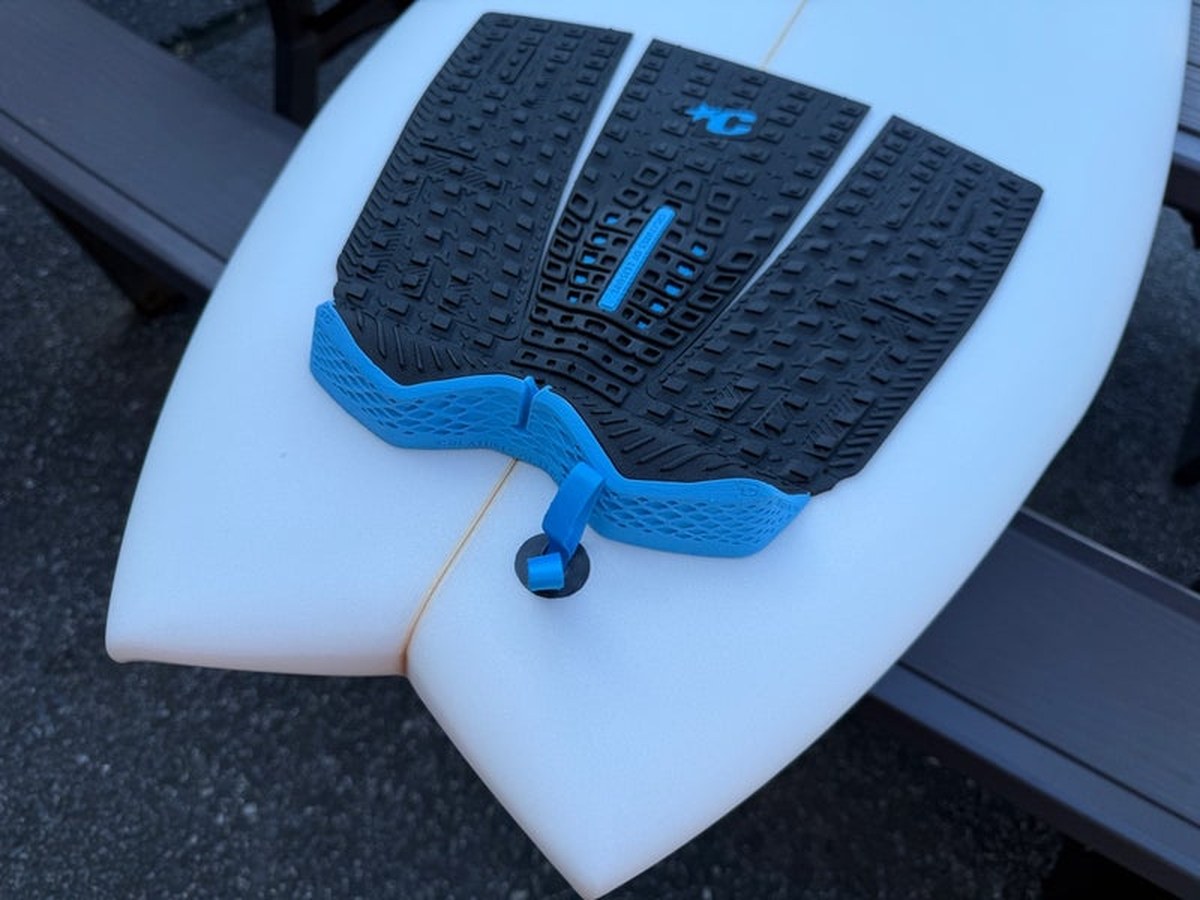
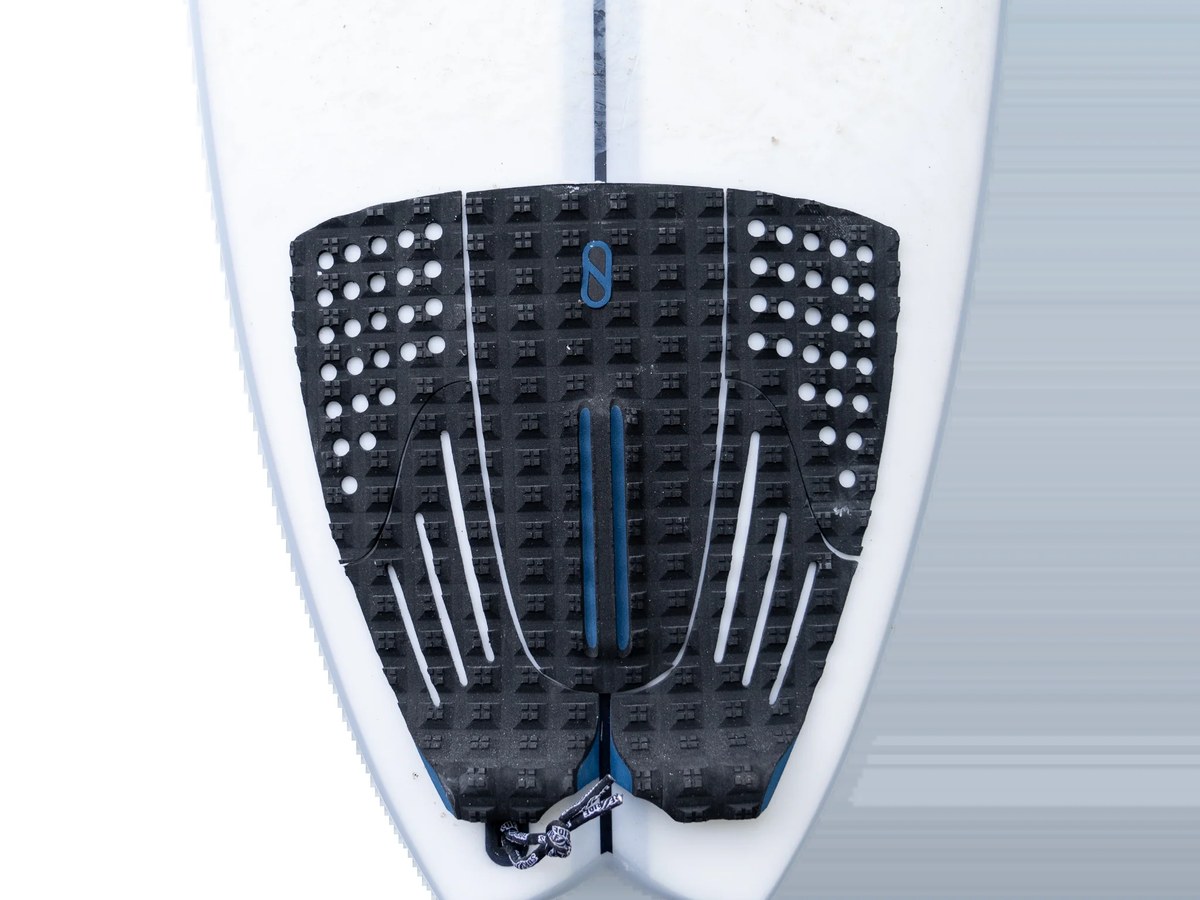
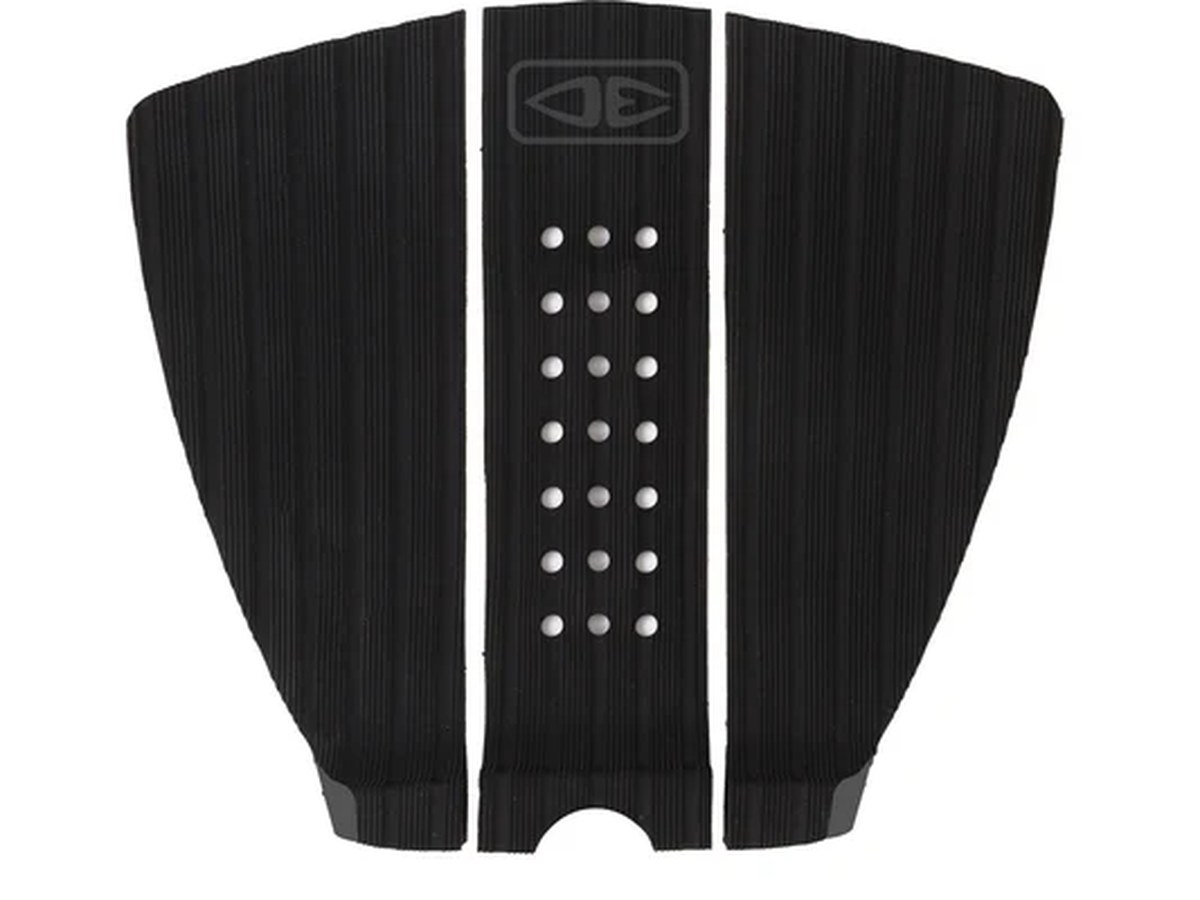
A neoprene surfboard traction pad is a textured pad of laminated neoprene (SBR, SCR or CR foam + fabric), usually 3 mm thick, that sticks to the tail of a surfboard so the surfer's back foot does not slip. Surf brands and board shops order it for surfing. It covers the tail only, not the whole board. Send us your design drawing and pad size, and we will confirm the best material and thickness.
We manufacture custom neoprene surfboard traction pads in our own factory in China, where we have made neoprene products for 15 years. We cut the foam, laminate the fabric face and stitch the finished surfboard traction pads under one roof, so a change to the size or the print can be checked on a sample before bulk production starts.
A traction pad is judged by the foot: if the back foot slips on a turn, the pad has failed, so the texture is where the work goes. We cut the grip pattern into the top face — a diamond or groove pattern to your drawing — deep enough to hold a wet foot and shallow enough not to catch the skin, and we check the finished pad by pressing a wet hand across it, because a pattern that looks grippy dry and goes smooth wet is no use in the surf.
The adhesive back is the other half of the product, because a pad that peels off the board on the first session is a wasted pad. We laminate the adhesive to the foam under pressure so it bonds across the whole back, and we cut the pad outline to the tail shape with a kick at the back edge, so the surfer's foot finds the tail without looking down and the pad does not lift at the corners.
The pad lives in sun and salt water, so the foam and the face have to hold up where a plain pad would crack. We use a fabric face that takes a printed logo and still grips when wet, and we check the finished pad by bending it around a board curve to make sure it follows the tail without creasing, because a pad that creases at the rail lets water in under the adhesive.
3 mm is the standard for most neoprene surfboard traction pads. It is thin enough to follow the curve of the tail and thick enough to cushion the back foot, which is why most of the pads we make are cut in 3 mm. For the full range, see our neoprene sheet thickness guide.
| Thickness | Best for | Trade-off |
|---|---|---|
| 3 mm | Most traction pads for the tail; follows the board curve and grips well | Best balance of grip, flex and a low profile |
| 5 mm | Pads for bigger boards and heavier surfers; extra cushioning underfoot | More cushioning, but stiffer around the tail curve |
| 7 mm | Thick pads for longboard tails and extra comfort | Most cushioning, but bulky and harder to bond flat |
Measure the tail, not the board. Take the width of the tail where the pad will sit and the length from the tail to where the back foot stands, and tell us the tail shape, because a pad cut to a square tail will not sit cleanly on a rounded pin tail. See our custom neoprene surfboard traction pads — adhesive back, tail pad, 3–8 mm for the styles this thickness choice applies to. For a cover that wraps the whole board for storage and transport, our neoprene surfboard covers are the closer page.
CR is the usual choice for a surfboard traction pad, and SBR is the choice where cost matters more than salt-water life. CR (chloroprene rubber) resists UV, ozone and seawater better, so a pad that will live in sun and salt water, session after session, holds up longer in CR. SBR (styrene-butadiene rubber) is the lower-cost foam and is fine for beginner boards and rental fleets that are replaced often.
The numbers from our own technical data sheet show why the two foams feel different: our CR foam measures 3–5° Shore C hardness, 276.32 kg/m³ density, 860 kPa tensile strength and 550% elongation, while our SBR (10–15°) measures 10–15° hardness, 158.34 kg/m³ density, 256 kPa tensile strength and 185% elongation. CR is softer and stretches further, so it follows the curve of the tail without a fight; SBR is firmer and holds the grip pattern and the pad outline through repeated sessions. SCR sits between the two on cost and stretch, and we use it where a customer wants more give than SBR without paying for CR.
| SBR | CR | |
|---|---|---|
| Cost | Lower cost; the usual choice for everyday lines | Costs more than SBR |
| UV and ozone resistance | Fair; best for indoor storage and short outdoor use | Better; holds up longer in sun, ozone and salt air |
| Water use | Fine for occasional water contact | Better for repeated surfing and seawater use |
| Best for | Beginner and rental surfboard pads | Surf pads used often in sun and salt water |
For changing after a session rather than grip on the board, our neoprene surf ponchos are the closer page.
Surf brands — your own grip pattern, your own colours and your own logo on a tail pad your riders trust on a turn, made to your tail size.
Board shops — pads in the sizes your boards need, with a kick at the back edge, for customers who want grip without wax.
Rental fleets — pads that survive daily hire and salt water, with a clear logo, built to be ridden by many different surfers, session after session.
Distributors and e-commerce sellers — mixed sizes in one order, retail-ready packaging with hangtag on request, for shops that sell surf accessories to surfers who already own a board.
When neoprene is NOT the right choice
Tell us which of these your surfboard traction pads need, and we will build the sample to your drawing.
Will the pad stick to my board, or does it need wax?
It sticks on its own. The pad has an adhesive back that bonds to the board tail, so no wax is needed under it — just a clean, dry board surface before you press it on.
What does the kick at the back do?
The raised kick at the back edge tells the surfer's foot where the tail is without looking down, so the back foot finds the right spot on a turn.
What is the minimum order?
200 pieces per design as a general minimum, adjustable to your actual order.
Can I get a sample first?
Yes — we support sampling, usually in 5–7 days. Send us your design drawing and the tail width and length and we will confirm the sample cost and time.
How long does bulk production take?
Usually 15–18 days after sample approval, depending on the quantity and customisation.
How do I order?
Send us your design drawing, the tail size and shape and the quantity. We confirm the material, thickness and price, then make a sample for your approval before bulk production.
We make custom neoprene surfboard traction pads to your tail size, your grip pattern and your print, and we check the grip pattern and the adhesive bond on a sample before bulk production. The general minimum order is 200 pieces per design, adjustable to your actual order; sampling is supported, usually in 5–7 days; and bulk production usually takes 15–18 days after sample approval. Request a quote for custom neoprene surfboard traction pads and we will confirm the best material and thickness for your surfboard traction pads.
Request a Quotation
To help us review your inquiry, please send:
Website: https://www.neoprenecustom.com/ Email: kevin@neoprenecustom.com
A traction pad is judged by whether the back foot stays put on a turn. Send us the tail size and we will make you a sample to press onto a real board.
Contact: Kevin
Phone: 13417385320
Tel: 0734-87965514
Email: kevin@neoprenecustom.com
Add: Intersection of Zhangjialing Road and Science and Technology Road, Guiyang Industrial Park, Guiyang Town, Qidong County, Hengyang City, Hunan Province./Dongguan Factory(GUANXIN): Shixin Street, Fushan Village, Liaobu Town, Dongguan, Guangdong Province.