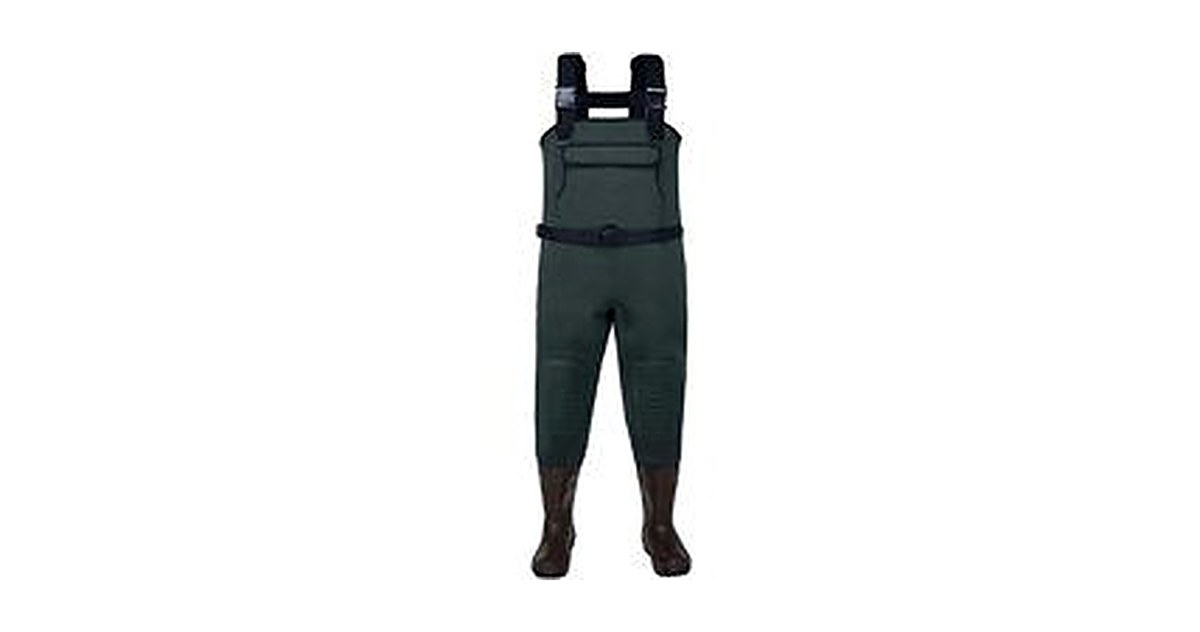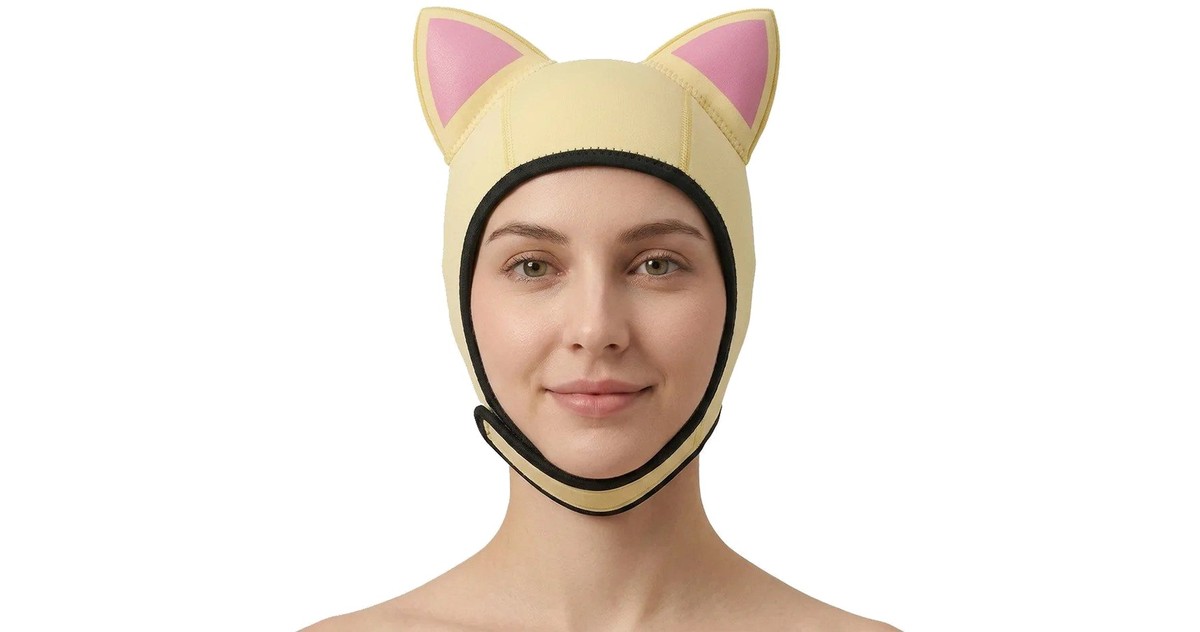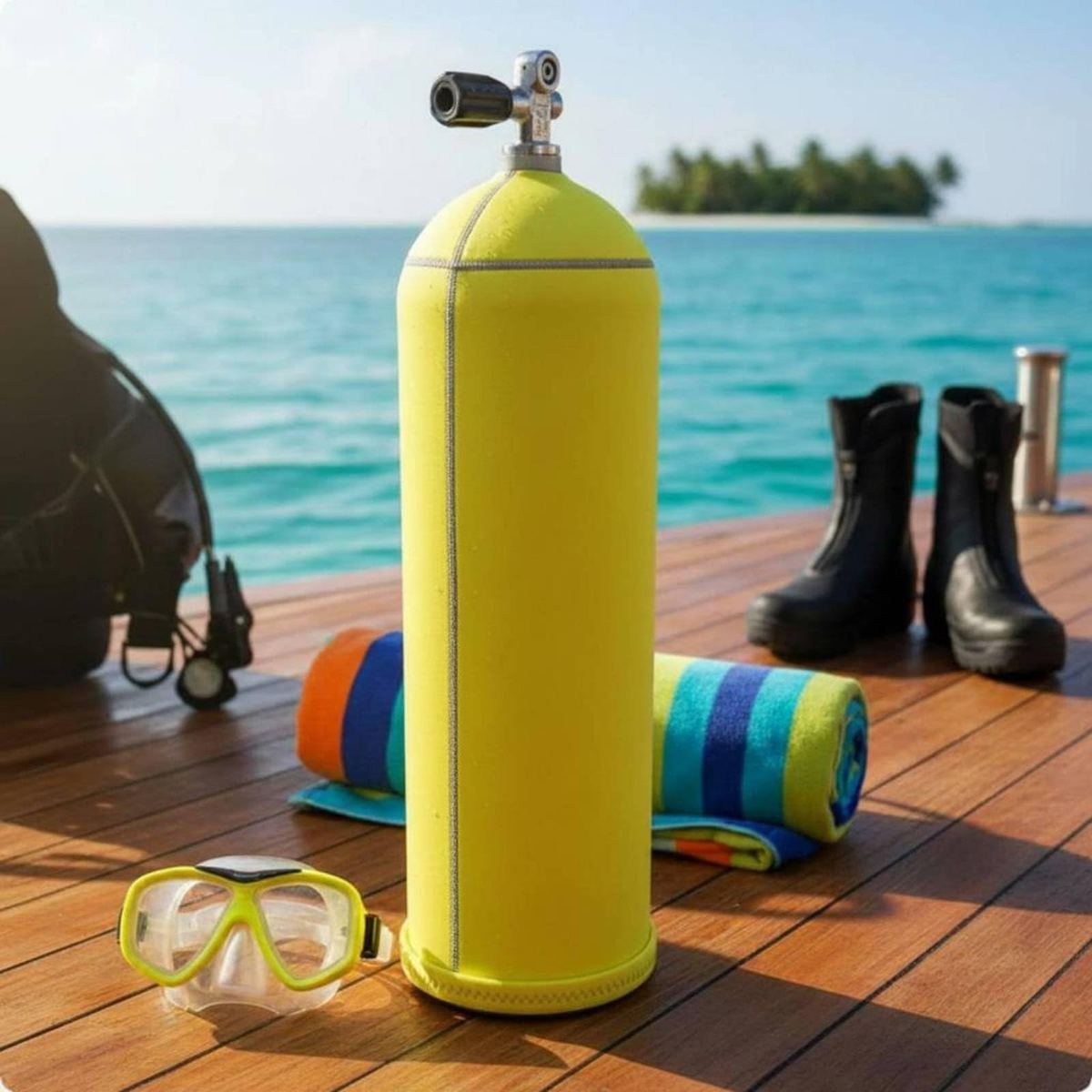
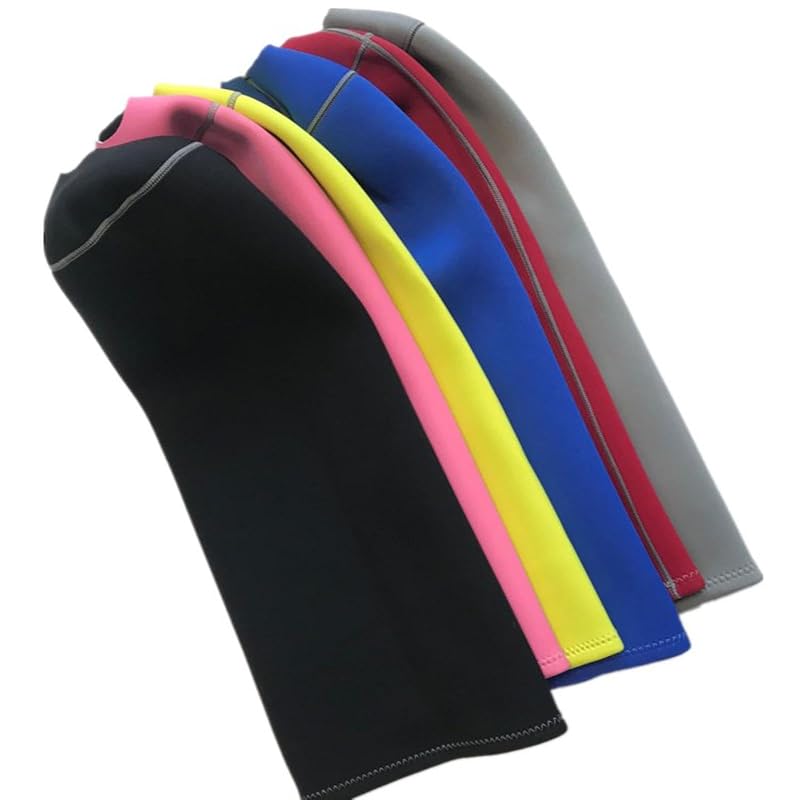
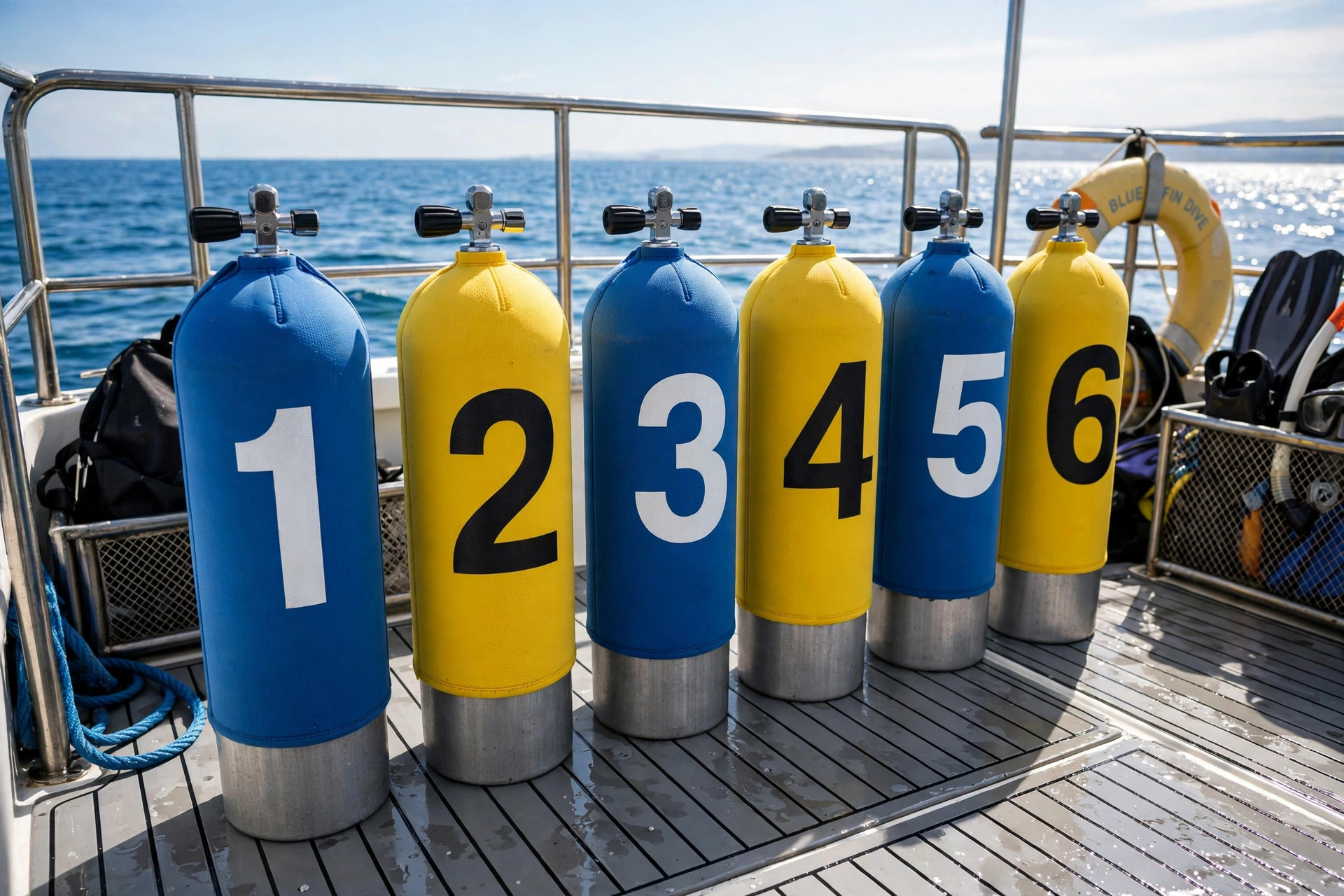
A neoprene scuba tank cover is a fitted sleeve of laminated neoprene (SBR, SCR or CR foam + fabric), usually 5 mm thick, that wraps the body of a diving cylinder and cushions it against the knocks, scratches and deck wear a working tank picks up every day. The foam grips a wet boat deck, the fabric face carries a colour or a printed number, and the cover slides off when the tank goes for filling or inspection. Send us your design drawing and cylinder size, and we will confirm the best material and thickness.
We manufacture custom neoprene scuba tank covers in our own factory in China, where we have made neoprene products for 15 years. We cut the foam, laminate the fabric face and stitch the finished covers under one roof, so a change to the size, the closure or the print can be checked on a sample before bulk production starts.
A scuba cylinder is carried by the valve, laid on benches, stacked with other tanks and rolled across fill-station floors. Bare aluminium and steel take every knock on the paint and the metal, and a chipped, scratched tank looks neglected long before it is unsafe. The foam spreads the force of a knock over a wider area, so the finish survives the season and the tank still looks looked-after when a customer is handed it.
The cover also works between the tank and the boat. A bare cylinder on a fibreglass deck slides in a swell and scratches the gelcoat; a neoprene sleeve grips the deck, quiets the rattle of tanks against each other in the rack, and gives the crew something soft to grab with wet hands. Dive boats are expensive to repair, and a cover is cheaper than a deck.
For schools and rental fleets, colour is a working tool, not decoration. A colour per group, a level or a tank size — with a big printed number — lets an instructor count cylinders on the boat at a glance, sort them at the fill station without reading valves, and notice at the end of the day if one has not come back. For choosing size, padding and closure in more depth, see our guide to custom neoprene scuba tank covers.
5 mm is the standard for most neoprene scuba tank covers. It gives real cushioning against deck knocks and tank-on-tank contact in a cover that still pulls on easily and adds little bulk in the rack, which is why most of the tank covers we make are cut in 5 mm. For the full range, see our neoprene sheet thickness guide.
| Thickness | Best for | Trade-off |
|---|---|---|
| 3 mm | Identification sleeves — colour coding, names and numbers on tanks that are handled with care | Least cushioning; light scratch protection only |
| 5 mm | Everyday boat and school use — the standard working cover | Best balance of impact protection, grip and easy fitting |
| 7 mm | Rental fleets and school tanks carried, stacked and filled daily | Thickest and bulkiest in the rack; costs more than 5 mm |
Measure the cylinder, not the catalogue. Take the diameter (or the circumference) and the height of the straight body of the tank, and tell us whether a tank boot stays on, because the cover is cut to that body — common aluminium and steel sizes such as 7 L, 10 L, 12 L and AL80 are routine, but two tanks of the same litres can differ in diameter between brands.
CR is the standard choice for scuba tank covers, because a working cover lives in salt water, sun and ozone — exactly the conditions CR is made for, and the same reason it is the foam of serious diving gear. SBR (styrene-butadiene rubber) is the firmer, lighter, lower-cost foam, and it has a place on light identification sleeves that live indoors at a fill station or in a classroom, where UV and salt exposure are low. SCR, a blend of the two, sits between them where a fleet wants more give than SBR at a lower cost than CR.
The figures behind the two foams show why they feel different: our CR foam measures 3–5° Shore C hardness, 276.32 kg/m³ density, 860 kPa tensile strength and 550% elongation, while our SBR foam measures 10–15° Shore C, 158.34 kg/m³, 256 kPa and 185%. CR is the softer, springier foam; SBR is the firmer, lighter one. On a cylinder, that means a CR cover stretches over the tank and hugs it, while an SBR sleeve is cut closer and feels stiffer in the hand.
| SBR | CR | |
|---|---|---|
| Cost | Lower cost; suits indoor identification sleeves | Costs more than SBR |
| Salt water, UV and ozone resistance | Fair; best away from daily sun and salt water | Better; the standard for gear that works on boats |
| Feel | Firm and light, cut close to the tank | Soft and elastic, stretches on and hugs the cylinder |
For sizes, closures and printing, see our custom neoprene scuba tank covers product page. For the suits the tanks are dived with, our neoprene diving wetsuits application page covers the same CR foams in 3–7 mm.
Dive centres and schools — covers in your colours with printed numbers, so instructors can count and sort cylinders on the boat and at the fill station.
Rental fleets and liveaboards — thick covers that take daily knocks across the whole fleet and keep rented tanks looking maintained.
Dive shops — covers in the common cylinder sizes for the retail wall, with your shop name printed down the side.
Dive gear brands — your own cover line to sell alongside your boots and gloves, made to your sizes, colours and artwork.
When neoprene is NOT the right choice
Tell us which of these your tank covers need, and we will build the sample to your drawing.
How is a tank cover different from a tank boot or a mesh net?
A boot only protects the base and helps the tank stand, and a net only stops rolling. A cover wraps the whole body of the cylinder in foam, cushioning the paint and the metal along its full length.
Will the cover fit my cylinders?
Yes — send us the cylinder size or its diameter and height, and we cut the cover to that tank. Common aluminium and steel sizes such as 7 L, 10 L, 12 L and AL80 are routine, and mixed sizes can share one order.
What is the minimum order?
200 pieces per design as a general minimum, adjustable to your actual order.
Can I get a sample first?
Yes — we support sampling, usually in 5–7 days. Send us your design drawing and the cylinder sizes you need.
How long does bulk production take?
Usually 15–18 days after sample approval, depending on the quantity and customisation.
How do I order?
Send us your design drawing, the cylinder size and the quantity. We confirm the material, thickness and price, then make a sample for your approval before bulk production.
We make custom neoprene scuba tank covers to your cylinder size, your colours and your print, and we check the fit on a real tank sample before bulk production. The general minimum order is 200 pieces per design, adjustable to your actual order; sampling is supported, usually in 5–7 days, and bulk production usually takes 15–18 days after sample approval.
Request a Quotation
To help us review your inquiry, please send:
Website: https://www.neoprenecustom.com/ Email: kevin@neoprenecustom.com
A tank cover is judged on the boat, not on the shelf. Send us your cylinder size and we will make you a sample to pull onto a real tank. For the rest of the kit it works alongside, see our neoprene diving gloves, and for cold feet on the same deck, our neoprene dive boots.
Contact: Kevin
Phone: 13417385320
Tel: 0734-87965514
Email: kevin@neoprenecustom.com
Add: Intersection of Zhangjialing Road and Science and Technology Road, Guiyang Industrial Park, Guiyang Town, Qidong County, Hengyang City, Hunan Province./Dongguan Factory(GUANXIN): Shixin Street, Fushan Village, Liaobu Town, Dongguan, Guangdong Province.