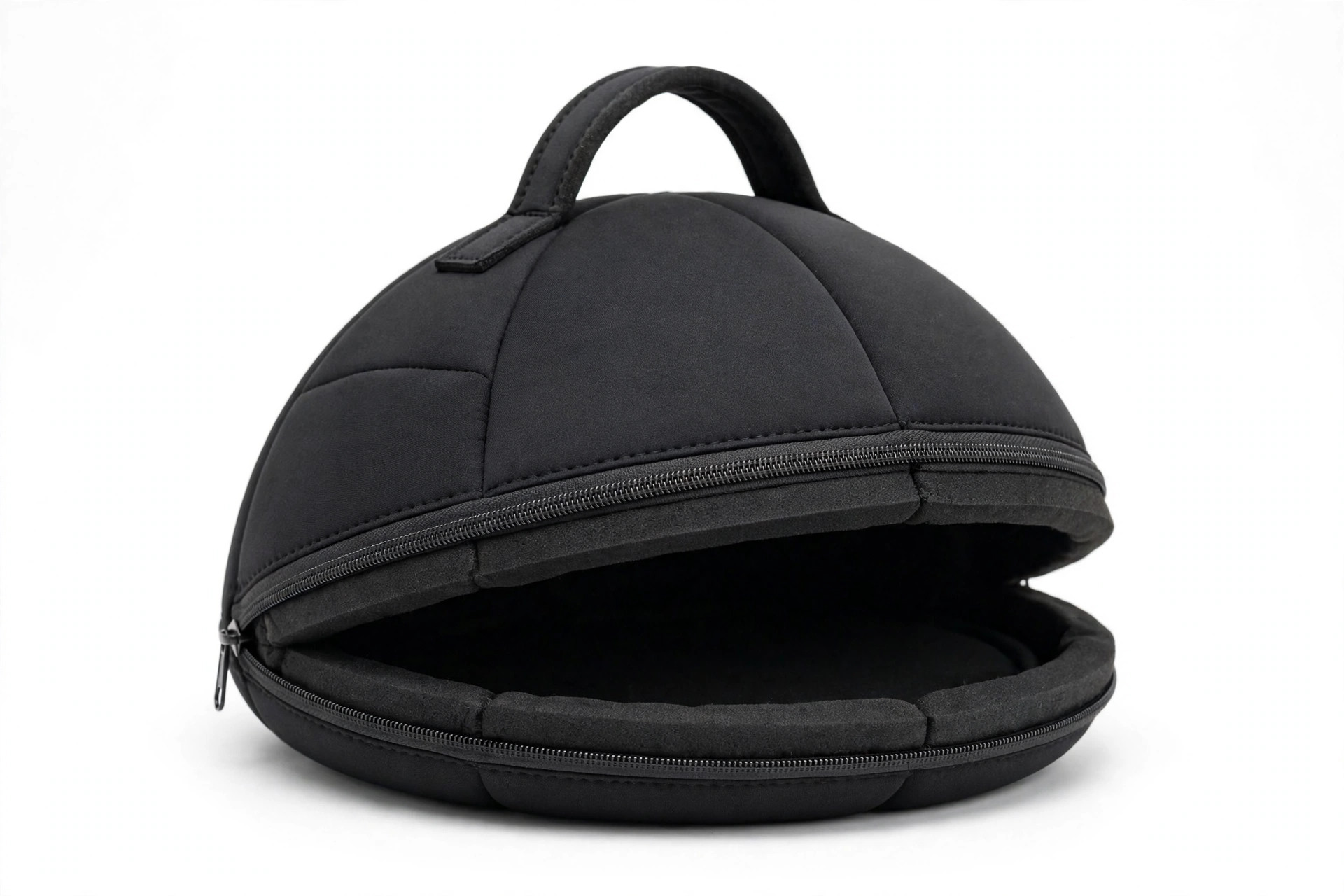
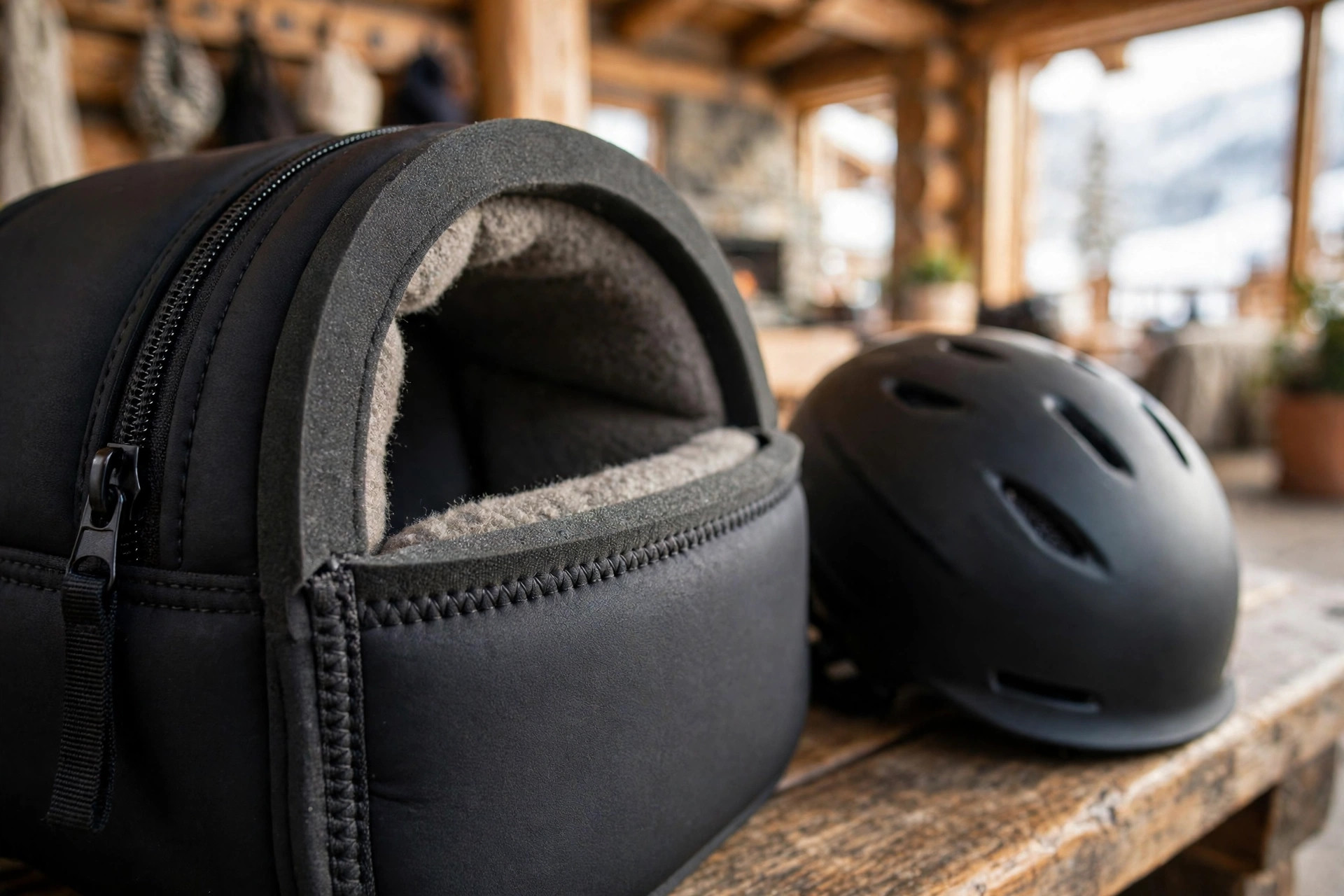
A neoprene helmet bag is a dome-shaped padded bag cut and stitched from laminated neoprene (SBR, SCR or CR foam + fabric), with a zip opening, a soft lining and a carry handle, sized to hold one motorcycle, ski or cycling helmet. The foam wall and the soft inside face protect what a helmet actually suffers from off the head: scratches to the shell and visor, chips from shelf edges and knocks against other gear in the car. The bag is storage and transport protection for the helmet's finish — it is not part of the helmet's safety function. Send us your design drawing and the helmet sizes the bag must fit, and we will confirm the best material and thickness.
We manufacture custom neoprene helmet bags in our own factory in China, where we have made neoprene products for 15 years. We laminate the foam, shape the dome panels and stitch the finished bags under one roof, so a change to the size, the lining or the print can be checked on a sample before bulk production starts.
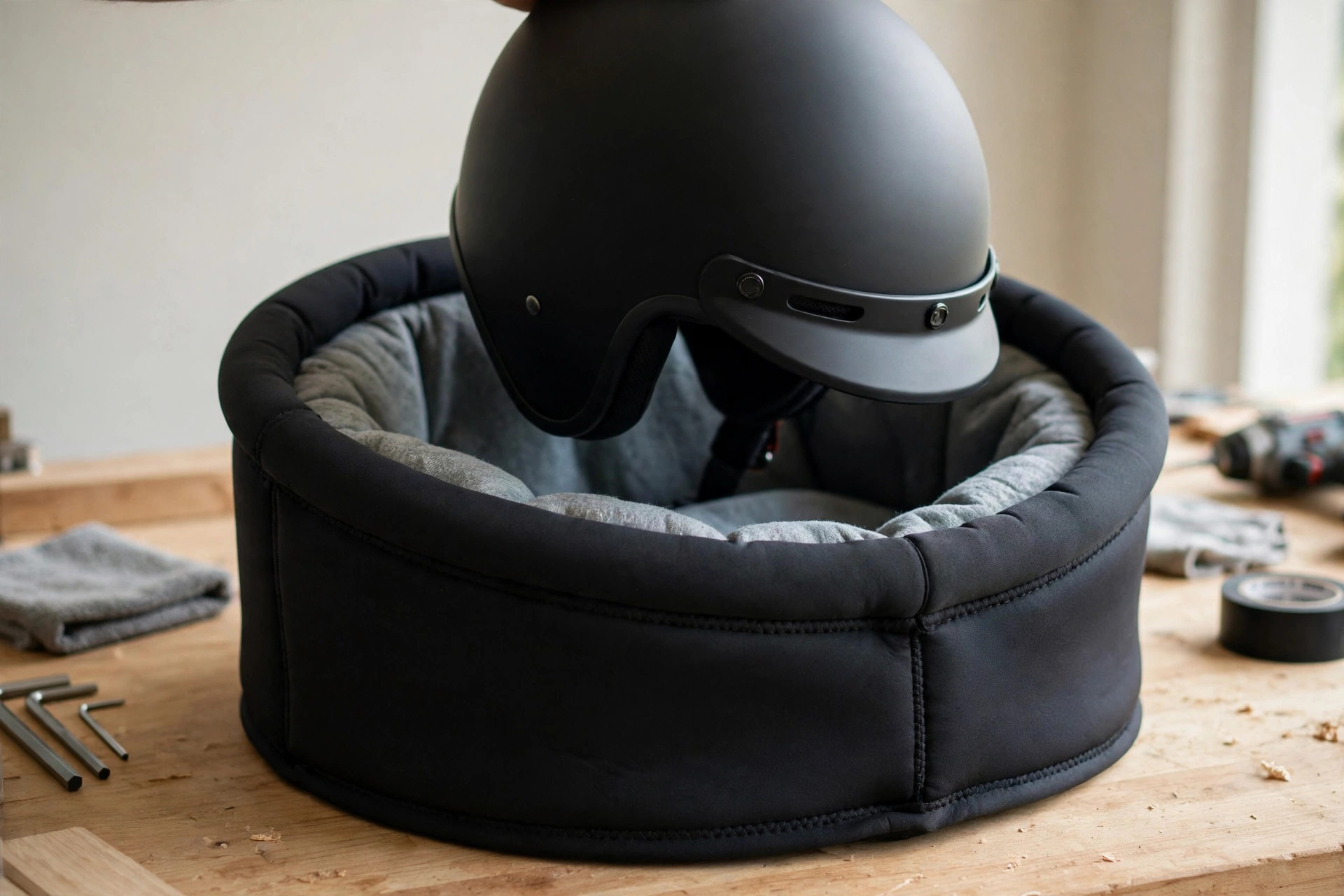
A helmet spends most of its life off the head — on a shelf, in a car boot, hanging in a rental shop — and that is where its finish gets damaged. A painted shell picks up scratches from keys, buckles and other helmets; a visor scuffs against anything hard it rests on. A padded bag ends that: the helmet lives in its own soft compartment, the lining face is what touches the visor, and the zip keeps dust and workshop dirt off between uses. The dome shape holds the helmet upright and the handle makes it a one-hand carry from house to bike to lodge.
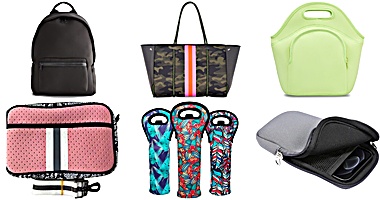
Neoprene is the right material for the job because the padding is the bag itself. The foam wall flexes over a helmet's vents, peaks and goggle clips instead of forcing a rigid shape, and it springs back after being packed around. It also wipes clean, shrugs off the damp of a ski lodge or a garage, and keeps its shape season after season — which is why the same construction is used across our padded bag range.
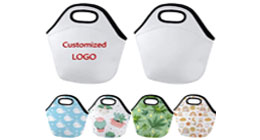
For gear brands, the bag is the accessory that carries the logo into every photo of the helmet: the dome panel takes a printed brand, and the bag is what the customer sees on the shelf and in the boot long after the helmet box is thrown away. Rental and resort operations buy them plainer and tougher, in sizes colour-coded to the helmet fleet.
5 mm is the most popular thickness for neoprene helmet bags. It gives the dome enough body to stand open for loading and enough padding to take the everyday knocks of shelves and car boots, which is why most of the helmet bags we make are cut in 5 mm. For the full range, see our neoprene sheet thickness guide.
| Thickness | Best for | Trade-off |
|---|---|---|
| 3 mm | Light dust-and-scratch bags for cycling helmets and home storage | Least padding and the softest dome; folds flattest for shipping |
| 5 mm | The standard bag — motorcycle and ski helmets, storage and car transport | The balanced choice; neither the lightest nor the most padded |
| 7 mm | Maximum padding for premium helmets and rental fleets in daily handling | Bulkiest dome and the highest cost of the three |
Size the bag to the helmet type, not just the helmet size. A full-face motorcycle helmet with its chin bar and peak needs a taller, wider dome than an open-face helmet; a ski helmet must fit with its goggle clip and ear pads; a cycling helmet is smaller but often travels with its visor fitted. Send the helmet models in your range, or their outside dimensions, and we will pattern the dome with the clearance the zip needs.
SBR is the standard choice for most helmet bags, because the firmer foam holds the dome shape, stands open on the shelf and keeps the price where an accessory range needs it. CR (chloroprene rubber) earns its higher price on premium lines — it is softer and more elastic, so the dome eases over awkward peaks and vents and the bag feels richer in the hand. SCR, a blend of the two, sits between them on both feel and cost.
The figures behind the two foams show why they behave differently: our CR foam measures 3–5° Shore C hardness, 276.32 kg/m³ density, 860 kPa tensile strength and 550% elongation, while our SBR foam measures 10–15° Shore C, 158.34 kg/m³, 256 kPa and 185%. CR is the softer, stretchier foam — it gives over a full-face helmet's chin bar — while SBR is the firmer one that keeps a printed dome panel smooth and holds the bag's shape through daily handling.
| SBR | CR | |
|---|---|---|
| Cost | Lower cost; the standard for most helmet bags | Costs more than SBR |
| Shape and fit | Firm dome that stands open and holds its line on the shelf | Softer and more elastic; eases over peaks, vents and chin bars |
| Best for | Retail and fleet ranges at a working price | Premium helmet lines where fit and feel sell the accessory |
For sizes, linings and printing, see our neoprene helmet bags product page. The same riders carry their kit in our neoprene motorcycle seat covers range, and skiers pair the helmet bag with the neoprene ski bags that carry the skis themselves.
Motorcycle gear brands — a bag patterned to your helmet range, sold with the helmet or as the branded accessory in the box.
Ski and snowboard shops — helmet bags sized for ski helmets with goggles attached, in your shop's colours for the rental desk.
Cycling retailers — lighter 3 mm bags for road and mountain helmets, printed with the shop or team brand.
Equestrian tack shops — riding helmet bags in yard colours, alongside the rest of the neoprene tack range.
When neoprene is NOT the right choice
Tell us which of these your helmet bags need, and we will build the sample to your drawing.
Does a helmet bag make the helmet safer?
No. The bag protects the helmet's shell finish and visor from scratches and knocks during storage and transport. The helmet's safety performance comes from the helmet itself, and the bag adds nothing to it — it is an accessory for keeping the helmet in good condition, not a safety product.
Will it fit a full-face motorcycle helmet?
Yes. The dome is patterned to the helmet type, and the full-face version is cut taller and wider for the chin bar and peak. Send the helmet models or their outside dimensions and the sample will be made to them.
Can the bag hold goggles or gloves as well?
Yes. A goggle pocket inside the lid or on the front panel is a common request, and the dome has room for thin gloves alongside most helmets — tell us what your customers carry and we will size the sample for it.
What is the minimum order?
200 pieces per design as a general minimum, adjustable to your actual order.
Can I get a sample first?
Yes — we support sampling, usually in 5–7 days. Send us your design drawing and the helmet types and sizes the bag must fit.
How long does bulk production take?
Usually 15–18 days after sample approval, depending on the quantity and customisation.
We make custom neoprene helmet bags to your helmet types, colours and print, and we check the fit on the real helmet before bulk production. The general minimum order is 200 pieces per design, adjustable to your actual order; sampling is supported, usually in 5–7 days, and bulk production usually takes 15–18 days after sample approval.
Request a Quotation
To help us review your inquiry, please send:
Website: https://www.neoprenecustom.com/ Email: kevin@neoprenecustom.com
A helmet bag is judged on the shelf and in the car boot, where helmets actually get marked. Send us your helmet range and we will make a sample to be judged exactly there. For the bag the rest of the kit travels in, see our neoprene travel duffel bags.
Contact: Kevin
Phone: 13417385320
Tel: 0734-87965514
Email: kevin@neoprenecustom.com
Add: Intersection of Zhangjialing Road and Science and Technology Road, Guiyang Industrial Park, Guiyang Town, Qidong County, Hengyang City, Hunan Province./Dongguan Factory(GUANXIN): Shixin Street, Fushan Village, Liaobu Town, Dongguan, Guangdong Province.