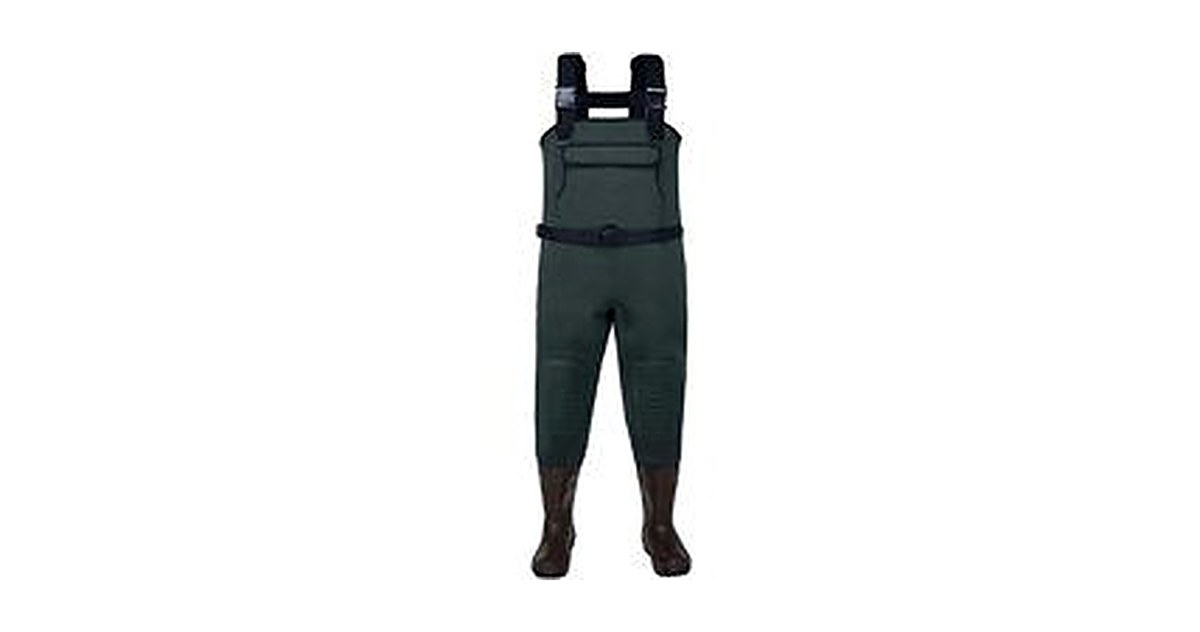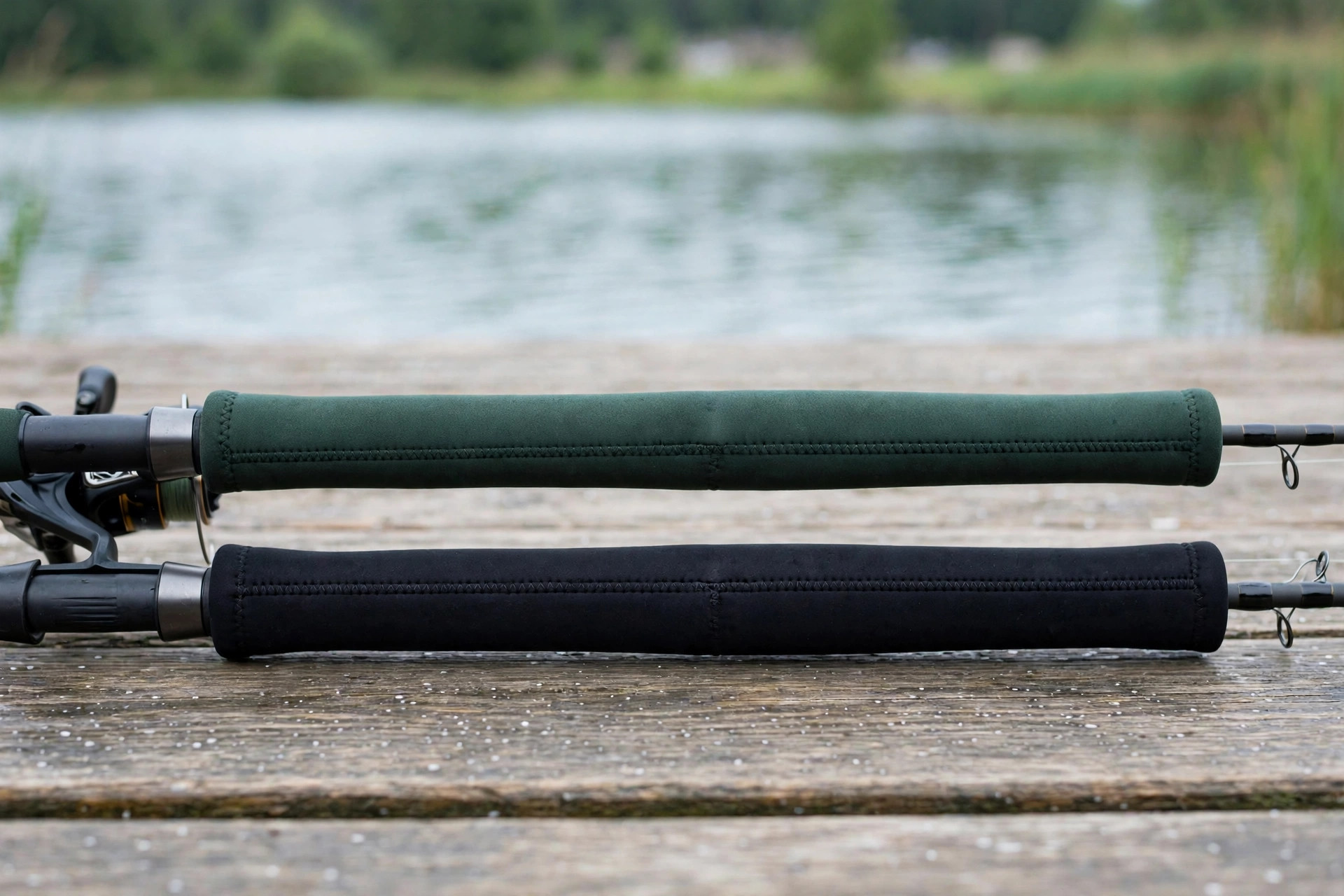
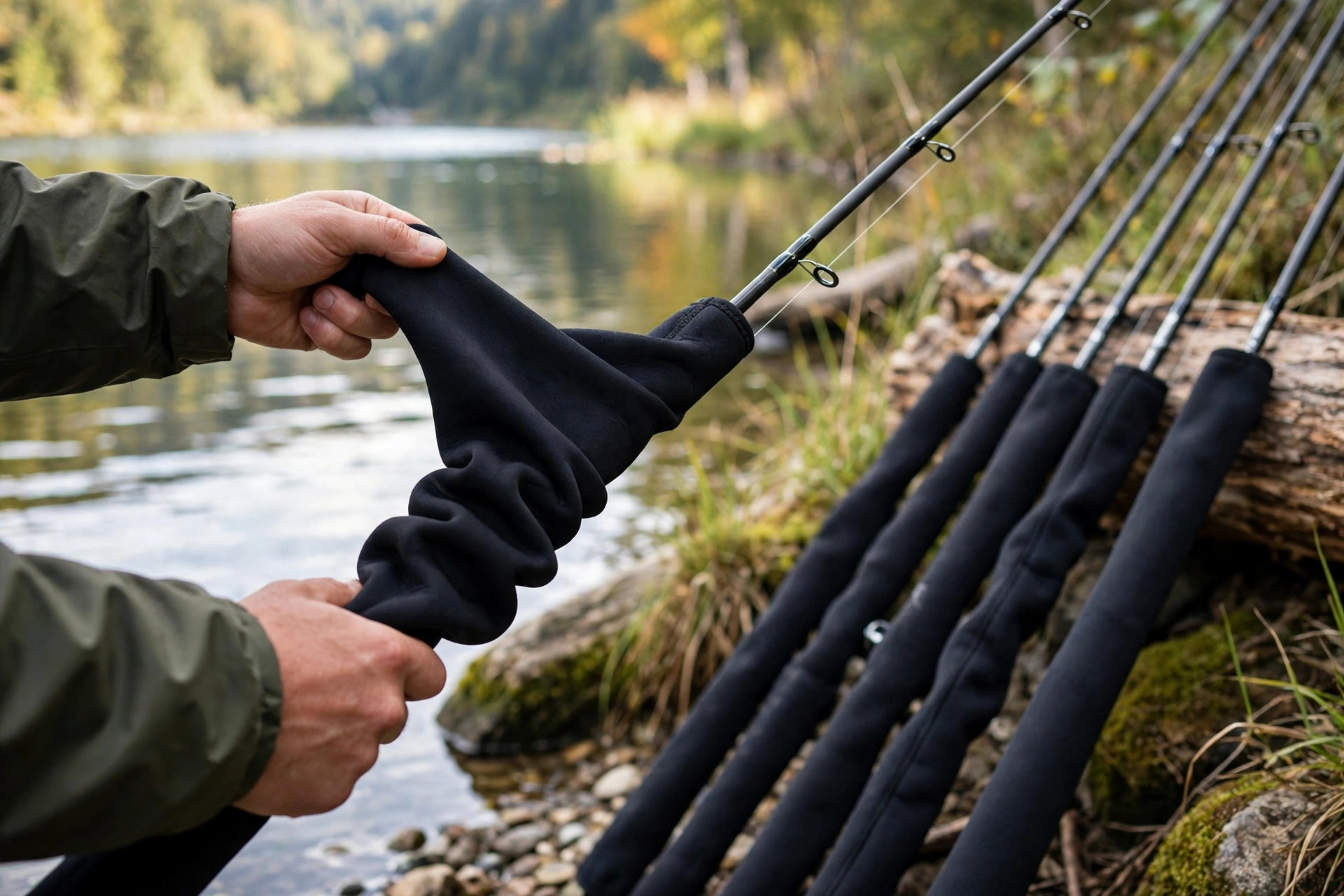
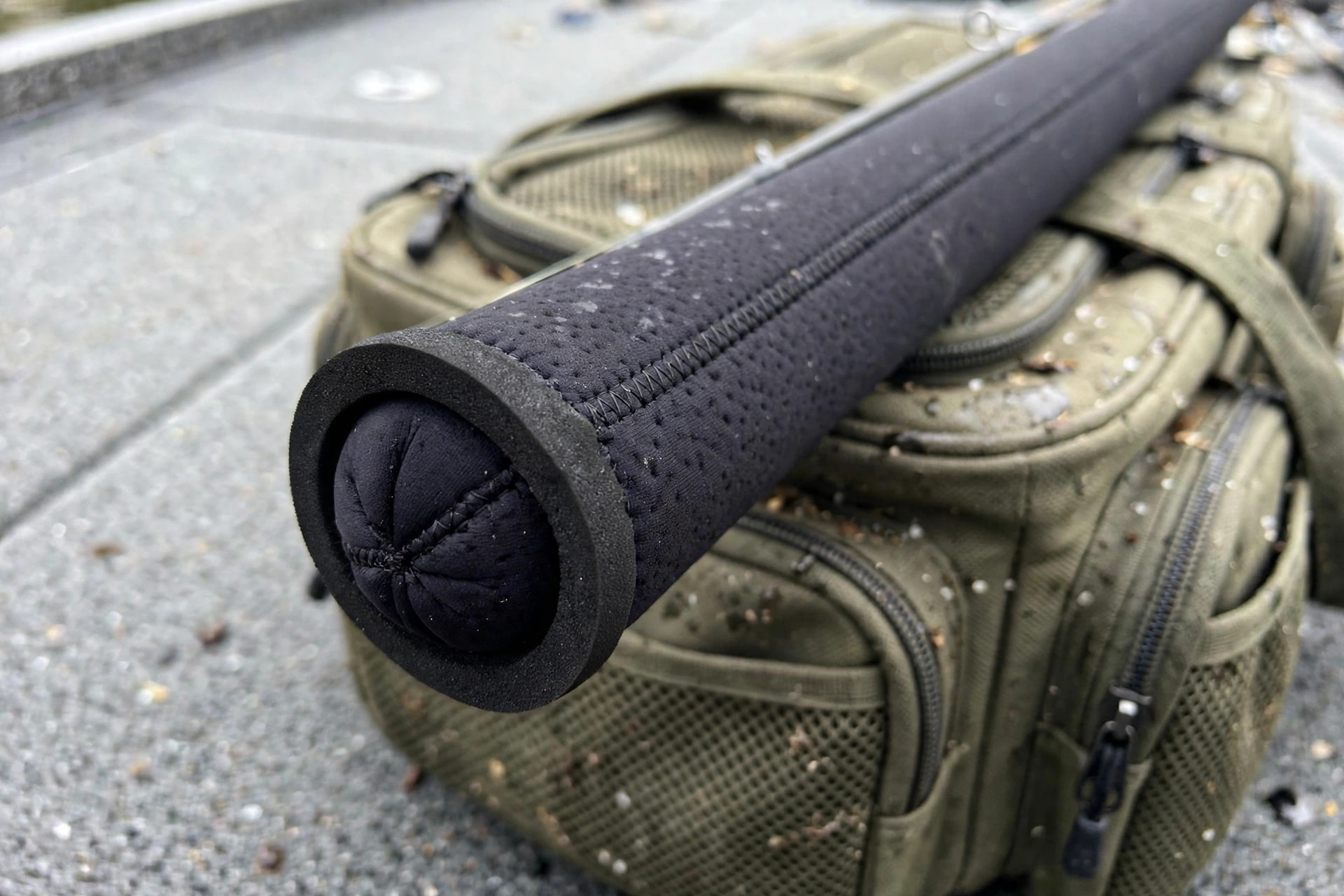
A neoprene fishing rod sock is a long, slim stretch sleeve of laminated neoprene (SBR, SCR or CR foam + fabric), open at one end and closed at the tip, that slides over a fishing rod and covers the blank and the guides. At only 2–3 mm thick it adds almost no bulk, so sleeved rods still pack side by side in a rod locker, a boat's rod rack or a bundle in the car — while the foam keeps blanks from knocking against each other and stops guides and line from tangling between rods. Send us your design drawing and the rod lengths and types the sock must fit, and we will confirm the best material and size.
We manufacture custom neoprene fishing rod socks in our own factory in China, where we have made neoprene products for 15 years. We laminate the foam, cut the sleeves and stitch the finished socks under one roof, so a change to the length, the width or the print can be checked on a sample before bulk production starts.
Rods rarely get damaged while they are being fished with. They get damaged in the locker, in the rack and in the car — blank against blank, guide against guide, with a door or a deck hatch closing on the bundle. A rod sock is the cheap, light answer to exactly that: each rod gets its own foam skin, so a set of six rods travels as six protected pieces instead of one clattering bundle. On the boat, the sock also keeps a rigged rod's line from wrapping around its neighbours between spots.
The neoprene version earns its place over a plain fabric sock in two ways. The foam has body, so the sock slides over guides instead of snagging on them, and it cushions a knock rather than just preventing a scratch. And the stretch of the foam grips the blank gently along its whole length — the sock stays where it was put in a moving boat, with no drawstring to tie. It rinses clean, dries fast and rolls up into a pocket when the rods come out.
For tackle brands and rod makers, the sock is the natural bundle item: one in the rod's colours goes in every rod tube and every retail pack, with the brand printed down the length where it is seen on every dock and deck. It pairs with the neoprene fishing reel covers that protect the other half of the outfit.
Rod socks are cut thin on purpose — 2–3 mm across the range. The sock has to stretch over the guides, fold flat in a locker and add almost nothing to the rod's diameter, so it never uses the heavier foam of a padded rod case. 3 mm is the most popular choice, for casting rods and two-piece versions; 2 mm serves lighter spinning rods. For how foam thickness behaves across neoprene products, see our neoprene sheet thickness guide.
| Thickness | Best for | Trade-off |
|---|---|---|
| 2 mm | Spinning rods — slim blanks and smaller guides, the lightest sleeve of the range | The least cushioning of the three; a scratch-and-tangle guard more than padding |
| 3 mm | Casting and baitcasting rods — bigger guides and trigger grips to ease over | Slightly bulkier in a tight locker; still folds flat |
| 3 mm, two-piece version | Two-piece and travel rods — a shorter sock for each section, ferrule included | Two socks per rod to keep track of; sold as a matched pair |
Size the sock by rod type and length, not by length alone. A spinning sock is cut slimmer than a casting sock of the same length because the guides it must pass are smaller, and the closed tip is shaped so the rod's tip section seats without folding. Standard lengths cover rods from 6 ft to 8 ft, with the width set by the largest guide. Send the rod models in your range and we will cut the sample to the biggest guide it has to clear.
SBR is the standard choice for most rod socks, because the firmer foam holds the sleeve's slim shape, slides over guides without collapsing and keeps the price where a bundle accessory needs it. CR (chloroprene rubber) earns its higher price on premium rod lines — it is softer and considerably more elastic, so the sock stretches over big casting guides and grips the blank more closely. SCR, a blend of the two, sits between them on both feel and cost.
The figures behind the two foams show why they behave differently: our CR foam measures 3–5° Shore C hardness, 276.32 kg/m³ density, 860 kPa tensile strength and 550% elongation, while our SBR foam measures 10–15° Shore C, 158.34 kg/m³, 256 kPa and 185%. On a sleeve that is pulled over guides hundreds of times, CR's elongation is the number that matters — it is the difference between a sock that eases over a guide and one that fights it.
| SBR | CR | |
|---|---|---|
| Cost | Lower cost; the standard for most rod socks | Costs more than SBR |
| Stretch over guides | Firm sleeve that holds its shape and slides on smoothly | Softer and more elastic; eases over big guides and grips closer |
| Best for | Bundle and retail ranges at a working price | Premium rod lines where the sock is part of the rod's presentation |
For lengths, widths and printing, see our neoprene fishing rod socks product page. For heavier, zippered protection on the road, our neoprene fishing rod covers are the padded step up — the sock is the light everyday sleeve, the cover is the travel case. The rest of the outfit travels in our neoprene fishing tackle bags.
Fishing tackle brands — socks in your colours and print, sold singly, in sets, or bundled across your rod range.
Rod makers — a branded sock in every rod tube, cut to your own blanks and guide sizes.
Boat and tournament outfitters — colour-coded socks that keep a full set of rigged rods untangled in the rack.
E-commerce sellers — light, flat, post-friendly sets by rod type and length, ready for the shelf with a barcode label.
When neoprene is NOT the right choice
Tell us which of these your fishing rod socks need, and we will build the sample to your drawing.
What is the difference between a rod sock and a rod cover?
A rod sock is a light stretch sleeve, 2–3 mm, that slips over the rod to stop blanks and guides knocking and tangling in the locker, the rack and the car. A rod cover is a heavier padded, usually zippered case for road travel. Most anglers use the sock every day and the cover for the long trip.
Will the sock fit over casting rod guides?
Yes. The casting version is cut wider and the foam stretches over the larger guides and the trigger grip. Tell us the biggest guide on your rods and the sample will be sized to clear it without forcing.
How do two-piece rods work?
Each section gets its own shorter sock, ferrule included, and the pair is sold and packed together. It keeps the two sections from rubbing in the same tube or bag compartment.
What is the minimum order?
200 pieces per design as a general minimum, adjustable to your actual order.
Can I get a sample first?
Yes — we support sampling, usually in 5–7 days. Send us your design drawing and the rod types and lengths the sock must fit.
How long does bulk production take?
Usually 15–18 days after sample approval, depending on the quantity and customisation.
We make custom neoprene fishing rod socks to your rod types, lengths, colours and print, and we check the fit over the real guides before bulk production. The general minimum order is 200 pieces per design, adjustable to your actual order; sampling is supported, usually in 5–7 days, and bulk production usually takes 15–18 days after sample approval.
Request a Quotation
To help us review your inquiry, please send:
Website: https://www.neoprenecustom.com/ Email: kevin@neoprenecustom.com
A rod sock is judged in a full locker on a moving boat. Send us your rod range and we will make samples to be judged exactly there.
Contact: Kevin
Phone: 13417385320
Tel: 0734-87965514
Email: kevin@neoprenecustom.com
Add: Intersection of Zhangjialing Road and Science and Technology Road, Guiyang Industrial Park, Guiyang Town, Qidong County, Hengyang City, Hunan Province./Dongguan Factory(GUANXIN): Shixin Street, Fushan Village, Liaobu Town, Dongguan, Guangdong Province.