
Custom Neoprene Yoga Mats: How to Choose Thickness, Grip and Size
A good custom neoprene yoga mat is a 5–7 mm closed-cell neoprene mat, 183 cm long and 61 cm wide, with a textured grip surface that stays non-slip when wet. It cushions knees and elbows, wipes clean in under a minute, and we make it to order in any size, colour and logo.
What Is a Neoprene Yoga Mat — and Why It Beats PVC and TPE
A neoprene yoga mat is a mat made from closed-cell chloroprene rubber foam, laminated with fabric on one or both faces. The foam is full of tiny sealed gas bubbles. Those bubbles cushion your knees and elbows, and they block water and sweat, so the mat stays dry inside even after a hot class. PVC mats are cheaper, but they get slippery when wet and flatten faster. TPE mats are lighter, but they tear more easily and wear out sooner. Neoprene is the only one of the three that cushions, grips and stays waterproof at the same time.
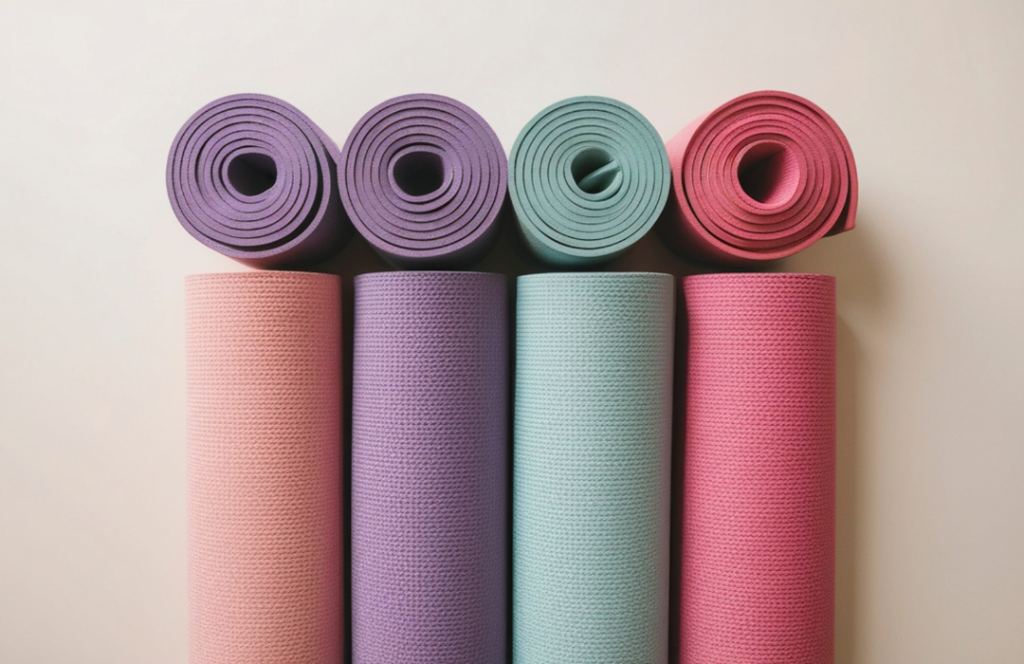
Eight rolled yoga mats in pink, purple, mint and coral — the same mat in every colour, rolled ends showing the foam layers.
The material is the same CR neoprene foam sheet we use across our wetsuits and sports supports — see our ultimate guide to neoprene sheets for how the foam is made. We make custom neoprene yoga mats in our own factory, from foaming to the finished mat, in SBR neoprene foam with a smooth or textured surface. Bulk buyers are yoga brands, studios, pilates chains and corporate gift buyers. A printed mat turns a basic accessory into a branded product, and one size range covers a whole customer base.
How Thick Should the Mat Be?
5–7 mm is the sweet spot for most buyers. Standard yoga mats run 3–6 mm thick, and neoprene mats sit at the cushioned end of that range. Below 4 mm, the mat is a travel mat — light and easy to roll, but your knees feel the floor in kneeling poses. Above 8 mm, the mat gets heavy, hard to roll tight, and wobbly in balance poses. For most studio and home use, 5–7 mm gives the best balance of cushion and stability.
| Use | Thickness | Why |
|---|---|---|
| Travel, gentle yoga | 3–4 mm | Lightest to carry, best feel for balance |
| Daily studio yoga | 5–6 mm | Best balance of cushion and stability |
| Restorative, pilates, bad knees | 7 mm | Most cushion for knees and elbows |
| Outdoor, exercise classes | 6–8 mm | Extra padding on hard ground |
Our factory splits foam from 1.5 mm to 45 mm, so any thickness is possible — but for yoga mats we use a soft SBR grade. Our SBR 5–7° foam is our soft grade for mats and gloves: tensile strength 247 kPa and elongation 199% on its technical data sheet. That stretch is what lets the mat roll tight without cracking and spring back flat when you unroll it. See our neoprene sheet thickness guide for how to pick the right mm for any product.
Thickness is only half the story. The foam must be closed-cell. Open-cell foam is softer and cheaper, but it absorbs sweat and stays damp, and it tears more easily. Ask your supplier which foam they use — and ask for the data sheet, not just a claim.
Grip: What Keeps You From Slipping?
Texture beats material — an embossed or shark-skin surface grips when smooth rubber slides. A smooth neoprene surface is fine for a dry class, but once your hands sweat, a smooth mat gets slippery. A good yoga mat has a textured top — an embossed pattern or a shark-skin finish — so your hands and feet stay put in Downward Dog. Our embossed neoprene sheets add a shark-skin texture for grip, and the same finish works on a mat. Our factory's fitness range already uses 7 mm shark-skin mats for pilates, where grip matters most.
Sweat is the real test. Closed-cell neoprene does not absorb sweat, so the surface stays the same wet or dry — but sweat still sits on top of the mat. A textured surface breaks up that sweat film, so your hands grip instead of sliding. A mat with no texture and no test data is a guess, not a specification. There is no EN or ASTM standard that rates yoga mat slip resistance, so ask your supplier how they test grip — a wet-hands test on a real mat tells you more than any claim.
Breathability matters too in a hot class. A solid mat traps heat under your body. Our perforated foam punches clean holes through the material so air passes through — the same idea we use in sports braces. For a hot yoga mat, ask about a perforated or breathable build.
What Size Fits You?
Order 183 × 61 cm unless you are under 170 cm or over 185 cm tall. The factory standard for yoga mats is 183 cm long and 61 cm wide (72 × 24 inches). The older US retail standard is 173 × 61 cm (68 × 24 inches). That 10 cm of extra length is the difference between your feet staying on the mat in a full stretch and hanging off the end. Width is 61 cm on almost every mat — it is slightly wider than the average person's shoulders, and it fits the space between mats in a crowded class.
| User Height | Length | Width | Best For |
|---|---|---|---|
| Under 170 cm | 173 cm | 61 cm | Compact, lighter to carry |
| 170–185 cm | 183 cm | 61 cm | Factory standard, most orders |
| Over 185 cm | 183–200 cm | 61–68 cm | Extra length and width, hot yoga |
If you sell to studios, the 183 × 61 cm mat is the volume product — it fits every adult and stacks neatly on a shelf. If you sell to tall practitioners or hot yoga studios, add the wider 183 × 68 cm option. Tell your supplier who the mat is for, and the size follows from that. Our fitness equipment range covers the mats and supports we make for gyms and studios.
Waterproof and Washable: How to Clean a Neoprene Mat
Rinse, soap, air dry — no heat. Rinse the mat under a tap or wipe it with a damp cloth, then wash it with mild soap and cool water. Hang it up to air dry, away from direct sun. Do not machine wash and do not tumble dry: heat damages the foam and shrinks the fabric face. Do not leave it in direct sun for days — UV ages neoprene faster than anything else.
The foam is waterproof. The mat as a whole is water-resistant. Closed-cell neoprene does not absorb water — sweat and spills bead and run off the surface. Our waterproof vs water-resistant guide explains the difference: the foam blocks water, but the seams and the edges let water in if the mat sits in a puddle. A neoprene mat dries faster than a PVC mat because the foam holds no water — only the fabric face gets wet. A rinsed mat is dry enough to use again in a few hours.
Check the safety labels too. The fabric face should carry OEKO-TEX Standard 100 certification, which tests textiles for harmful substances — see the Oeko-Tex standard reference. Our foam is RoHS and REACH compliant, which limits hazardous substances in the material. A mat with no test data is a guess, not a specification.
Printing and Custom Colours
Print on the fabric face, not on the foam. Neoprene yoga mats take full-colour sublimation printing on the fabric face — logos, patterns, alignment lines, even photos. A printed alignment line helps beginners place their hands and feet, and it is the feature buyers notice first in a photo. If the mat must match a brand colour, ask for Pantone matching — our colour matching and printing guide explains how we match Pantone colours and print full-colour designs.
Send your artwork as a vector file if you have one. A low-resolution JPEG prints blurry at full size. Tell us the mat size, the thickness, the print area, and the quantity — and whether you need a single design or a different print per colour. We accept low minimum order quantities for custom brand runs, so a small studio can order 100 pieces, not 10,000.
Your Trusted Custom Neoprene Yoga Mat Manufacturer
Stop buying plain mats that slip when wet, flatten in a month, or tear at the edges. We are a specialized custom neoprene factory making yoga mats, pilates mats, and exercise mats for brands worldwide.
When you partner with our factory for custom OEM mats, you get 3–8 mm closed-cell neoprene, textured grip surfaces, standard 183 × 61 cm and custom sizes, Pantone-matched colours, and full-colour print.
Do you want to launch a branded line of neoprene yoga mats? We accept custom OEM orders with full branding options, tailored sizes, and low minimum order quantities.
- True 5–7 mm closed-cell neoprene, cushioned and waterproof.
- Textured grip surface — embossed or shark-skin finish that stays non-slip when wet.
- Low Minimum Order Quantities (MOQ) for custom brand runs.
Learn more about our OEM production capabilities on our official website: https://source.neoprenecustom.com
Ready to design a custom yoga mat? Contact our team directly: kevin@neoprenecustom.com
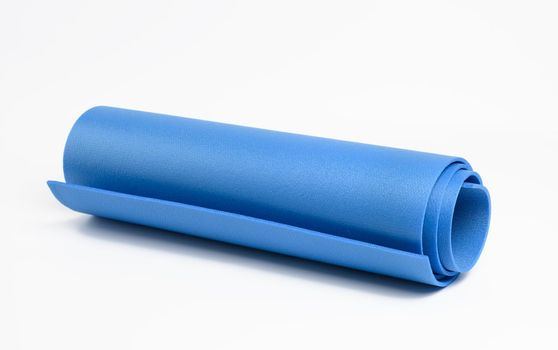
A rolled blue neoprene yoga mat — the smooth matte rubber surface and the foam layers at the rolled edge.
Frequently Asked Questions (FAQ)
Q: What size yoga mat should I order?
A: 183 × 61 cm is the factory standard — 72 × 24 inches. The older US retail standard is 173 × 61 cm. Order 183 cm unless your customers are under 170 cm tall, then 173 cm is enough.
Q: How thick should a neoprene yoga mat be?
A: 5–7 mm is the sweet spot for most buyers. Below 4 mm your knees feel the floor; above 8 mm the mat gets heavy and wobbly in balance poses. For restorative yoga and pilates, 7 mm gives the most cushion.
Q: Are neoprene yoga mats slippery when wet?
A: No — a textured neoprene mat stays non-slip when wet. The embossed or shark-skin surface breaks up the sweat film, so your hands grip instead of sliding. A smooth mat with no texture is slippery once your hands sweat.
Q: How do I clean a neoprene yoga mat?
A: Rinse it under a tap or wipe it with a damp cloth, wash with mild soap and cool water, and air dry away from sun and heat. Do not machine wash or tumble dry — heat damages the foam. A rinsed mat is dry enough to use again in a few hours.
Q: How can we order custom colours and logos?
A: Send your mat sizes, thicknesses, Pantone colours, and logo file to kevin@neoprenecustom.com for a quotation. We print the full-colour design on the fabric face of the mat.