
Custom Neoprene Sunglass Cases: A Simple Buying Guide
A custom neoprene sunglass case is a soft, padded pouch made from stretchy neoprene foam. It keeps your sunglasses safe from scratches, dust, and small bumps, and it folds flat when empty. Most cases are made from SBR neoprene, with a zipper or a slip-in opening, and come in any size, colour, and print.
This guide explains what a sunglass case does, how to pick thickness and size, and how to order one with your own colours and logo.
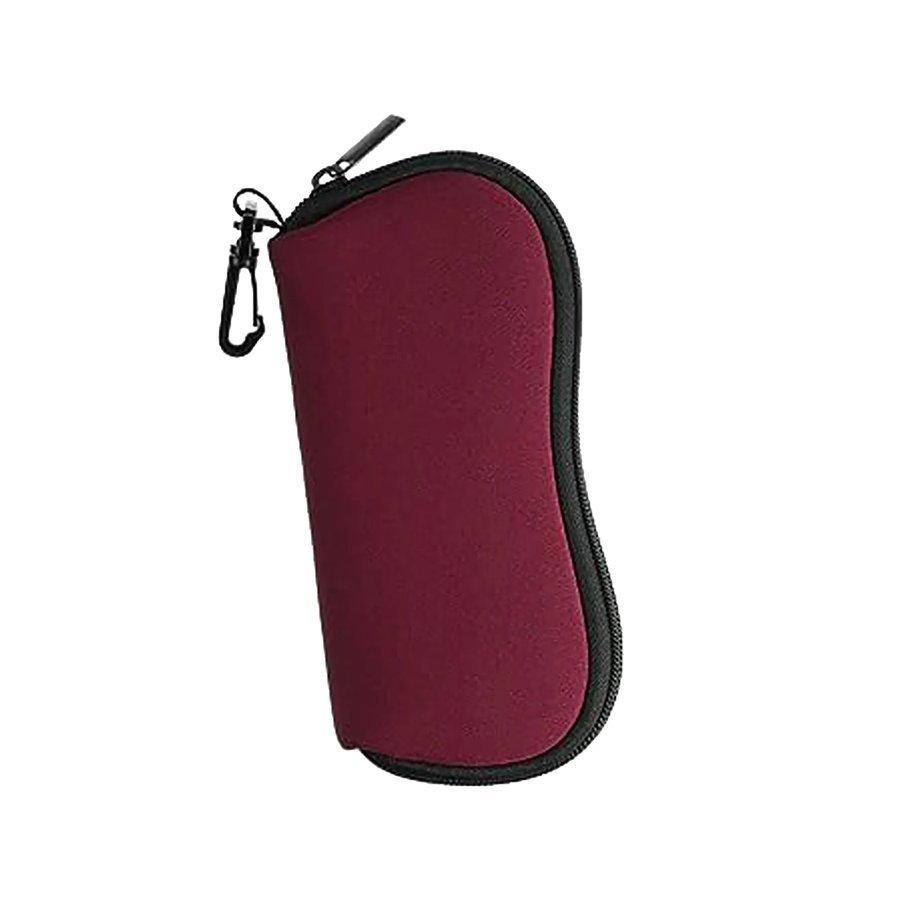
A maroon custom neoprene sunglass case — soft matte face, full-length zipper, and a clip that hooks onto a bag or belt.
What Is a Neoprene Sunglass Case?
A sunglass case is a small soft pouch that holds one pair of glasses. It covers the lenses and the frame, and it does three simple jobs. First, it stops the lenses from getting scratched in a bag or a pocket. Second, it keeps dust and sand off the glass. Third, its soft padding takes the shock when the case is dropped or squeezed.
Most cases are made from SBR neoprene foam, the soft, light grade that keeps the price down for everyday goods, while CR neoprene foam sheet is the premium option when you want better heat resistance and a longer life. The foam is often laminated with fabric on one or both faces. The fabric gives the case its colour and a soft feel. The foam gives it stretch, cushion, and light padding. See our ultimate guide to neoprene sheets for how the foam is made.
A neoprene case is not a hard shell, and it will not stop a heavy weight from crushing the glasses inside. What it does well is daily protection: keys and coins in the same bag cannot reach the lenses, and a short drop onto a desk or floor is no problem.
Why Neoprene Protects Lenses So Well
Neoprene foam is full of tiny sealed air cells. When something presses on the case, those cells squeeze and spread the force. The lens never feels one sharp point of pressure. That is why a soft pouch can protect glass better than a thin cloth bag, even though it looks simple.
The fabric face helps too. It is smooth, so it will not scratch coated lenses when you slide the glasses in and out. Many cases also have a soft inner lining that wipes the lens a little each time the glasses go in, and it stops dust from settling on the glass.
Neoprene also handles water well. A splash or a light rain will not soak through at once, and the case dries fast in the air. That makes it a good pick for the beach, the boat, and the pool side, where a leather or paper case would soon look tired. See our guide on waterproof vs water-resistant neoprene to know what the material can and cannot do in the rain.
How Thick Should the Neoprene Be?
Thickness is the first choice to make. A thicker case pads better and holds its shape. A thinner case feels lighter and folds flatter in a pocket. There is no single best choice. It depends on how the case will be used.
| Thickness | Feel | Padding | Best for |
|---|---|---|---|
| 2 mm | Light and flat | Basic scratch cover | Slip-in pouches, giveaways, tight pockets |
| 3 mm | Soft and padded | Good daily cover | Most cases, the common choice |
| 5 mm | Thick and firm | Strong bump cover | Travel, sports, rough bags |
For most brands, 3 mm is the safe middle ground. It pads well, still folds flat, and keeps the case light. See our neoprene sheet thickness guide for how to pick the right mm for any product. For a soft, light case we use a soft SBR grade — our SBR 5–7° foam is the soft grade for sewn accessories. If the case is a free gift with a pair of sunglasses, 2 mm keeps the cost down. If it will travel in a sports bag, 5 mm is worth the extra bulk.
Zipper, Slip-In, or Clip-On?
The opening is the second choice to make. A zipper case closes all the way around, so the glasses cannot fall out and dust cannot get in. It is the safest pick for a bag or a car. A slip-in pouch has no zipper at all. You just slide the glasses in from the top. It is faster to use and cheaper to make, and it works well for a desk drawer or a jacket pocket.
Many cases add a clip. A small plastic carabiner or a metal lobster clasp hangs from the zipper pull and hooks onto a belt loop, a backpack strap, or a handbag. That keeps the case where you can reach it, and a clip costs little, so most of our custom orders include one.
For a first custom order, most brands start with a zipper case and a clip. It is easy to use, easy to sell, and it fits most standard sunglasses. A slip-in pouch suits a simple gift or a low-cost promo, where speed and price matter more than full closure.
Size and Fit: One Size or Made to Measure?
Most sunglass cases are one size. A standard case is about 16 to 18 cm long and 7 to 8 cm wide, and it fits most adult sunglasses, from slim fashion frames to medium sport frames. The stretchy neoprene gives a little, so a case that feels snug on day one soon fits just right.
Big frames need a bigger case. Wrap-around sport sunglasses and wide fashion frames each need their own size. Before you order, measure the glasses: length from one temple tip to the other when folded, and width across the widest part of the frame. Tell the maker both numbers before you order. A case that is too tight will press on the lenses. A case that is too loose will let the glasses slide around inside.
You can see more neoprene pouches and cases on our source site, where we list cases, sleeves, and bags made from the same material. If you need a special size, such as a long case for ski goggles or a flat case for reading glasses, we can cut it to order.
Colours, Logos, and Printing
A sunglass case is a good place for a brand. The flat face takes a logo well, and the case travels with the buyer, so the brand is seen again and again. Black is the most popular colour, but bright colours stand out in a shop: red, blue, green, and pink all print well on neoprene.
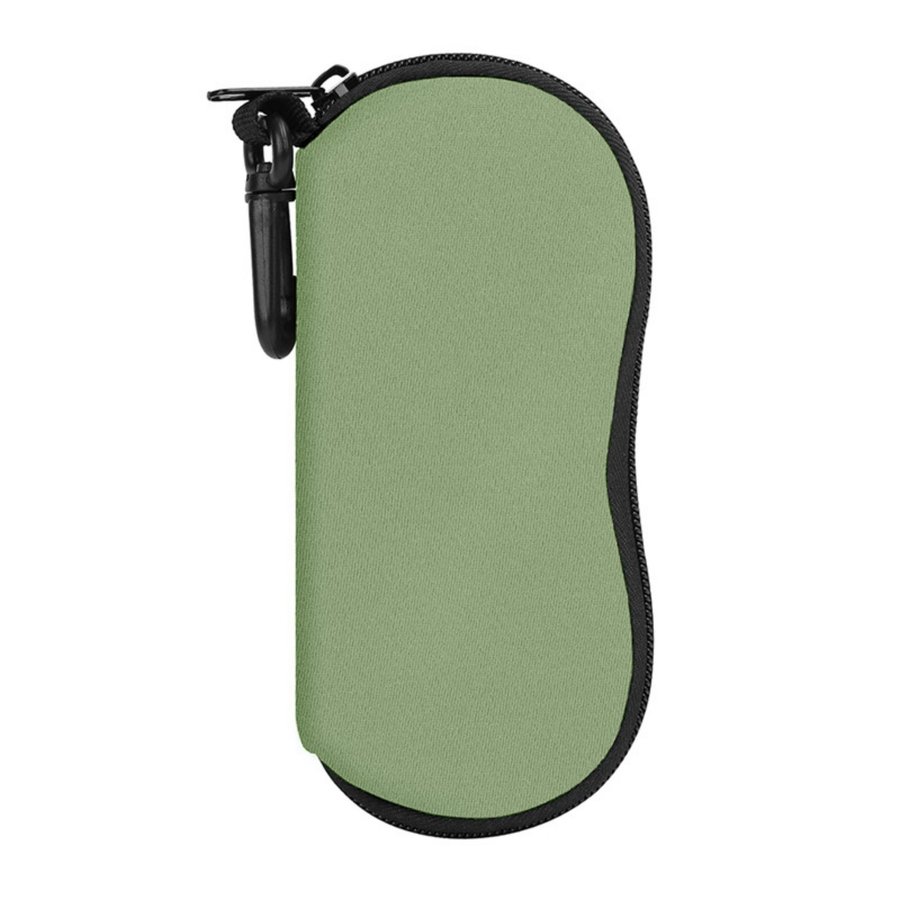
A light green custom neoprene sunglass case — the fine fabric weave shows clearly, and the flat face is ready for a logo or print.
There are three common ways to put a logo on a case. Screen printing is the cheapest for one or two colours, and it works well for a simple logo or a short line of text. Heat transfer prints a full-colour picture, such as a photo or a bright pattern, onto the fabric. Embroidery gives a raised, lasting mark, but it suits small logos best. See our guide on custom neoprene color matching and printing for how each method looks and lasts.
When you send your logo, send a vector file if you have one. It keeps the lines sharp at any size. If you only have a photo, send the largest file you have. Tell us the print size and where it should sit — centre front is the usual spot — and we will send a proof before we start.
Your Trusted Custom Neoprene Sunglass Cases Manufacturer
We are a custom neoprene manufacturer in Shenzhen, China. We make sunglass cases to order in any size, thickness, colour, and print. Most of our cases use SBR neoprene foam with a fabric face, and CR is the premium option when you need better heat resistance and a longer life. We cut, sew, and print in our own workshop, so we can match your sample and your artwork.
To start an order, send us your size, thickness, colour, and logo. Tell us how the case will be used, and we will suggest the best foam and closure. You can see more of our work on www.neoprenecustom.com and on our source site. To order, contact us at kevin@neoprenecustom.com or visit www.neoprenecustom.com.
Frequently Asked Questions (FAQ)
Q: Will a neoprene case fit my sunglasses?
A: Most standard adult sunglasses fit a standard case, about 16 to 18 cm long and 7 to 8 cm wide. Measure your folded glasses first. If they are wider than 8 cm, or they are wrap-around sport frames, ask for a larger size.
Q: What thickness should I choose?
A: For most uses, 3 mm is the safe pick. It pads well and still folds flat. Choose 2 mm for a light gift pouch, and 5 mm for travel or sports bags where the case will get knocked around.
Q: Is a neoprene sunglass case waterproof?
A: It resists splashes and light rain, but it is not fully waterproof. Water can get in through the zipper and the seams if the case is soaked. Keep it out of deep water, and dry it in the air after it gets wet.
Q: Can the case be washed?
A: Yes. Wash it by hand with mild soap and cool water. Press it gently in the water. Do not scrub hard. Rinse it well until the soap is gone, then air-dry it in the shade. Do not use a dryer or dry it in direct sun.
Q: Can I print my logo on the case?
A: Yes. We print logos by screen printing, heat transfer, or embroidery. Send a vector file if you have one, and tell us the print size and position. We send a proof before we start.
Q: How can we order custom colours and logos?
A: Send your size, thickness, colour, and logo to kevin@neoprenecustom.com. We will confirm the foam, the closure, and the print method, then send a sample before the full order.