
Custom Neoprene Golf Club Covers: A Simple Buying Guide
A good custom neoprene golf club cover is a soft, stretchy sleeve made from closed-cell neoprene foam that slips over a club head, stops irons from clashing, and keeps drivers and putters free of dings and scratches. It fits snug, wipes clean, and we make it to order in any size, thickness, and colour.
This guide explains what a golf club cover does, how to pick thickness and type, and how to size, clean, and order one.
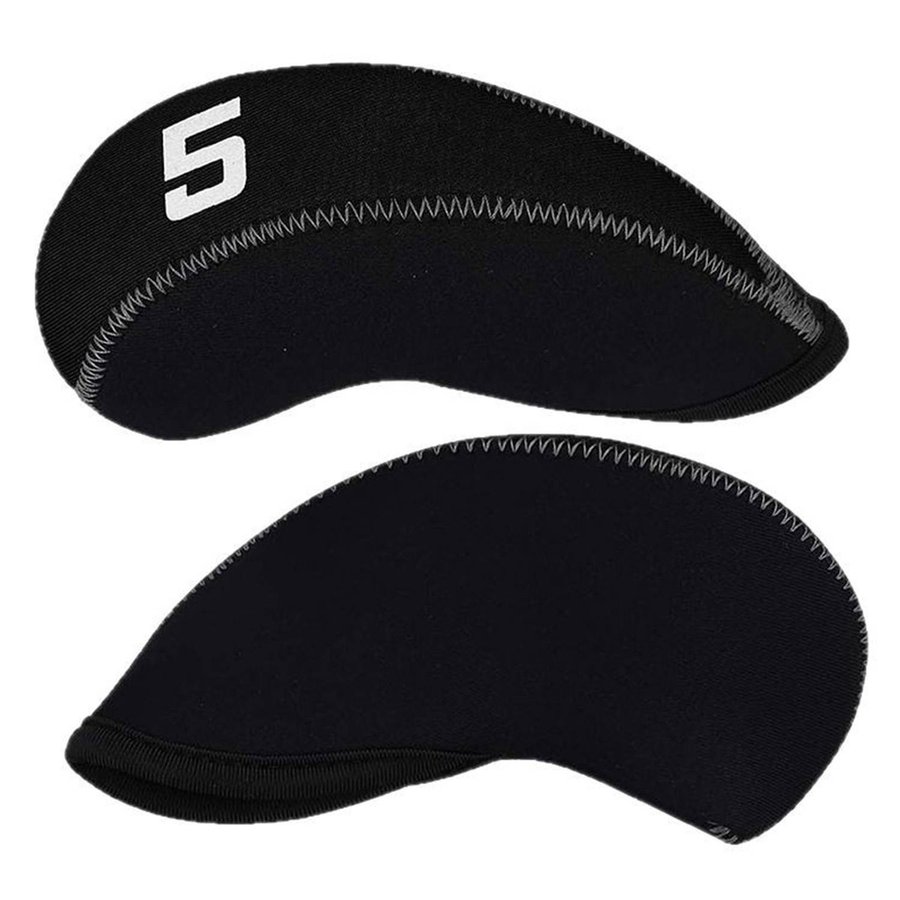
A single black custom neoprene golf iron cover — the smooth matte face, grey zigzag stitching, and printed club number on white.
What Is a Neoprene Golf Club Cover?
A golf club cover is a soft sleeve that slips over a club head. It does three simple jobs. First, it stops irons from clashing and chipping each other in the bag. Second, it keeps dirt, rain, and grass off the club face. Third, it protects the paint and finish on drivers and putters, so the clubs look new for longer.
Most golf club covers are made from SBR neoprene foam, the soft, light grade that keeps the price down for everyday golf gear, while CR neoprene foam sheet is the premium option for better heat resistance and a longer life. The foam is laminated with fabric on one or both faces, giving it colour and a soft feel, plus stretch, cushion, and light padding. See our ultimate guide to neoprene sheets for how the foam is made.
A full set usually has three kinds of covers. Iron covers are slim sleeves, one for each iron. Wood covers are wider and taller, made for drivers, fairway woods, and hybrids. Putter covers are short and shaped to fit a blade or mallet putter. The right mix depends on the clubs in the bag.
How Thick Should the Neoprene Be?
Thickness is the first choice to make. A thicker cover cushions more and holds its shape longer. A thinner cover feels lighter and slides on and off faster. There is no single best choice. It depends on how the clubs travel and how much protection they need.
| Thickness | Feel | Protection | Best for |
|---|---|---|---|
| 2 mm | Light and slim | Light protection | Iron covers, carry bags |
| 3 mm | Snug and soft | Balanced protection | Most covers, the common choice |
| 5 mm | Thick and firm | Heavy protection | Drivers and woods, travel bags |
For most golfers, 3 mm is the safe middle ground. It is thick enough to stop chips and still light to carry. See our thickness guide for how to pick the right mm. For a soft, light cover we use our SBR 5–7° foam, the soft grade for sewn accessories. If you walk with a light carry bag, 2 mm feels lighter. If you fly with your clubs, 5 mm is worth the extra bulk.
Think about the bag too. A crowded stand bag needs slim covers that slide past each other. A cart bag with wide dividers has room for thicker covers. Always test the cover on your own clubs before you order in bulk.
Iron Covers, Wood Covers, or Putter Covers?
Iron covers are the most common. Each one is a slim sleeve with an elastic opening at the bottom and a number printed on the front, so you can find the right club fast. They stop the irons from knocking together, which is what causes most chips and nicks.
Wood covers are bigger. A driver cover needs room for a 460cc head, and a fairway wood cover needs a long neck to fit over the shaft. Many wood covers add a zipper or a long sock so the cover stays on during travel. Some have a clear window at the tip so you can read the club number without taking the cover off.
Putter covers are short and shaped. A blade putter needs a slim, flat cover. A mallet putter needs a wider cover with room for the back weight. The foam itself does not soak up water — our waterproof vs water-resistant guide explains the difference between the foam and the finished cover. If you are not sure which types to order, start with a full iron set and add driver and putter covers as a second step.
How to Pick the Right Size and Fit
A golf club cover should fit snug, not tight. A cover that is too tight is hard to pull off on the course. A cover that is too loose will fall off in the bag.
Measure your clubs before you order. Measure the width of the largest club head the cover must fit, and the length from the top of the head to the hosel where the shaft starts. Compare both numbers with the size chart.
Here are a few fit tips that work for most golfers:
- Try it on the club. Slip the cover on and off a few times. It should slide on with one hand and stay put when you turn the bag upside down.
- Check the number. The number should face out when the club sits in the bag, so you can read it without pulling the club out.
- Test the elastic. Pull the opening wide and let go. It should snap back flat. Elastic that stays stretched will not hold the cover on.
- Pull it off fast. You will take the cover off on every shot, so it must come off in one smooth pull, even with wet hands.
If you fall between two sizes, pick the larger cover and let the elastic take up the slack. A cover that is a little roomy still protects the head. A cover that is too small will split at the seam.
Colours, Numbers, and Logos
Black is the most popular colour for golf club covers, but many golf shops add a bright trim colour so their rental sets are easy to spot. A blue or red trim also makes it easy to tell one player's clubs from another's in a shared bag.
Numbers matter as much as colours. Iron covers are printed with 3, 4, 5, 6, 7, 8, 9, P, S, and A, so you can grab the right club without checking the sole. A clear window at the tip shows the number even when the print wears. Wedges often get their loft printed instead — 48°, 52°, 56°, and 60°.
Next, think about the logo. A printed logo on the front is the most common option. An embroidered logo looks smarter and lasts longer. Send your logo file with your colour choices and we will match it before production.
How to Clean and Care for Your Golf Club Covers
Grass, sand, and sweat are hard on neoprene. Shake the covers out after every round. Brush off dried mud from the seams before it grinds into the fabric.
Wash them by hand with mild soap and cool water. Do not use bleach. Do not put them in a washing machine. Do not dry them in direct sun or with heat. Heat can make neoprene stiff and crack over time. Air-dry them in the shade, with the opening facing down so the water can run out.
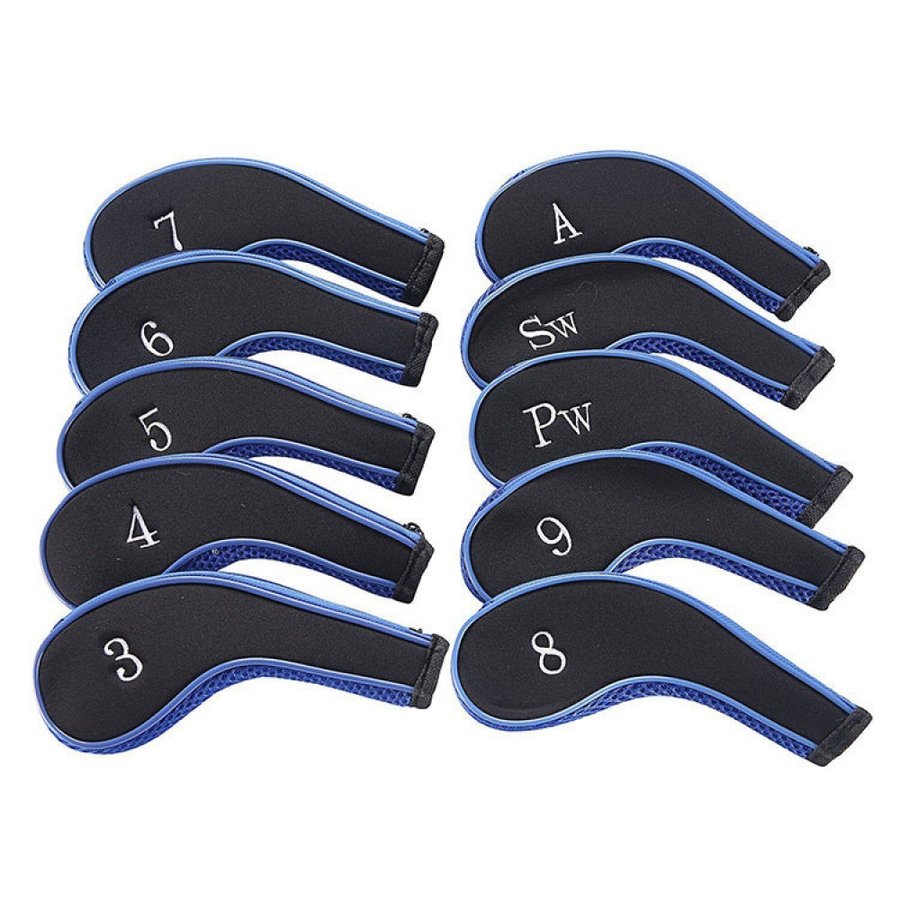
A full set of ten black and blue custom neoprene golf iron covers — the numbered fronts, blue trim, and mesh side panels on white.
Check the elastic and seams before each round. Store the covers in a dry place, away from sharp tees and divot tools. You can see more neoprene golf gear on our source site, where we list covers, bags, and other soft gear made from the same material.
Your Trusted Custom Neoprene Golf Club Covers Manufacturer
A custom order starts with a few simple choices. First, pick the thickness and the type: 2 mm, 3 mm, or 5 mm, iron covers, wood covers, or putter covers. Then pick the closure: elastic opening, zipper, or long sock. Then pick the colour. Black is the most popular, but many golf shops add a bright trim colour so their sets stand out.
Next, think about the logo. A printed logo on the front is the most common option. A woven label sewn on the side looks smarter and lasts longer. Our colour matching and printing guide explains how we match Pantone colours and print designs on neoprene.
When you are ready, visit www.neoprenecustom.com and send your size list, colour choice, and logo file.
Learn more about our OEM production capabilities on our official website: https://source.neoprenecustom.com
Ready to design custom golf club covers? Contact our team directly: kevin@neoprenecustom.com
A good golf club cover is simple: soft neoprene, a snug fit, and a number you can read at a glance. Pick the right thickness, measure before you order, and rinse the covers after every round.
Frequently Asked Questions (FAQ)
Q: What thickness golf club cover do I need?
A: Use 5 mm for drivers and woods that travel by air. For most clubs, 3 mm is enough. For iron covers in a light carry bag, 2 mm feels lighter and slides on and off faster.
Q: Do I need covers for every club?
A: Irons benefit most, because they clash and chip each other in the bag. Add a driver cover and a putter cover too — those two heads cost the most to replace.
Q: How do I clean golf club covers?
A: Shake out grass and sand after each round. Hand wash with mild soap and cool water, rinse well, and air-dry in the shade. No bleach, no machine wash, no dryer.
Q: Will the covers fit my clubs?
A: Measure the widest club head and the length from the top of the head to the hosel, then compare both numbers with the size chart. If you fall between two sizes, pick the larger cover.
Q: Can I get my own logo and club numbers on the covers?
A: Yes. Most custom orders add a printed logo on the front and numbers for each iron. Send your logo file with your size and colour choices.
Q: How can we order custom colours and logos?
A: Send your cover sizes, Pantone colours, and logo file to kevin@neoprenecustom.com for a quotation.