
Custom Neoprene Gardening Gloves: Waterproof, Thorn-Proof and Easy to Clean
A good neoprene gardening glove is a 2–3 mm closed-cell neoprene glove with a textured grip palm and a cuff that keeps water and soil out. It stays dry through 2 hours of wet weeding, stops rose thorns, and rinses clean under a tap in under a minute. We make it to order in any size, colour and logo.
What Makes a Gardening Glove Neoprene — and Why It Beats Leather and Cotton
A neoprene gardening glove is made from closed-cell chloroprene rubber foam, laminated with fabric on one or both faces. The foam is full of tiny sealed gas bubbles. Water cannot get into closed cells, so the glove stays dry inside even when the outside is soaked. Leather soaks up water and goes stiff when it dries. Cotton soaks up water and stays wet for hours. Neoprene does neither.
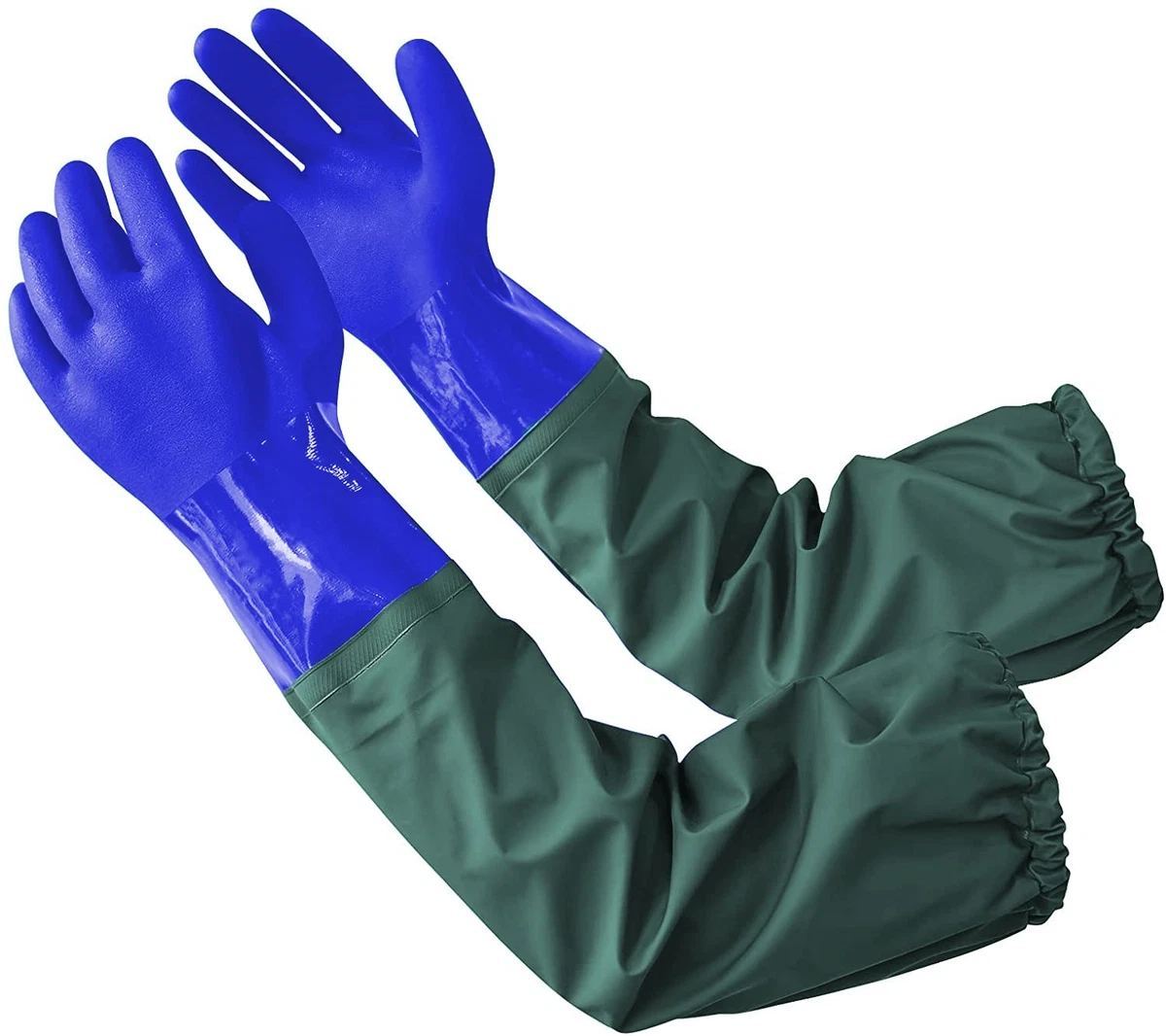
Long neoprene pond gloves — the blue rubbery hands stay dry while the green cuffs protect the forearms.
Neoprene is also flexible when wet. A leather glove gets stiff and hard to close into a fist after it dries. A neoprene glove bends the same wet or dry, so you can still grip a trowel or pull a weed after an hour in the mud. The material is the same CR neoprene foam sheet we use across our wetsuits and sports supports — see our ultimate guide to neoprene sheets for how the foam is made.
Bulk buyers are garden brands, pond supply shops, and corporate gift buyers. A printed glove turns a basic work glove into a branded product, and one size range covers a whole customer base.
How Thick Should the Neoprene Be?
2–3 mm is the standard. Most neoprene gardening gloves are listed at 2–3 mm. That thickness is a balance: thin enough to feel a seedling between your fingers, thick enough to stop a thorn. Below 2 mm, the glove is a splash guard, not protection — it keeps hands dry but a rose thorn goes straight through. Above 4 mm, the glove gets stiff and you lose the feel you need for planting and pruning.
Our factory splits foam from 1.5 mm to 45 mm, so any thickness is possible — but for garden gloves we use a soft SBR grade. Our SBR 5–7° foam is our soft grade for gloves: tensile strength 247 kPa and elongation 199% on its technical data sheet. That stretch is what lets the glove bend with your hand instead of fighting it. See our neoprene sheet thickness guide for how to pick the right mm for any product.
Thickness is only half the story. The foam must be closed-cell. Open-cell foam is softer and cheaper, but it absorbs water and stays damp, and it tears more easily. Ask your supplier which foam they use — and ask for the data sheet, not just a claim.
Waterproof or Just Water-Resistant? What the Glove Really Keeps Out
The foam is waterproof. The glove is water-resistant. Closed-cell neoprene does not absorb water — rain beads and runs off the surface. Our waterproof vs water-resistant guide explains the difference: the foam blocks water, but the seams and the cuff let water in if you push your hand deep into a pond or hold it under a tap.
For normal garden work — watering, weeding wet soil, washing pots — a short cuff with a snug elastic wrist keeps hands dry. For pond work, you need a long cuff that reaches the elbow, so water cannot run down inside the glove. The cuff is the weak point, not the foam. A glove with a loose wrist lets in more water in 5 minutes than the foam lets in all day.
Light rain and splashes are no problem. Standing water up to the wrist is fine with a snug cuff. But no stitched gardening glove is a diving glove — if you need to work with both hands under water for an hour, buy a sealed diving glove, not a garden glove.
Grip and Thorn Protection: The Palm Matters More Than the Back
Check the palm first. A smooth neoprene palm is slippery when wet. A good gardening glove has a textured palm — raised dots, an embossed pattern, or a rubberised grip print — so a wet trowel handle does not twist in your hand. Our embossed neoprene sheets add a shark-skin texture for grip, and the same idea works on a glove palm.
Thorn protection comes from the palm and the fingertips. Look for a reinforced palm — a second layer of neoprene or a tough fabric patch — and reinforced fingertips, because that is where thorns hit first. A single layer of 2 mm neoprene stops a light scratch. A 3 mm glove with a reinforced palm stops most rose thorns.
Glove makers test this under EN 388:2016, the European standard for protective gloves against mechanical risks. It rates abrasion, cut, tear and puncture on a scale — for example, puncture resistance is rated from level 1 to level 4. Ask your supplier for the EN 388 test result of the glove you are buying. A glove with no test data is a guess, not a specification. Breathability matters too on a hot day — our perforated neoprene sheets punch clean holes through the foam so air passes through, which helps when the glove is worn for hours.
Long Cuff or Short Cuff? Pick by the Job
Match the cuff to the job, not to the price. A short cuff is cheaper and cooler, but it leaves the wrist open. A long cuff costs more and runs warmer, but it keeps water and soil out of the sleeve:
| Job | Cuff | Thickness | Why |
|---|---|---|---|
| Light weeding, dry soil | Short cuff | 2 mm | Best feel for seedlings |
| Wet weeding, watering | Short cuff, snug wrist | 3 mm | Keeps water out of the wrist |
| Pond work, mud | Long cuff to elbow | 3 mm | Forearm stays dry |
| Roses, thorny shrubs | Short cuff, reinforced palm | 3 mm | Thorn protection first |
If you sell to pond keepers, the long cuff is the feature that matters most — it is the difference between a glove and a pond glove. If you sell to rose growers, the reinforced palm matters most. Tell your supplier who the glove is for, and the cuff and palm follow from that.
How to Clean and Dry Neoprene Gloves
Rinse, soap, air dry — no heat. Rinse the gloves under a tap to wash off soil, then hand wash in cool water with mild soap. Turn them inside out to clean the lining. Rinse again and hang them up to air dry, fingers down so water drains out. Do not machine wash and do not tumble dry: heat damages the foam and shrinks the fabric face. Do not leave them in direct sun for days — UV ages neoprene faster than anything else.
A neoprene glove dries faster than leather because the foam holds no water — only the fabric face gets wet. In normal indoor air, a rinsed glove is dry enough to wear again in about 2 hours. A leather glove takes a day or more. That is why a gardener who works every day can own one pair of neoprene gloves instead of three pairs of leather ones.
Your Trusted Custom Neoprene Gardening Glove Manufacturer
Stop buying plain gloves that soak through, tear at the fingertips, or fall apart after one season. We are a specialized custom neoprene factory making gardening gloves, pond gloves, and protective gear for brands worldwide.
When you partner with our factory for custom OEM gloves, you get 2–3 mm closed-cell neoprene, textured grip palms, reinforced fingertips, short or long cuffs, Pantone-matched colours, and full-colour print.
Do you want to launch a branded line of neoprene gardening gloves? We accept custom OEM orders with full branding options, tailored sizes, and low minimum order quantities.
- True 2–3 mm closed-cell neoprene, waterproof and flexible when wet.
- Textured grip palm and reinforced fingertips for thorn protection.
- Low Minimum Order Quantities (MOQ) for custom brand runs.
Learn more about our OEM production capabilities on our official website: https://source.neoprenecustom.com
Ready to design a custom gardening glove? Contact our team directly: kevin@neoprenecustom.com
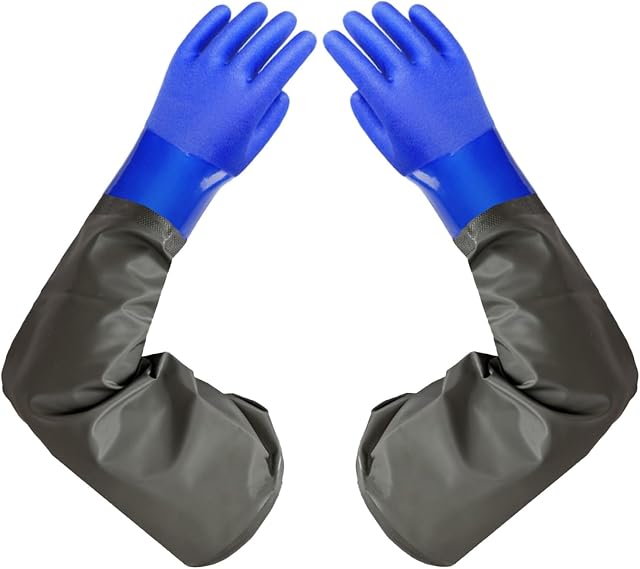
Blue and grey long gardening gloves — smooth rubbery hands for wet work, grey cuffs to keep soil out.
Frequently Asked Questions (FAQ)
Q: How thick should neoprene gardening gloves be?
A: 2–3 mm is the standard. Below 2 mm a rose thorn goes through; above 4 mm the glove gets stiff and you lose the feel for planting. Our factory splits foam from 1.5 mm to 45 mm, so any thickness is possible.
Q: Are neoprene gardening gloves waterproof?
A: The foam is waterproof — closed cells do not absorb water. The glove as a whole is water-resistant, because the seams and cuff can let water in. A snug wrist keeps hands dry for normal watering and wet weeding.
Q: Can thorns poke through neoprene gloves?
A: A 3 mm glove with a reinforced palm stops most rose thorns. A single layer of 2 mm neoprene stops scratches but not a hard thorn. Ask your supplier for the EN 388:2016 puncture rating — it is rated from level 1 to level 4.
Q: How do I clean neoprene gardening gloves?
A: Rinse under a tap, hand wash in cool water with mild soap, and air dry fingers-down. Do not machine wash or tumble dry — heat damages the foam. A rinsed glove is dry enough to wear again in about 2 hours.
Q: How can we order custom colours and logos?
A: Send your sizes, Pantone colours, and logo file to kevin@neoprenecustom.com for a quotation. We print the full-colour design on the fabric face of the glove.