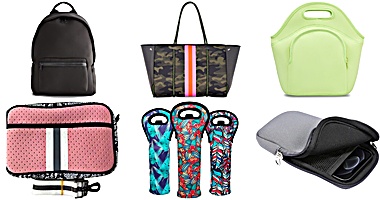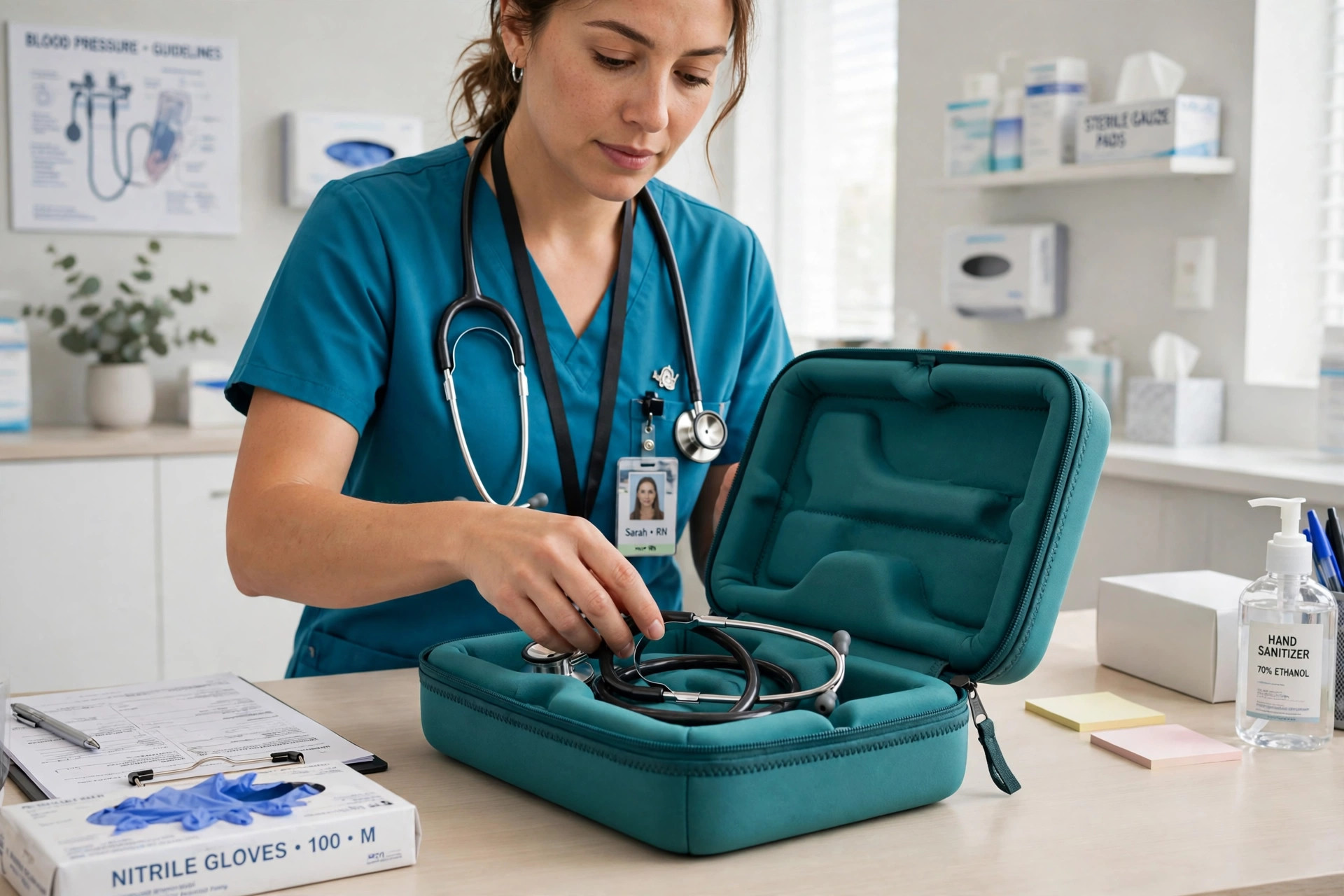
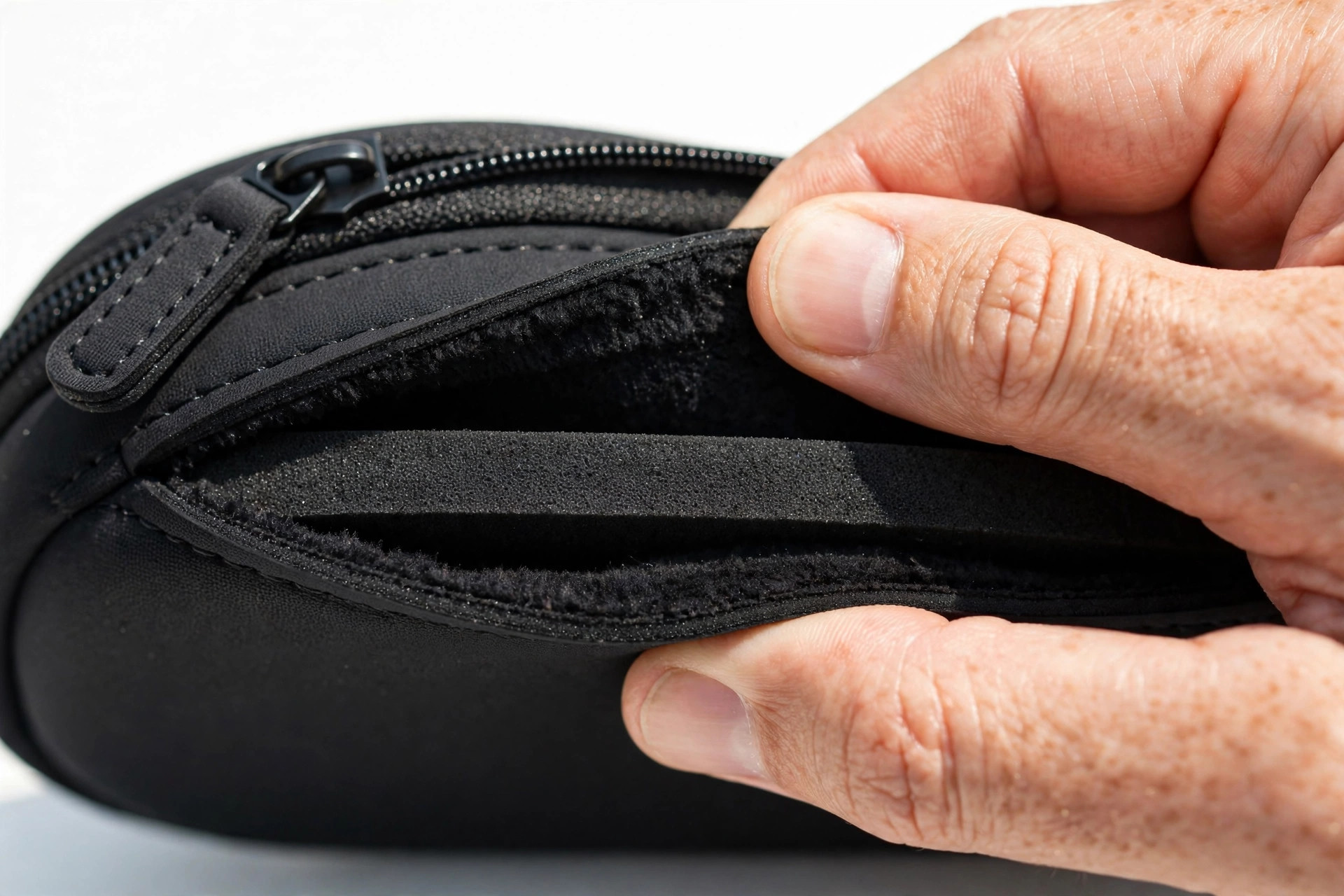
A neoprene stethoscope case is a soft protective carry case cut and stitched from laminated neoprene (SBR, SCR or CR foam + fabric), shaped to hold a coiled stethoscope and closed with a zip. The foam wall is the protection: it cushions the chestpiece, headset and tubing against the knocks of a kit bag, a locker and a commute, and it gives an instrument that is usually carried loose a clean, padded home of its own. Send us the stethoscope models your case must fit, and we will confirm the best material and thickness.
We manufacture custom neoprene stethoscope cases in our own factory in China, where we have made neoprene products for 15 years. We laminate the foam, cut the panels and stitch the finished cases under one roof, so a change to the shape, the lining or the print can be checked on a sample — fitted with the actual instrument — before bulk production starts.
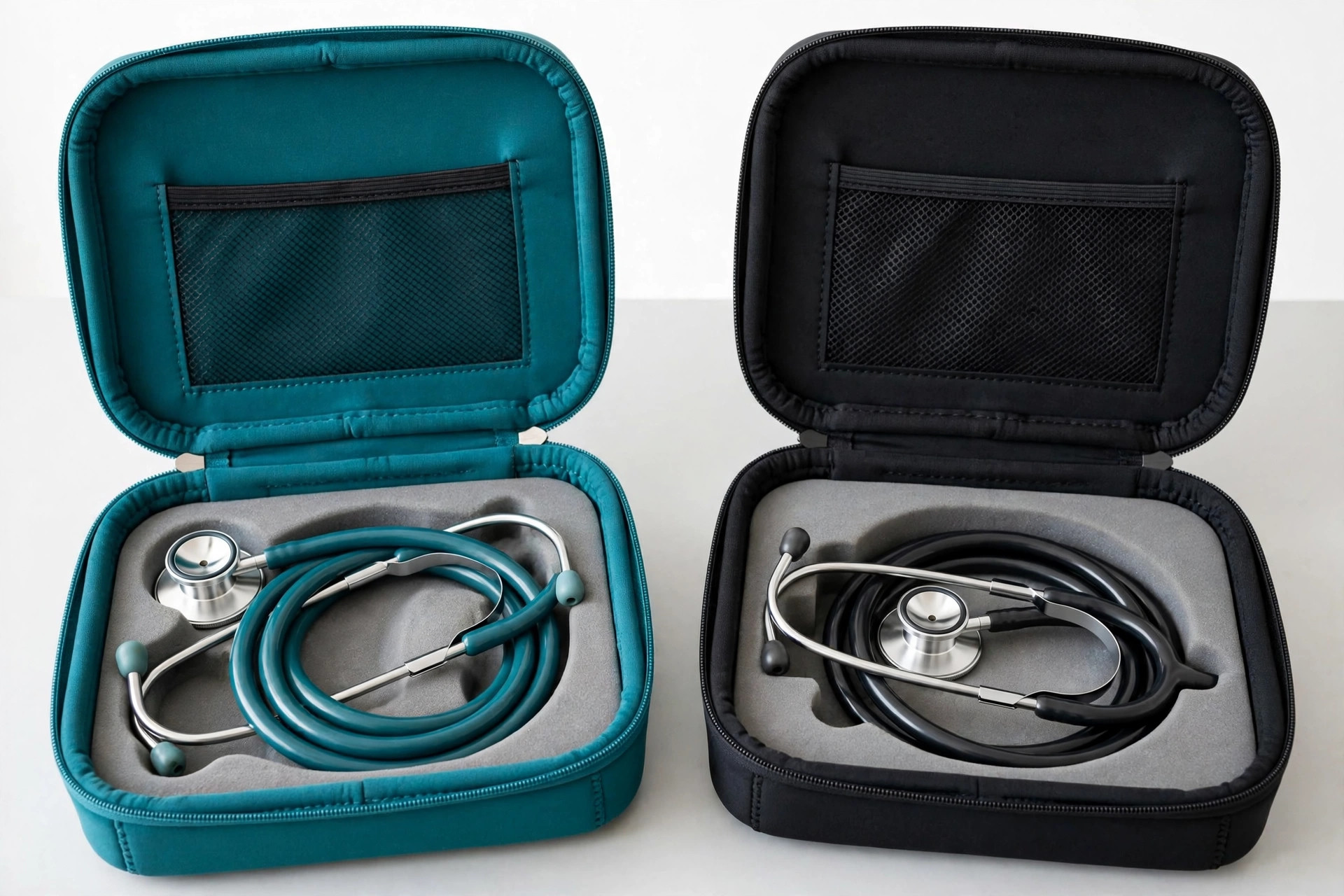
A stethoscope spends its working life being carried, and most of that carrying is unprotected: coiled into a coat pocket, dropped into a tote with keys and a phone, hung in a locker by its tubing. The parts that suffer are the parts a case covers — the chestpiece face gets scratched, the earpieces get bent against hard objects, and the tubing picks up nicks and kinks from everything else in the bag. A padded neoprene case ends that: the instrument coils into a foam-lined space of its own, with a mesh pocket in the lid for spare earpieces and a name card.
The shape follows the instrument. Standard stethoscopes coil into a compact round or oval case; longer cardiology models need a larger footprint and a deeper lid. Inside, the soft lining keeps the chestpiece face away from abrasion, and the case is cut so the tubing coils at its natural radius rather than being forced into a tight bend. It is the same fitted-case thinking we use on our neoprene blood pressure monitor cases — a padded skin shaped around one instrument and its accessories.
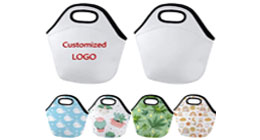
For medical supply brands and nursing schools, the outside is identity. The fabric face takes screen print and sublimation, so a school crest, a hospital programme logo or a brand's colours sit on every case issued; cases in cohort colours — one colour per intake year or per department — make a class set easy to hand out and easy to keep track of. A name-label panel on the lid is a common addition for exactly that reason.
5 mm is the most popular thickness for neoprene stethoscope cases. It gives the foam wall enough body to cushion the chestpiece and headset against the contents of a kit bag, while keeping the case light and slim enough to ride in that same bag every day — which is why most of the stethoscope cases we make are cut in 5 mm. For the full range, see our neoprene sheet thickness guide.
| Thickness | Best for | Trade-off |
|---|---|---|
| 3 mm | Light slip pouches where the job is keeping the instrument separate and scratch-free in a pocket or tote | Least knock cushioning; a separator more than a case |
| 5 mm | The standard case — real cushioning around chestpiece and headset, still slim in the bag | Best balance of protection, size and weight for daily carry |
| 7 mm | Maximum padding for cases that travel in checked luggage, field kits and shared equipment pools | Bulkiest option; takes more room in the kit bag |
Give us the instrument, not just a case size. The model name, or the coiled diameter and the tubing length, lets us cut the case so the stethoscope coils at its natural radius and the chestpiece sits clear of the zip. Tell us whether spare earpieces, a name card or a second instrument ride in the lid pocket, and whether the case is a zip case or a slip pouch.
SBR is the standard choice for most stethoscope cases, because the firmer, lighter, lower-cost foam does everything a case that lives in kit bags and lockers asks. CR (chloroprene rubber) earns its higher price on premium lines, where its softer hand-feel and elasticity suit a case that is opened and closed many times a day, every day, for years. SCR, a blend of the two, sits between them where a brand wants a softer feel than SBR at a lower cost than CR.
The figures behind the two foams show why they feel different: our CR foam measures 3–5° Shore C hardness, 276.32 kg/m³ density, 860 kPa tensile strength and 550% elongation, while our SBR foam measures 10–15° Shore C, 158.34 kg/m³, 256 kPa and 185%. CR is the softer, springier foam; SBR is the firmer, lighter one. In a case, that means CR walls feel softer around the instrument and spring back from being crushed in a full bag, while an SBR case holds a crisper shape on the shelf.
| SBR | CR | |
|---|---|---|
| Cost | Lower cost; the standard for most stethoscope cases | Costs more than SBR |
| Durability in daily use | Good; suits standard-issue and student case programmes | Better flex life; the choice for premium lines handled all day |
| Feel | Firm and light, holds a crisp case shape | Soft and elastic, springs back from being crushed |
For sizes, shapes and printing, see our custom neoprene stethoscope cases product page. The matching case for the rest of a starter kit is our neoprene first aid kit bags.
Medical supply brands — a branded case sold with the instrument or as the step-up accessory, cut to your models' dimensions.
Nursing and medical schools — cohort cases printed with the school crest and colour-coded by intake year, issued with the student kit.
Hospitals and clinic groups — standard-issue cases with department colours and a name-label panel, so shared instruments come back to the right place.
Retailers and e-commerce sellers — mixed colours and models in one order, packed ready for the shelf with a barcode label.
When neoprene is NOT the right choice
Tell us which of these your stethoscope cases need, and we will build the sample to your drawing.
Will the case fit my stethoscope model?
Yes — the case is cut to the instrument, not to a standard size. Send the model name or the coiled diameter and tubing length, and we will check the fit on a sample before bulk production.
Does the case protect the chestpiece and tubing?
It cushions them against the everyday knocks of a kit bag, locker and commute — the foam wall and soft lining keep the chestpiece face, headset and tubing away from hard, sharp neighbours. It is a protective carry case, not a hard transport case.
Can you print our school crest or brand on the cases?
Yes. Screen print puts a crest or logo on every case, sublimation covers the panel in full colour, and cases can be colour-coded by cohort or department with a name-label panel on the lid.
What is the minimum order?
200 pieces per design as a general minimum, adjustable to your actual order.
Can I get a sample first?
Yes — we support sampling, usually in 5–7 days. Send us the stethoscope model or its dimensions and we will make the sample to fit.
How long does bulk production take?
Usually 15–18 days after sample approval, depending on the quantity and customisation.
We make custom neoprene stethoscope cases to your instrument, your colours and your print, and we check the fit on a sample before bulk production. The general minimum order is 200 pieces per design, adjustable to your actual order; sampling is supported, usually in 5–7 days, and bulk production usually takes 15–18 days after sample approval.
Request a Quotation
To help us review your inquiry, please send:
Website: https://www.neoprenecustom.com/ Email: kevin@neoprenecustom.com
A stethoscope case is judged by the instrument that comes out of it unmarked, term after term. Send us your model list and we will make you a sample to carry. For the kit that goes with it, see our neoprene first aid kit bags.
Contact: Kevin
Phone: 13417385320
Tel: 0734-87965514
Email: kevin@neoprenecustom.com
Add: Intersection of Zhangjialing Road and Science and Technology Road, Guiyang Industrial Park, Guiyang Town, Qidong County, Hengyang City, Hunan Province./Dongguan Factory(GUANXIN): Shixin Street, Fushan Village, Liaobu Town, Dongguan, Guangdong Province.