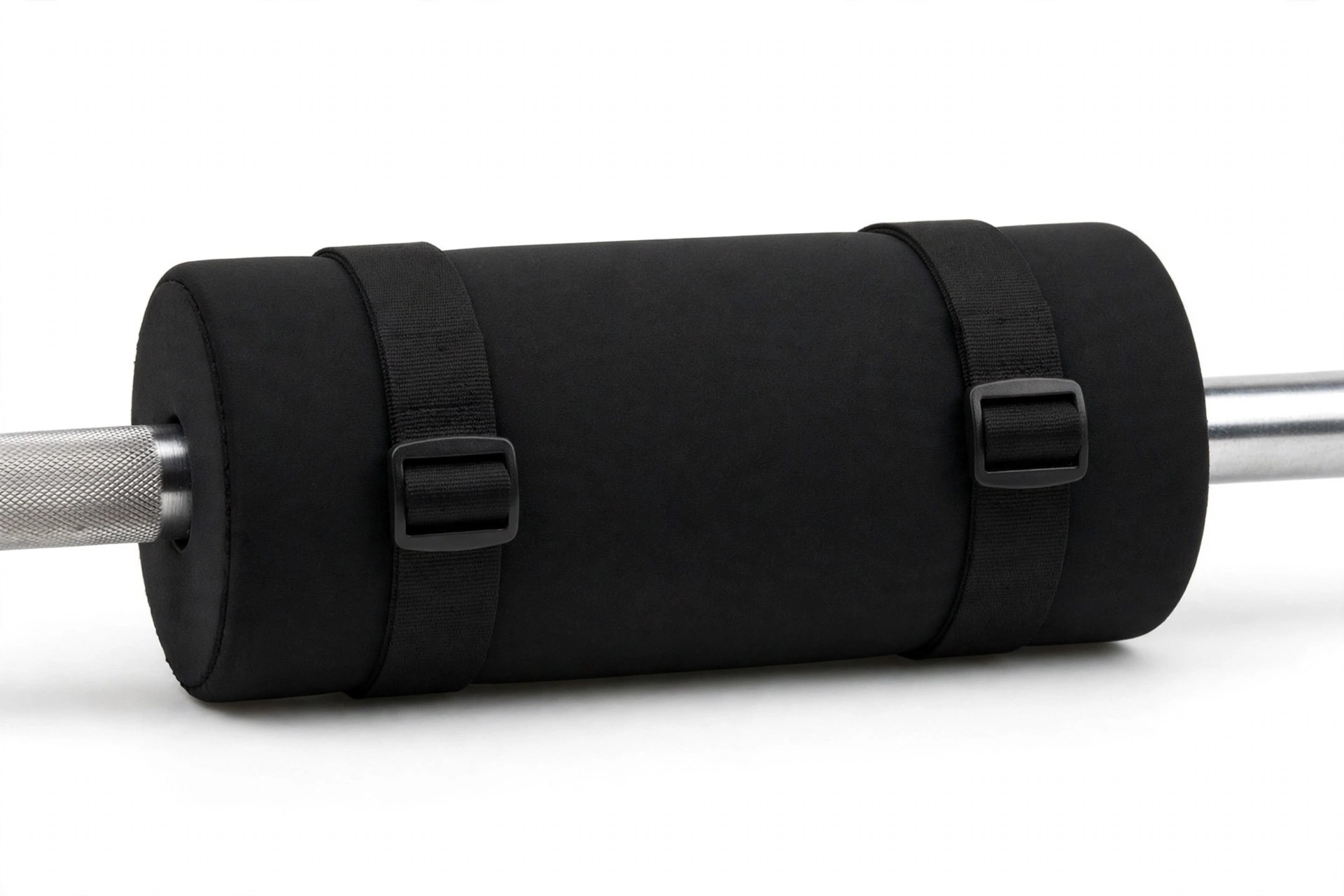
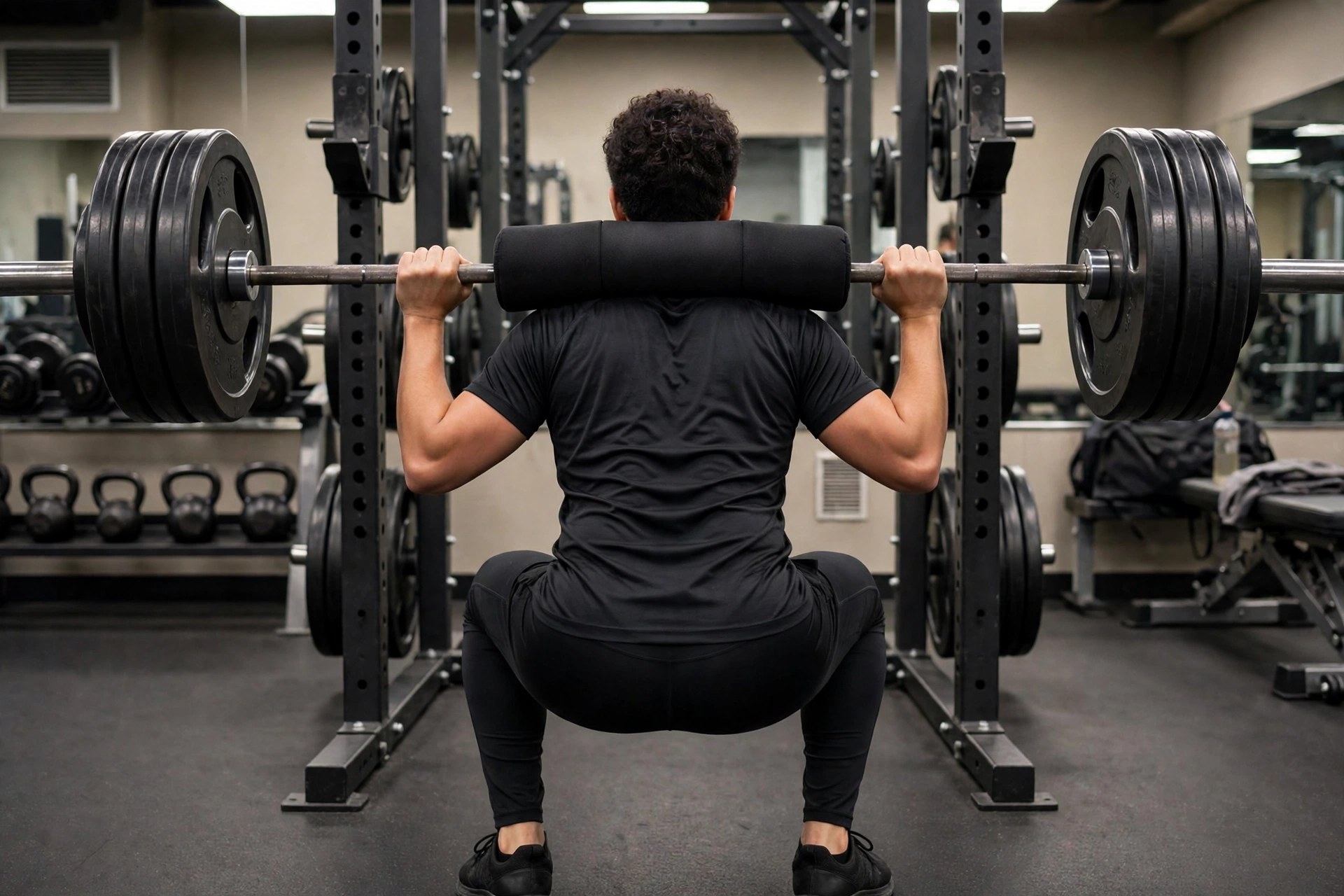
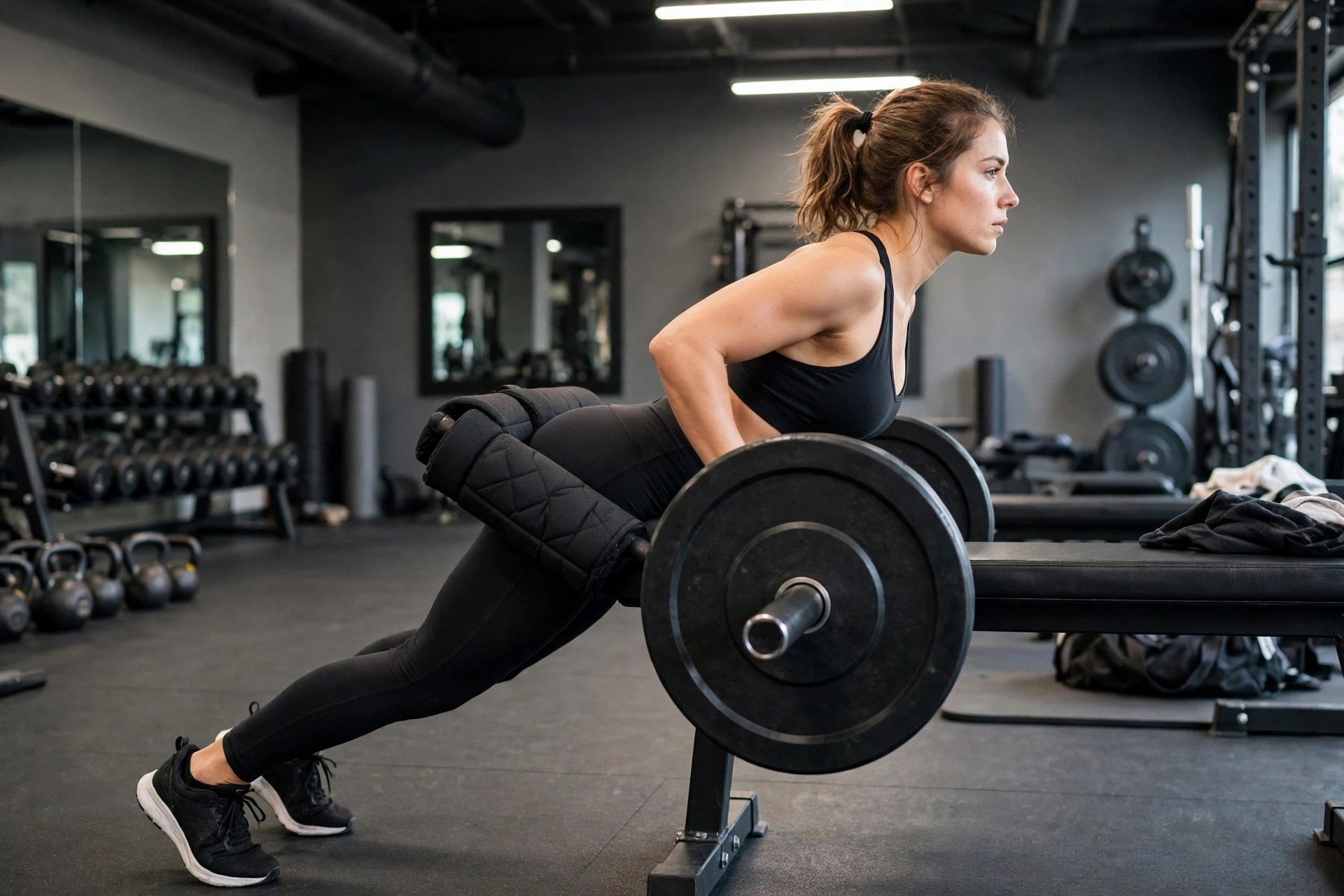
A neoprene barbell pad is a wrap-around pad of laminated neoprene (SBR, SCR or CR foam + fabric) that fastens around a barbell with hook-and-loop straps and cushions the bar where it rests on the lifter — across the shoulders in a squat, and across the hips in a hip thrust or glute bridge. The foam spreads the pressure of the bar over a wider area, so the lifter can focus on the lift instead of the bar digging in. Send us your design drawing and bar size, and we will confirm the best material and thickness.
We manufacture custom neoprene barbell pads in our own factory in China, where we have made neoprene products for 15 years. We cut the foam, laminate the fabric face and stitch the finished pads under one roof, so a change to the size, the strap or the print can be checked on a sample before bulk production starts.
A loaded bar puts the whole weight on one narrow line of steel. The neoprene foam spreads that pressure over a wider area of the shoulders or hips and springs back between sets, so the heaviest moment of the workout is spent on the lift, not on where the bar is pressing.
A barbell pad is shaped to wrap the bar and is held in place with hook-and-loop straps. Unlike a towel or a folded mat wrapped around the bar, it does not bunch up or slide under load, and it sits in the same place for the first rep and the last.
Gym kit gets sweaty, and it is handled at every session. The foam does not soak up sweat, the fabric face wipes clean after training, and that same face takes a brand's colour and print — which is why pads are usually sold as part of a strength range, alongside products such as neoprene weightlifting belts.
5 mm is the standard for most neoprene barbell pads. It gives real cushioning under a loaded bar for squats and hip thrusts, while the pad stays light enough to carry in a gym bag, which is why most of the barbell pads we make are cut in 5 mm. For the full range, see our neoprene sheet thickness guide.
| Thickness | Best for | Trade-off |
|---|---|---|
| 3 mm | Light pads for everyday training and lighter bars; thin and easy to carry | Least cushioning; a heavy bar still presses through |
| 5 mm | Most barbell pads, for squats and hip thrusts | Best balance of cushioning and weight |
| 7 mm | Maximum cushioning, for heavy hip thrusts and lifters who feel the bar most | Thickest and bulkiest; costs more than 5 mm |
Size the pad to the bar, not to the lifter. Tell us which bar the pad will wrap, and we make the pad to that bar size, with the strap length set so the pad closes firmly and does not spin on the bar during a set.
SBR is the standard choice for most barbell pads, and CR is the choice where the pad needs the softest, most elastic feel under a very heavy bar. SBR (styrene-butadiene rubber) is the firm, light foam that holds its shape under the bar at the lowest cost. CR (chloroprene rubber) is softer and more elastic, so it gives more under load and costs more. SCR, a blend of the two, sits between them.
The figures show why the two foams feel different: our CR foam measures 3–5° Shore C hardness, 276.32 kg/m³ density, 860 kPa tensile strength and 550% elongation, while our SBR foam measures 10–15° Shore C, 158.34 kg/m³, 256 kPa and 185%. CR is the softer, springier foam; SBR is the firmer, lighter one. SCR sits between the two on cost and stretch, and we use it where a customer wants more give than SBR without paying for CR.
| SBR | CR | |
|---|---|---|
| Cost | Lower cost; the usual choice for gym ranges | Costs more than SBR |
| Feel under the bar | Firm and light, holds its shape under load | Soft and elastic, more give under a heavy bar |
| Best for | Everyday squats, hip thrusts and studio pads | Premium pads and very heavy hip thrust work |
For the wider gym range, see how neoprene is used across neoprene fitness equipment. For belts in the same strength range, see our custom neoprene weightlifting belts product page.
Fitness brands — your own pad size, your own colours, your own logo, made to your tech pack.
Gyms and training studios — matching pads kept with the bars, in your house colours, with your logo on the pad, so members use the gym's pads instead of bringing their own.
Sports retailers — pads in your house colours, sized for standard and Olympic bars, packed ready for the shelf.
Distributors and e-commerce sellers — mixed sizes and colours in one order, retail-ready packaging with barcode and hangtag on request.
When neoprene is NOT the right choice
Tell us which of these your barbell pads need, and we will build the sample to your drawing.
What is the minimum order?
200 pieces per design as a general minimum, adjustable to your actual order.
Can I get a sample first?
Yes — we support sampling, usually in 5–7 days. Send us your design drawing and the bar size you need.
How long does bulk production take?
Usually 15–18 days after sample approval, depending on the quantity and customisation.
Does the pad stay in place on the bar?
Yes. The pad wraps around the bar and is held with hook-and-loop straps, so it stays where the lifter places it through the whole set.
Which foam should I choose — SBR, SCR or CR?
SBR is the standard choice for most gym pads: it is firmer and lighter, and holds its shape under the bar. CR is the softest and most elastic of the three; SCR is a blend of the two, sitting between them in feel and performance. We confirm the best combination after checking your design.
How do I order?
Send us your design drawing, the bar size and the quantity. We confirm the material, thickness and price, then make a sample for your approval before bulk production.
We make custom neoprene barbell pads to your bar size, your colours and your logo, and we check the fit and the straps on a sample before bulk production. The general minimum order is 200 pieces per design, adjustable to your actual order; sampling is supported, usually in 5–7 days, and bulk production usually takes 15–18 days after sample approval.
Request a Quotation
To help us review your inquiry, please send:
Website: https://www.neoprenecustom.com/ Email: kevin@neoprenecustom.com
A barbell pad is judged at the heaviest rep of the set. Send us your bar size and we will make you a sample to train with. Many brands pair the pad with our custom knee sleeves as one strength range.
Contact: Kevin
Phone: 13417385320
Tel: 0734-87965514
Email: kevin@neoprenecustom.com
Add: Intersection of Zhangjialing Road and Science and Technology Road, Guiyang Industrial Park, Guiyang Town, Qidong County, Hengyang City, Hunan Province./Dongguan Factory(GUANXIN): Shixin Street, Fushan Village, Liaobu Town, Dongguan, Guangdong Province.