
Custom Neoprene Wetsuit Bags: How to Choose Size, Waterproofing and Carry Style
A good custom neoprene wetsuit bag is a 40–60 litre bag with a waterproof lining, a wet compartment and a mesh vent. Size it to your suit: 40 litres for a 3 mm suit, 60 litres for a 5 mm suit. It carries a wet wetsuit home without soaking the car, and the suit dries inside it.
What Is a Neoprene Wetsuit Bag — and Why It Beats a Plastic Bin Bag
A neoprene wetsuit bag is a bag made from closed-cell chloroprene rubber foam, laminated with fabric on one or both faces, built to carry a wet wetsuit home from the beach or the dive boat. The foam is full of tiny sealed gas bubbles. Those bubbles block water, cushion the suit, and give the bag a soft structure that holds its shape. A plastic bin bag keeps the car dry for one trip, then tears. A mesh bag lets the suit drip everywhere. A neoprene bag does neither — it holds the water in and the smell out.
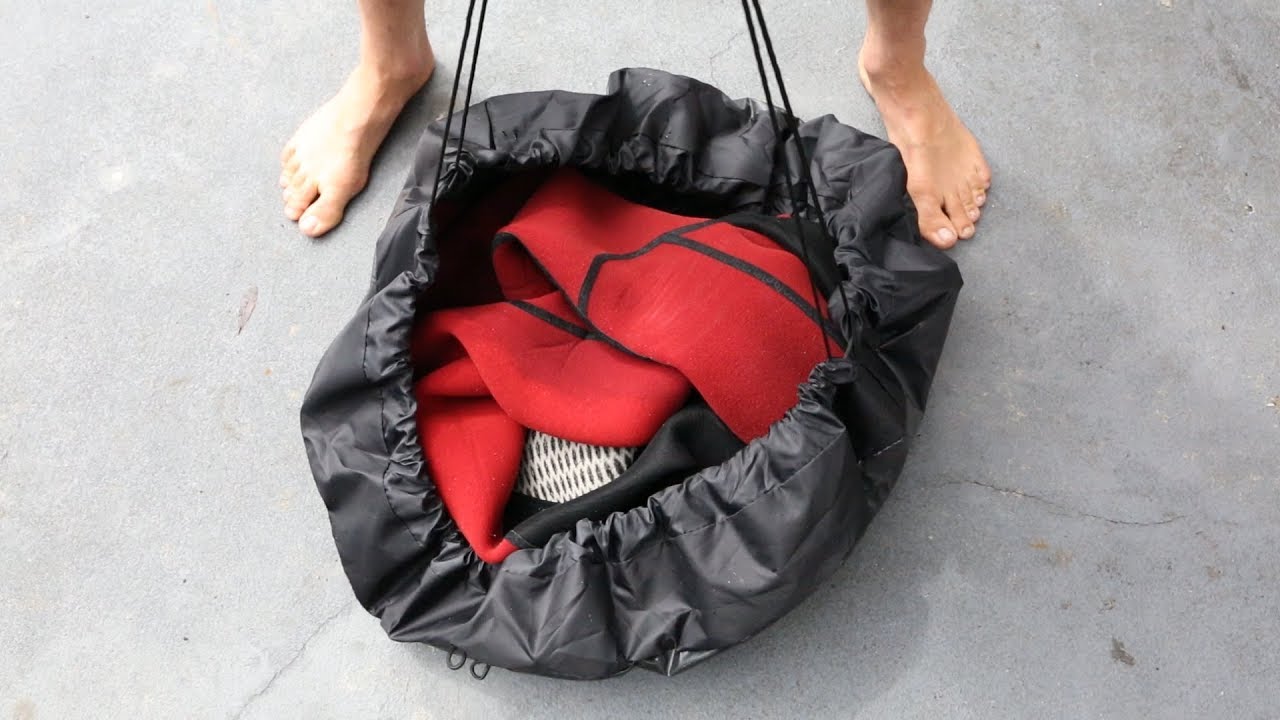
A red neoprene wetsuit in a drawstring wetsuit bag — the suit goes in wet and the car stays dry.
The material is the same CR neoprene foam sheet we use across our wetsuits and sports supports. Our neoprene wetsuit range is made from the same foam, so the bag matches the suit it carries. A wetsuit bag is a soft bag that wipes clean after every session, holds its shape in a locker, and cushions everything inside it.
Bulk buyers are dive brands, surf shops, dive schools and resorts. A printed bag turns a basic accessory into a branded product, and one size range covers a whole dive class.
How Big Should the Bag Be? Match the Litres to the Suit
Match the litres to the suit, not to the price. A bag that is too small means the suit is squeezed in and the zipper strains. A bag that is too big means the suit slides around and the bag looks empty. A 3 mm suit folds to half the volume of a 7 mm suit, so the thickness decides the litres.
| Wetsuit | Bag Size | Fits | Best For |
|---|---|---|---|
| Shorty or 2 mm spring suit | 25–30 L | Suit + towel | Summer, kids |
| 3/2 mm full suit | 40–50 L | Suit + boots + gloves | Most divers and surfers |
| 5/4 mm full suit | 60 L | Suit + boots + gloves + hood | Cold water |
| 7 mm full suit | 70–90 L | Thick suit + full kit | Winter diving, two suits |
Our factory splits foam from 1.5 mm to 45 mm, so any thickness is possible — but for wetsuit bags we use a soft SBR grade. Our SBR 5–7° foam is our soft grade for sewn accessories: tensile strength 247 kPa and elongation 199% on its technical data sheet. That stretch is what lets the bag bend and fold without cracking at the seams. See our neoprene sheet thickness guide for how to pick the right mm for any product.
Measure the suit folded, not flat. Fold the suit the way you pack it, measure the longest side, and add 5 cm for the zipper and the seams. If your customers fly with dive kit, the 40–50 litre size is the one to sell — IATA recommends a maximum cabin size of 56 cm × 45 cm × 25 cm, so a 50 cm bag fits the length limit.
Wet and Dry: Compartments That Keep the Rest of Your Kit Dry
Two compartments matter most: a wet compartment and a dry compartment. The wet compartment holds the suit, boots and gloves in a waterproof lining, so the water stays in. The dry compartment holds a towel, keys and a phone, so they stay dry. A bag with one big compartment is a bag where everything gets wet.
The lining is the detail to check. A wet compartment needs a sealed lining — PEVA foil or a welded waterproof pocket — or the water seeps through the seams into the dry side. Ask your supplier what the wet compartment is lined with, and whether the seams are sealed.
Do not overdo the pockets. A bag with 10 pockets looks clever in a photo and frustrates in use — every pocket is a seam that can fail and a place to lose things. Two good compartments beat ten small ones. The main compartment should open wide, so the whole suit is visible at a glance.
Waterproof or Just Water-Resistant? What the Bag Really Keeps Out
The foam is waterproof. The bag is water-resistant. Closed-cell neoprene does not absorb water — rain beads and runs off the surface. But a wetsuit bag has zippers and seams, and those let water in. A bag left in heavy rain will get damp inside at the zipper line, even though the foam itself stays dry.
Under IEC 60529, IPX7 means immersion in water up to 1 metre deep for 30 minutes — see our waterproof vs water-resistant guide. A stitched neoprene wetsuit bag cannot claim IPX7. A bag with a sealed roll-top closure and welded seams can be tested, but a zipper bag cannot. Do not let a supplier promise IPX7 on a zippered bag.
What matters in practice is the car boot, not the test tank. A wet suit drips as you carry it home, and a lined bag holds that water inside. An unlined bag lets it soak into the boot carpet. Ask your supplier for the lining, not the rating.
Drainage and Ventilation: How the Suit Dries Inside the Bag
A drain grommet or a mesh base lets the water out. A small brass or plastic grommet at the lowest corner drains the water that collects at the bottom, so the bag does not sit in a puddle. A mesh base does the same job — water drains through and air comes in. Without drainage, the suit sits in its own water and the bag smells by the next morning.
Mesh vent panels let the suit dry inside the bag. A sealed bag traps moisture, and a damp suit in a sealed bag grows mildew in two days. A mesh panel on the side or the lid lets air pass through, so the suit dries between sessions. The vent should be on the top, not the bottom, so water does not leak out of it in the car.
Hang the bag open after use. Unzip it fully, hang it by the handle, and let the air in. In normal indoor air, a drained bag is dry enough to use again the next day. Do not leave a wet suit sealed in the bag for a week — no bag, however good, keeps a sealed wet suit fresh.
Carry Style: Handles, Shoulder Strap or Backpack?
Pick the carry by the walk, not by the look. Short webbing handles carry the bag from the car to the house. A padded shoulder strap — 38–50 mm wide, padded with neoprene — carries it from the beach to the car park. Backpack straps carry it on both shoulders, so it is the best choice for a cycle or a long walk to the dive site, and it keeps the hands free.
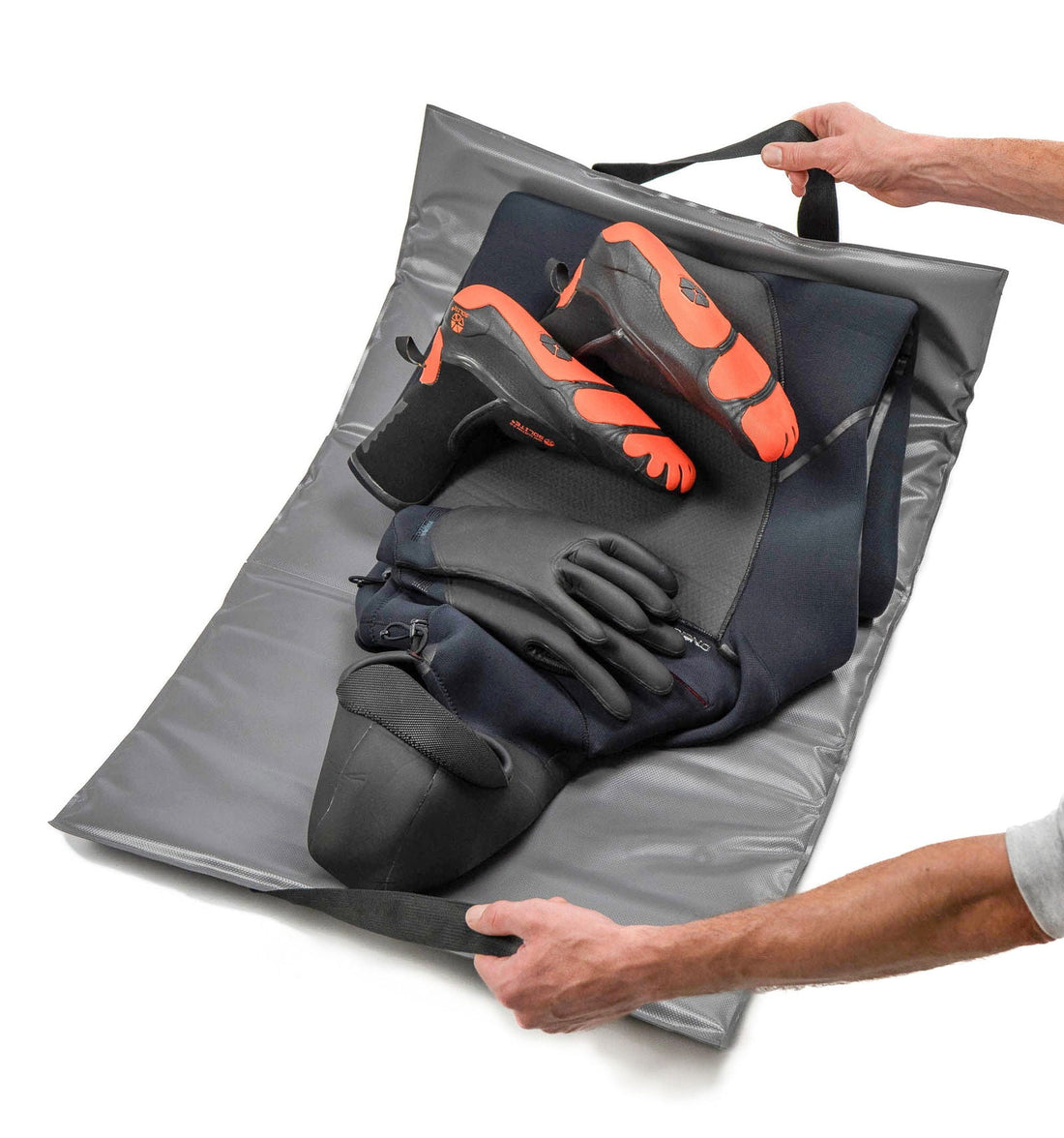
A wetsuit bag opened flat as a changing mat — the folded suit, gloves and boots laid out, with handles at both ends to gather it into a bag.
The best wetsuit bags open flat as a changing mat. Stand on the mat, step out of the suit, then gather the mat by its handles and it becomes the bag — the sand and water stay on the mat, not on your feet or in the car. A bag that only opens at the top cannot do this. Ask your supplier whether the bag opens flat, and how the handles gather it closed.
Grab handles matter too. Two short handles that join together with a wrap let you carry the bag by hand, and they should be long enough to fit over a coat sleeve. A detachable shoulder strap is the flexible option — clip it on for the walk to the beach, take it off when the bag goes in a locker.
Your Trusted Custom Neoprene Wetsuit Bag Manufacturer
Stop buying plain bags that leak at the zipper, tear at the handles, or leave the car boot soaking wet. We are a specialized custom neoprene factory making wetsuit bags, wetsuits, and dive accessories for brands worldwide.
When you partner with our factory for custom OEM bags, you get 3–7 mm closed-cell neoprene, 30–90 litre sizes, wet and dry compartments, mesh vents and drain grommets, padded straps, Pantone-matched colours, and full-colour print. Our colour matching and printing guide explains how we match Pantone colours and print full-colour designs on neoprene.
Do you want to launch a branded line of neoprene wetsuit bags? We accept custom OEM orders with full branding options, tailored sizes, and low minimum order quantities.
- True 3–7 mm closed-cell neoprene, waterproof foam and soft structure.
- Wet and dry compartments, mesh vents and drain grommets — the three details that keep a bag dry.
- Low Minimum Order Quantities (MOQ) for custom brand runs.
Learn more about our OEM production capabilities on our official website: https://source.neoprenecustom.com
Ready to design a custom wetsuit bag? Contact our team directly: kevin@neoprenecustom.com
Frequently Asked Questions (FAQ)
Q: What size wetsuit bag do I need?
A: 40–50 litres fits most divers and surfers — a 3/2 mm full suit plus boots and gloves. A 25–30 litre bag suits a shorty or a 2 mm spring suit; a 70–90 litre bag suits a 7 mm suit or two suits. Measure the suit folded, not flat.
Q: Are neoprene wetsuit bags waterproof?
A: The foam is waterproof — closed cells do not absorb water. The bag as a whole is water-resistant, because zippers and seams let water in. A stitched bag cannot claim IPX7; only a sealed roll-top bag with welded seams can be tested for it.
Q: How do I dry a wetsuit inside the bag?
A: Open the bag fully, drain the water through the grommet or mesh base, and hang it by the handle to air dry. The mesh vent lets air pass through, so the suit dries between sessions. Do not leave a wet suit sealed in the bag for days — it will smell.
Q: Will a wet wetsuit make the bag smell?
A: No — closed-cell neoprene holds no liquid and no odour, unlike canvas or open-cell foam. Rinse the bag, wash the fabric face with mild soap, and air dry. A drained bag is dry enough to use again the next day.
Q: How can we order custom colours and logos?
A: Send your sizes, Pantone colours, and logo file to kevin@neoprenecustom.com for a quotation. We print the full-colour design on the fabric face of the bag.