
Custom Neoprene Swim Caps: How to Choose Thickness, Fit and Warmth
A good custom neoprene swim cap is a 2–3 mm closed-cell neoprene cap with ear coverage and a chin strap. It keeps the head warm in water down to about 15 °C, protects hair from chlorine, and we make it to order in any size, thickness, colour and print.
What Is a Neoprene Swim Cap — and How It Differs from Silicone and Latex
A neoprene swim cap is a cap made from closed-cell chloroprene rubber foam, laminated with fabric on one or both faces. It covers the head and ears, keeps the head warm in cool water, and protects hair from chlorine and salt. The foam is full of tiny sealed gas bubbles. Those bubbles trap a thin layer of water against the skin, and the body warms that layer — the same way a wetsuit works.
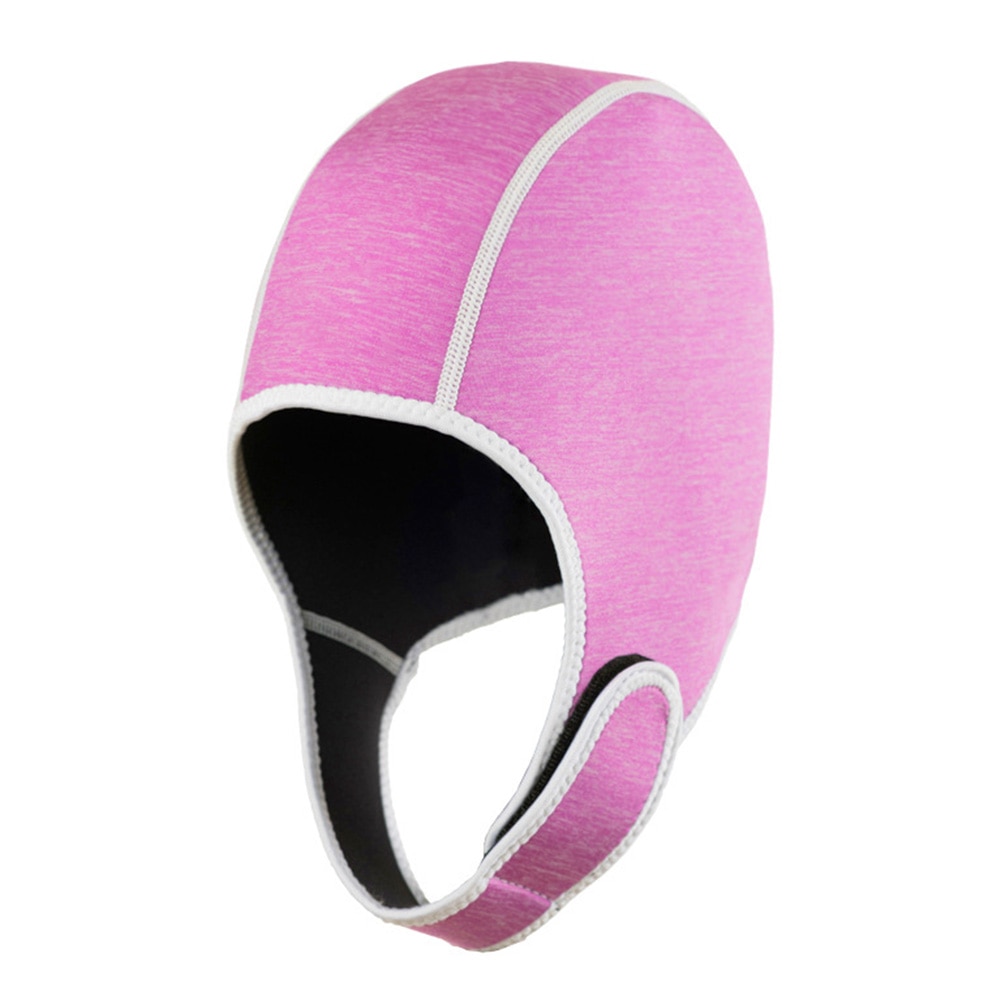
A bright pink neoprene swim cap — the smooth matte face, white overlock stitching and chin strap.
The material is the same CR neoprene foam sheet we use across our wetsuits and sports supports — see our ultimate guide to neoprene sheets for how the foam is made. A silicone cap is thinner and smoother, so it has less drag in the water — but it gives almost no warmth. A latex cap is the cheapest and the thinnest, and it tears easily and can trigger latex allergies. A neoprene cap is the only one of the three that is warm: it is the cap for cool open water, winter pool sessions and anyone who feels the cold.
Bulk buyers are swim schools, open-water swim clubs, resorts, beach shops and corporate gift buyers. A printed cap turns a basic accessory into a branded product, and one size range covers a whole swim group.
How Thick Should the Cap Be? Match Thickness to Water Temperature
Pick the thickness by the water, not by the price. A cap that is too thin leaves the head cold, and a cold head ends a swim early — the head loses heat faster than any other part of the body in the water. A cap that is too thick feels bulky, presses on the ears, and is hard to pull on. Thicker foam holds more warm water against the head, but it also adds drag and makes the cap stiffer.
| Water Temperature | Cap Thickness | Best For | Trade-off |
|---|---|---|---|
| Above 24 °C | 2 mm | Warm water, summer lake, heated pool | Lightest, least drag |
| 18–24 °C | 2–3 mm | Temperate open water, long swims | Best all-round balance |
| 15–18 °C | 3 mm | Cool water, early season, morning swims | Warmest standard cap |
| Below 15 °C | 5 mm | Cold water, winter swimming | Thickest, most drag |
Our factory splits foam from 1.5 mm to 45 mm, so any thickness is possible — but for swim caps we use a soft SBR grade. Our SBR 5–7° foam is our soft grade for sewn accessories: tensile strength 247 kPa and elongation 199% on its technical data sheet. That stretch is what lets the cap pull on over the head without tearing at the seams, and spring back to shape after every swim. See our neoprene sheet thickness guide for how to pick the right mm for any product.
Thickness is only half the story. The foam must be closed-cell. Open-cell foam is softer and cheaper, but it absorbs water, holds the smell, and tears more easily at the seams. Ask your supplier which foam they use — and ask for the data sheet, not just a claim.
How Should a Swim Cap Fit? Snug, Chin Strap or Strap-Free, Ear Coverage
Snug, not tight — and measure the head in centimetres. A swim cap should fit like a second skin: the edge should sit just above the eyebrows, the ears should be covered, and the back should reach the hairline without riding up. A cap that is one size too big lets cold water flush in and out, and the cap slides back in the water. A cap that is one size too small presses on the temples, gives a headache in 20 minutes, and pulls the ears.
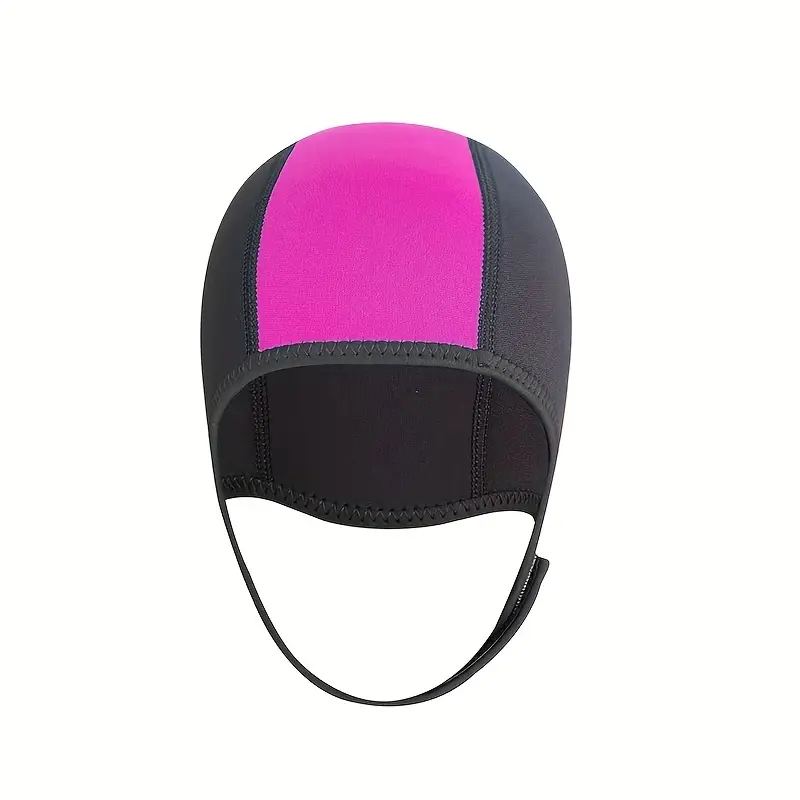
A magenta and black neoprene swim cap, front view — the chin strap keeps the cap on in open water.
Chin strap for open water, strap-free for the pool. A chin strap — usually a Velcro tab under the chin — holds the cap in place in waves and surf, so the cap cannot peel off when a wave hits the head. A strap-free cap is quicker to pull on and more comfortable for pool laps, where nothing pulls at it. Most open-water swimmers order the strap version; most pool swimmers order the strap-free version. If your customers swim in the sea, sell them the strap.
Ear coverage matters too. A neoprene cap covers the ears, which keeps cold water out of the ear canal and stops the sharp cold-water headache that hits when cold water rushes into the ears. The trade-off is hearing: a covered ear muffles sound, so a swimmer hears the coach or the safety boat less clearly. Some caps leave a small hole over the ear to let sound in — ask your supplier whether the ear panel is solid or vented.
Warmth vs Drag: What a Neoprene Cap Costs You in Speed
A neoprene cap is warmer and slower than a silicone cap — that is the honest trade. Neoprene is thicker and its fabric face is not as smooth as silicone, so it creates more drag in the water. A silicone racing cap is thin, smooth and tight, and it is the faster cap in a pool. A neoprene cap is the warmer cap in cool water. For a swimmer racing short pool distances in warm water, the silicone cap wins. For a swimmer spending an hour in 18 °C open water, the neoprene cap wins — because a warm head keeps the swimmer in the water, and a cold head ends the swim.
The drag gap is smaller than most swimmers think. A 2 mm neoprene cap is close to a silicone cap in feel, and the warmth it adds is worth far more than the seconds it costs over a long swim. A 5 mm cap is a different story: it is noticeably slower, and it is only the right choice when the water is genuinely cold. If your customers ask about speed, sell them the 2 mm cap. If they ask about warmth, sell them the 3 mm cap.
Hair protection is the other half of the deal. Chlorine dries hair out and fades colour-treated hair, and salt water tangles it. A neoprene cap keeps most of the hair dry — not all of it, because water seeps in at the edges, but far more than a loose silicone cap. Swimmers with long hair should tuck the hair up and pull the cap down over the ears; a cap with a slightly longer back panel holds long hair better.
Colours for Visibility in Open Water
In open water, the cap is a safety device, not just a fashion choice. A bright cap — orange, yellow, pink or lime green — is visible from the shore and from a safety boat at 100 metres. A black or dark blue cap disappears against dark water, and a safety kayaker cannot see the swimmer. Open-water swim events use bright caps for exactly this reason: the cap colour is how the safety team counts heads.
Our colour matching and printing guide explains how we match Pantone colours and print full-colour designs on neoprene. A club can order its own colour with its logo printed on the side, so the whole group is visible and branded at once. For pool use the colour does not matter — pick the colour your customers like. For open water, pick the brightest colour your customers will wear.
Care: Rinse, Dry, Store
Rinse, air dry — no heat. Rinse the cap in fresh water after every swim to wash off chlorine and salt, then turn it inside out and hang it up to air dry, away from direct sun. Do not machine wash and do not tumble dry: heat damages the foam and shrinks the fabric face. Do not leave it in direct sun for days — UV ages neoprene faster than anything else.
The foam is waterproof. The cap as a whole is water-resistant. Closed-cell neoprene does not absorb water — and a rinsed cap is dry enough to wear again in a few hours, because the foam holds no water and only the fabric face gets wet. Our waterproof vs water-resistant guide explains the difference: the foam blocks water, but the seams and the edge let water in. Store the cap flat or loosely rolled, never folded tight — a sharp crease in the foam becomes a weak line that tears.
Check the safety labels too. The fabric face should carry OEKO-TEX Standard 100 certification, which tests textiles for harmful substances. Our foam is RoHS and REACH compliant, which limits hazardous substances in the material. A cap with no test data is a guess, not a specification.
Your Trusted Custom Neoprene Swim Cap Manufacturer
Stop buying plain caps that let cold water in, slide off in waves, or tear at the seams after a month. We are a specialized custom neoprene factory making swim caps, wetsuits, and water sports accessories for brands worldwide.
When you partner with our factory for custom OEM caps, you get 2–5 mm closed-cell neoprene, chin-strap or strap-free styles, full ear coverage, Pantone-matched colours, and full-colour print.
Do you want to launch a branded line of neoprene swim caps? We accept custom OEM orders with full branding options, tailored sizes, and low minimum order quantities.
- True 2–5 mm closed-cell neoprene, warm and quick-drying.
- Chin-strap and strap-free styles with full ear coverage.
- Low Minimum Order Quantities (MOQ) for custom brand runs.
Learn more about our OEM production capabilities on our official website: https://source.neoprenecustom.com
Ready to design a custom swim cap? Contact our team directly: kevin@neoprenecustom.com
Frequently Asked Questions (FAQ)
Q: What thickness swim cap do I need?
A: 2 mm for water above 24 °C, 2–3 mm for 18–24 °C, 3 mm for 15–18 °C, and 5 mm for water below 15 °C. The 2–3 mm cap is the best all-round choice for most open-water swimmers.
Q: Are neoprene swim caps warmer than silicone caps?
A: Yes, much warmer. Neoprene traps a thin layer of water against the head and the body warms it, like a wetsuit. A silicone cap is thinner and smoother, so it has less drag but gives almost no warmth.
Q: Do I need a chin strap on a swim cap?
A: For open water, yes — the strap holds the cap in place in waves and surf so it cannot peel off. For pool laps, a strap-free cap is quicker to pull on and more comfortable. Most open-water swimmers order the strap version.
Q: How do I clean a neoprene swim cap?
A: Rinse it in fresh water after every swim, turn it inside out and air dry away from sun and heat. A rinsed cap is dry enough to wear again in a few hours. Do not machine wash or tumble dry — heat damages the foam.
Q: How can we order custom colours and logos?
A: Send your sizes, thickness, Pantone colours, and logo file to kevin@neoprenecustom.com for a quotation. We print the full-colour design on the fabric face of the cap.