
A good custom neoprene wallet is a 2–3 mm slim wallet with 6–8 card slots, a waterproof closed-cell foam body, and a soft fabric face that takes full-colour print. It holds cards and cash without the bulk of leather, shrugs off rain and sweat, and keeps its shape for years. We make it to order in any size, colour and print.
What Is a Neoprene Wallet — and Why It Beats Leather and Fabric
A neoprene wallet is a slim wallet made from closed-cell chloroprene rubber foam, laminated with fabric on one or both faces, built to carry cards and cash every day. The foam is full of tiny sealed gas bubbles. Those bubbles give the wallet a soft body that cushions the cards, blocks water from soaking through, and springs back when the wallet is squeezed into a tight pocket. A leather wallet looks good when new but gets bulky, stiffens when wet, and cracks at the fold after a year or two. A fabric wallet is light but soaks up sweat and rain, and it wears thin at the edges. Neoprene is the only one of the three that stays slim, stays waterproof, and keeps its shape.
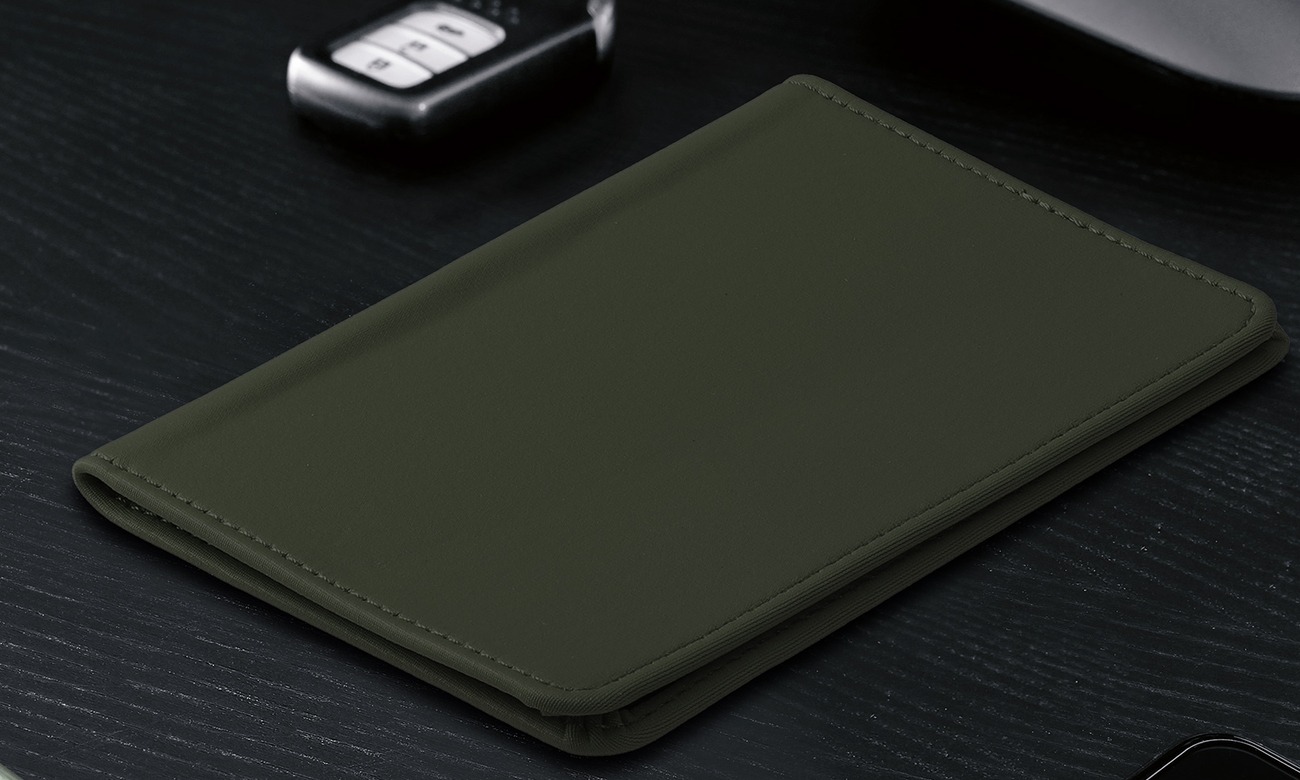
Olive-green neoprene bifold wallet — the smooth matte face and the stitching that holds the fold.
The material is the same CR neoprene foam sheet we use across our wetsuits and sports supports — see our ultimate guide to neoprene sheets for how the foam is made. Bulk buyers are fashion brands, sports brands, corporate gift buyers, event organisers and retailers. A printed wallet turns a basic accessory into a branded product, and one size range covers a whole customer base.
How Thick Should a Neoprene Wallet Be?
2–3 mm is the standard for a wallet. Below 2 mm, the wallet is a card sleeve — it holds cards but gives them no cushioning when the wallet is dropped or sat on. At 3 mm, the wallet protects the cards, holds its shape in a pocket, and still slides into a jeans pocket. Above 4 mm, the wallet gets bulky and defeats the point of a slim wallet. For most wallets we use 2 mm on the outer faces and 3 mm in the card slots, so the wallet protects where it matters and stays slim where it folds.
Our factory splits foam from 1.5 mm to 45 mm, so any thickness is possible — but for wallets we use a soft SBR grade. Our SBR 5–7° foam is our soft grade for sewn accessories: tensile strength 247 kPa and elongation 199% on its technical data sheet. That stretch is what lets the wallet flex open hundreds of times without cracking at the fold. See our neoprene sheet thickness guide for how to pick the right mm for any product.
Thickness is only half the story. The foam must be closed-cell. Open-cell foam is softer and cheaper, but it absorbs sweat, holds the smell, and tears more easily at the seams. Ask your supplier which foam they use — and ask for the data sheet, not just a claim.
Bifold, Card Holder or Zip: Which Style Sells Best?
The bifold is the volume product. A bifold wallet folds once, holds 6–8 cards plus folded cash, and fits a back pocket. A card holder is a flat sleeve with 3–4 slots and no fold — it is the slimmest option and the one a minimalist buyer already knows. A zip wallet closes all the way around, so it holds coins and small items that a bifold drops. Most brands order the bifold first, because it is the wallet most customers already carry and trust. Most promotional buyers order the card holder, because it is light, cheap to ship, and prints a big logo on a flat face.
The foam is waterproof. The wallet is water-resistant. Closed-cell neoprene does not absorb water — it beads and wipes off the surface. Our waterproof vs water-resistant guide explains the difference: the foam blocks liquid, but the seams and the card-slot openings let water in. For a normal day — rain, sweat, a spilled drink — the cards stay dry enough and the wallet dries fast.
RFID Blocking, Print and Custom Options
Ask for an RFID-blocking layer if your buyers want it. A thin metalised film laminated inside the wallet blocks the radio signal that a contactless card reader uses, so a card cannot be skimmed while it sits in the wallet. Not every buyer needs it, but it is a real selling point for a travel or tech audience. The layer adds almost no thickness and no stiffness, so the wallet still feels like neoprene.
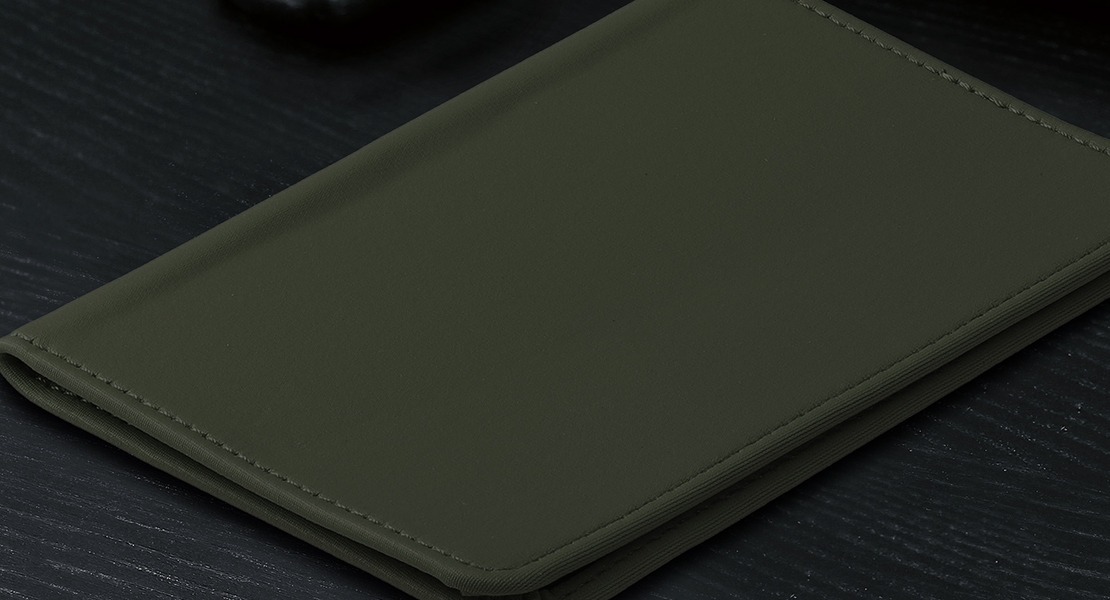
A close-up of the olive-green neoprene bifold wallet — the smooth matte face and the neat edge stitching.
Print is where a neoprene wallet earns its margin. The fabric face takes full-colour print — a logo, a photo, a pattern, a Pantone-matched brand colour. Our colour matching and printing guide explains how we match Pantone colours and print full-colour designs on neoprene. A printed wallet is a walking billboard: the buyer carries your brand every day, and the wallet itself is the advertisement.
Rinse, soap, air dry — no heat. Rinse the wallet in fresh water, wash with mild soap and cool water, and hang it up to air dry away from direct sun. Do not machine wash and do not tumble dry: heat damages the foam and shrinks the fabric face. Do not leave it in direct sun for days — UV ages neoprene faster than anything else. A rinsed wallet is dry enough to use again in a few hours, because the foam holds no water.
Your Trusted Custom Neoprene Wallet Manufacturer
Stop buying plain wallets that get bulky when full, soak up sweat, or crack at the fold after one season. We are a specialized custom neoprene factory making wallets, card holders, and travel accessories for brands worldwide.
When you partner with our factory for custom OEM wallets, you get 2–3 mm closed-cell neoprene, 6–8 card slots, bifold / card holder / zip styles, RFID-blocking layers on request, Pantone-matched colours, and full-colour print.
Do you want to launch a branded line of neoprene wallets? We accept custom OEM orders with full branding options, tailored sizes, and low minimum order quantities.
- True 2–3 mm closed-cell neoprene, slim body and waterproof face that stays dry in rain and sweat.
- Bifold, card holder and zip styles with RFID-blocking layers on request.
- Low Minimum Order Quantities (MOQ) for custom brand runs.
Learn more about our OEM production capabilities on our official website: https://source.neoprenecustom.com
Ready to design a custom wallet? Contact our team directly: kevin@neoprenecustom.com
Frequently Asked Questions (FAQ)
Q: How many cards does a neoprene wallet hold?
A: A bifold holds 6–8 cards plus folded cash. A card holder holds 3–4 cards. If your buyers carry more, order the bifold — the foam stretches, so a full wallet still closes flat.
Q: Is a neoprene wallet really waterproof?
A: The foam is waterproof — it does not absorb water. The wallet as a whole is water-resistant: rain and sweat bead off, but water can get in through the card slots and seams. For daily use the cards stay dry.
Q: Will a neoprene wallet stay slim in a front pocket?
A: Yes — at 2–3 mm the wallet is thinner than a leather bifold and it does not stiffen with use. A card holder is the slimmest option and fits a front pocket without a visible bulge.
Q: How do I clean a neoprene wallet?
A: Rinse it in fresh water, wash with mild soap and cool water, and air dry away from sun and heat. A rinsed wallet is dry enough to use again in a few hours. Do not machine wash or tumble dry — heat damages the foam.
Q: How can we order custom colours and logos?
A: Send your wallet style, Pantone colours, and logo file to kevin@neoprenecustom.com for a quotation. We print the full-colour design on the fabric face of the wallet.