
Custom Neoprene Hot Water Bottle Covers: A Simple Buying Guide
A hot water bottle is a simple thing. You fill it with warm water, close the stopper, and hold it close. It warms your hands on a cold night. It soothes a sore back after a long day. It sits beside you on the sofa while you read.
A cover changes how that bottle feels. A bare rubber bottle can feel too hot at first. Then it cools down fast. It can also slip from your hands. A neoprene cover fixes all three problems at once. It softens the heat. It holds the warmth in for longer. And it gives you a good grip.
This guide explains how to pick the right cover: thickness, size, fabric, care, and custom options.
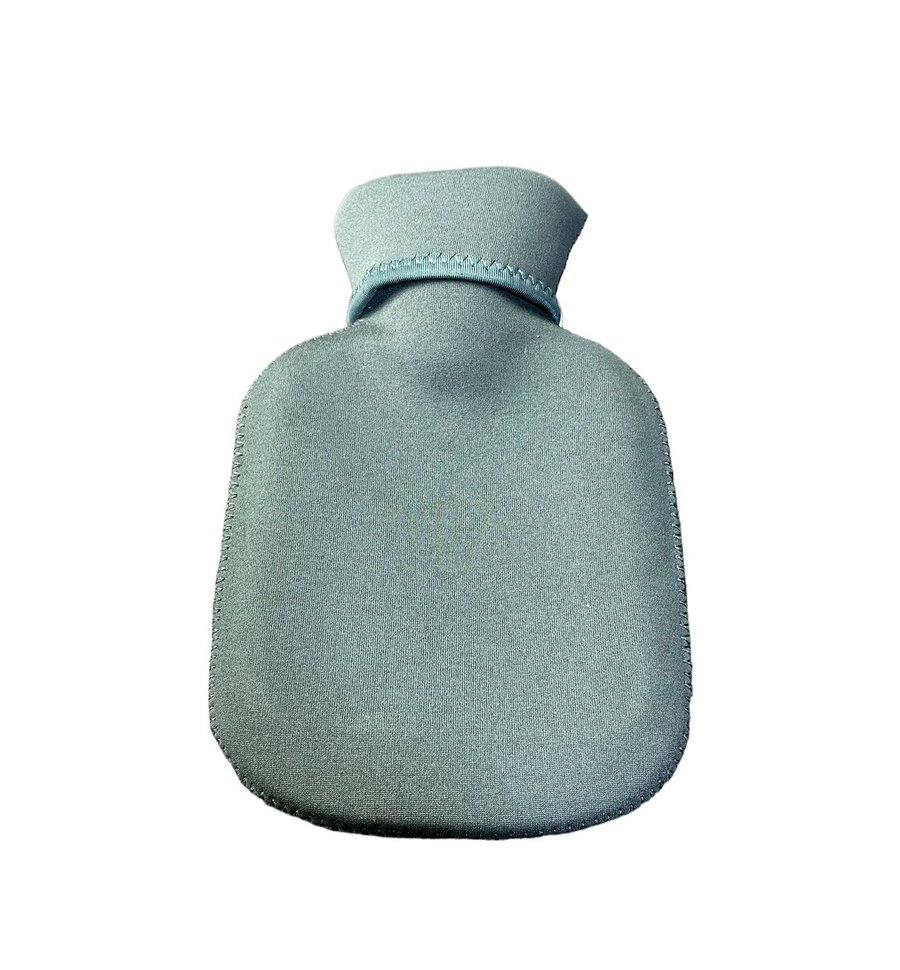
A sage green custom neoprene hot water bottle cover — the smooth matte face and neat edge stitching, standing upright on white.
What a Neoprene Hot Water Bottle Cover Does
A cover does more than make a bottle look nice. It has four plain jobs.
First, it spreads the heat. The neoprene layer sits between the bottle and your skin. The warmth comes through in a slow, even way. You do not get a sharp hot spot.
Second, it keeps the bottle warm for longer. Neoprene slows down heat loss. The bottle still cools in time, as all hot water bottles do. But the drop is slower, so the comfort lasts longer.
Third, it protects the bottle. A bare bottle can pick up marks and scuffs. A cover takes the wear instead. When the cover gets dirty, you can wash it.
Fourth, it makes the bottle easy to hold. Neoprene has a soft grip, so the bottle does not slide on a blanket or on your lap.
Why Neoprene Works So Well for Warmth
Neoprene is a foam rubber. Its core is full of tiny closed cells. Those cells trap air. Trapped air lets heat move through slowly. That is the whole trick.
Most covers use fabric-laminated CR neoprene foam sheet: a thin knit fabric on one or both faces of the foam. The fabric feels soft, protects the foam, and holds the stitching, while the foam does the warm work. See our ultimate guide to neoprene sheets for how the foam is made. You can read more in the material notes on our source site.
Neoprene also bends without breaking. It stretches a little and springs back. That is why a cover can hug a bottle that is full and round, then lie flat when the bottle is empty.
Some covers have fabric on one face only. The inside is smooth rubber, which grips the bottle well. Others have fabric on both faces. They feel soft inside and out, and they slide on more easily for washing. Either build works at home. Double-sided fabric often looks better on a shop shelf.
Neoprene also resists water, so a small splash wipes off. Our waterproof vs water-resistant guide explains the difference: the foam itself stays dry, while seams and openings can let water in.
How to Choose the Right Thickness
Thickness is the first choice to make. A thicker cover holds heat longer. A thinner cover feels softer and lets more heat through at once. Neither one is wrong. They suit different people.
The table below sums up the three common choices.
| Thickness | Feel | Warmth | Best for |
|---|---|---|---|
| 2 mm | Soft and light | Warmth comes through fast | Quick heat and a light cover |
| 3 mm | Soft with a firm hold | A good middle ground | Daily home use and gift sets |
| 5 mm | Thick and cushioned | Warmth lasts the longest | Cold rooms and slow, steady heat |
For most homes, 3 mm is the safe pick. It feels good in the hand. It keeps the bottle warm for a good stretch. It is not too bulky on the shelf. See our neoprene sheet thickness guide for how to pick the right mm for any product. For a soft, light cover we use a soft SBR grade — our SBR 5–7° foam is the soft grade for sewn accessories.
For the strongest warmth, go thicker; for the lightest touch, go thinner. Ask for a sample in each thickness before a large order. A short test tells you more than any chart.
Picking the Right Size and Fit
A cover should fit like a glove. Too loose, and it slips and bunches up. Too tight, and it strains the seams. It is also hard to pull on and off.
Start with your bottle. Measure its length and its width when it is full. Most home bottles hold about 2 litres and share a classic shape: a wide body and a narrow neck. But shapes vary. Some bottles are long and slim. Some are round and flat, like a small pillow.
Check these points before you order:
- Body shape: classic, long, or round. The cover pattern must match the shape.
- Neck opening: leave room for the stopper, so you can open and close the bottle with the cover on.
- Closure: some are sewn shut at the base; others have a zip or wide opening for easy removal and washing.
- Seam strength: look for neat, even stitching. The seams take the strain each time you pull the cover on.
When in doubt, send the bottle size to your supplier so they can check the fit before cutting. That one step avoids most returns.
How to Use and Care for Your Cover
Good care is simple, and it keeps the cover soft for a long time.
Fill the bottle with warm water, not boiling water. Fill it about two thirds full. Squeeze out the extra air, then close the stopper with care. Check that the stopper is tight before you use the bottle. Always follow the safety notes that come with your bottle.
To wash it, take it off the bottle and hand wash with mild soap and cool water. Rinse well and air-dry in the shade. Do not machine wash it, use bleach or fabric softener, or dry it in direct sun or with a hair dryer or other heat. Heat and strong sun can age the rubber.
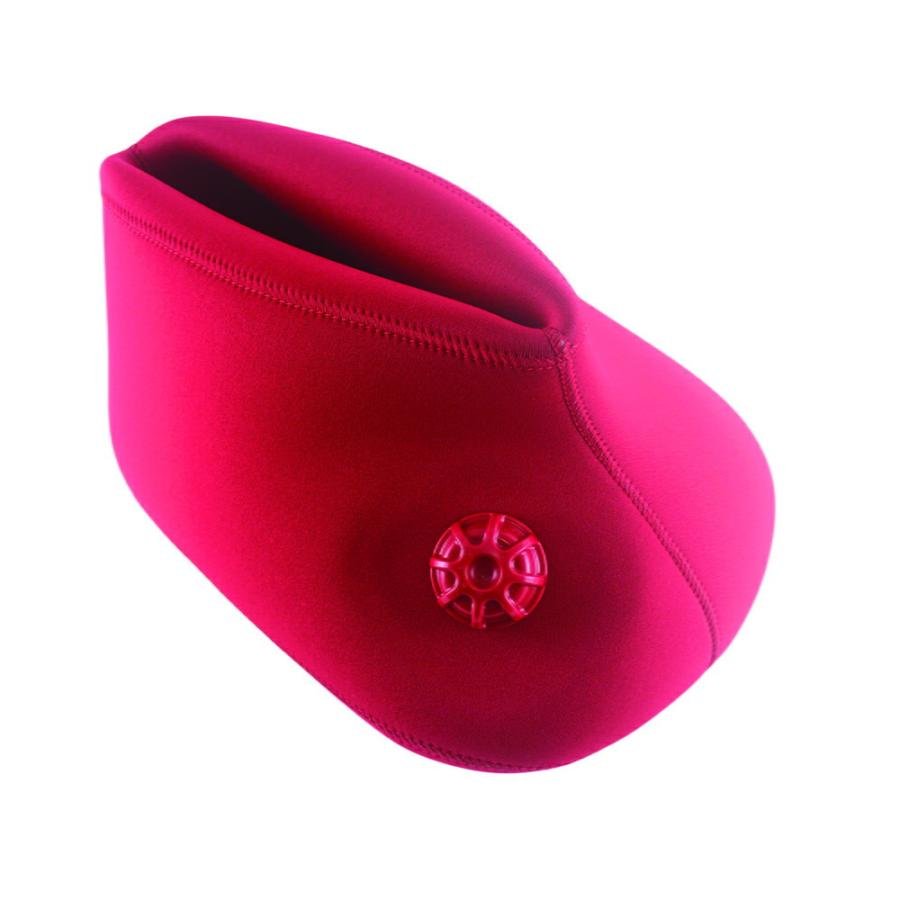
A bright pink custom neoprene hot water bottle cover — the smooth matte face, neat stitching, and red stopper on white.
Store it in a dry place, away from sharp objects. Check the seams now and then: a loose thread is easy to fix early.
Custom Options for Shops and Brands
A plain cover works fine at home. For a shop or a brand, a custom cover does more. It carries your colours. It carries your logo. It turns a plain household item into a product that shoppers remember.
Common custom choices include:
- Colour: one colour for the whole range, or a small set of colours for different buyers.
- Print: a logo, a short line of text, or a simple pattern on the front.
- Size and thickness: match the cover to the bottle you sell, in the thickness your buyers like best.
- Extras: a zip, a hang loop, or a small pocket for a hand warmer.
- Packing: each cover on its own, or packed with a bottle as a ready gift set.
Start with a clear sketch or a sample bottle, and tell your supplier the size, thickness, colour, and print position. Ask for one sample first and check the fit, stitching, and print. Then move on to the full run. To talk through sizes and colours, get in touch with our team.
A neoprene cover is a small thing that makes a big difference: softer heat, longer warmth, and a good grip. Pick the right thickness, check the fit, and wash it gently by hand.
Your Trusted Custom Neoprene Hot Water Bottle Cover Manufacturer
Stop buying plain covers that slip, cool too fast, or wear out at the seams. We are a custom neoprene factory making hot water bottle covers, lunch bags, and other soft goods for brands worldwide.
When you order with us, you get 2–5 mm closed-cell neoprene, Pantone-matched colours, and full-colour print. Our colour matching and printing guide explains how we match Pantone colours and print full-colour designs on neoprene.
Learn more about our OEM production capabilities on our official website: https://source.neoprenecustom.com
Ready to design a custom hot water bottle cover? Contact our team directly: kevin@neoprenecustom.com
Frequently Asked Questions (FAQ)
Q: Can I wash a neoprene hot water bottle cover?
A: Yes. Take it off the bottle, hand wash with mild soap and cool water, rinse well, and air-dry in the shade. Do not machine wash it, and do not use bleach or fabric softener.
Q: How long does the warmth last?
A: It depends on the thickness, the room, and how much water you use. A thicker cover slows heat loss, so the bottle feels warm for longer. A thinner cover gives faster heat but cools sooner. Most people find 3 mm a good middle ground.
Q: Does neoprene have a smell?
A: New neoprene can have a light rubber smell, which fades with air and use. Wash the cover once by hand before first use and let it air out in the shade.
Q: What size cover fits my bottle?
A: Measure your bottle when full: length, width, and shape. Most home bottles are the classic 2-litre shape; long and round bottles need their own pattern. Send the size to your supplier to check the fit.
Q: Can I order custom colours and a logo?
A: Yes — custom colours, print, size, and thickness are all common. Ask for one sample first and check the fit, stitching, and print before the full run.
Q: How can we order custom colours and logos?
A: Send your cover sizes, Pantone colours, and logo file to kevin@neoprenecustom.com for a quotation. We print the full-colour design on the fabric face of the cover.