
Custom Neoprene Dumbbells: Coating, Grip and Weight Guide for Home Gyms
A custom neoprene dumbbell is a solid cast-iron core dipped in a 3 mm neoprene coating. It is the best choice for home gyms and fitness brands that need quiet, floor-safe weights from 1 to 15 pounds. The coating stops slipping, protects wood floors, and the hex heads stop rolling. We make them to order in any colour, weight, and logo.
What Is a Neoprene Dumbbell, and Why Do Home Gyms Choose It?
A neoprene dumbbell is a cast-iron core coated in soft synthetic rubber (polychloroprene), usually 2–4 mm thick. The coating gives it colour, a soft grip, and floor-friendly behaviour. It is the same material family we use across our neoprene fitness equipment range.
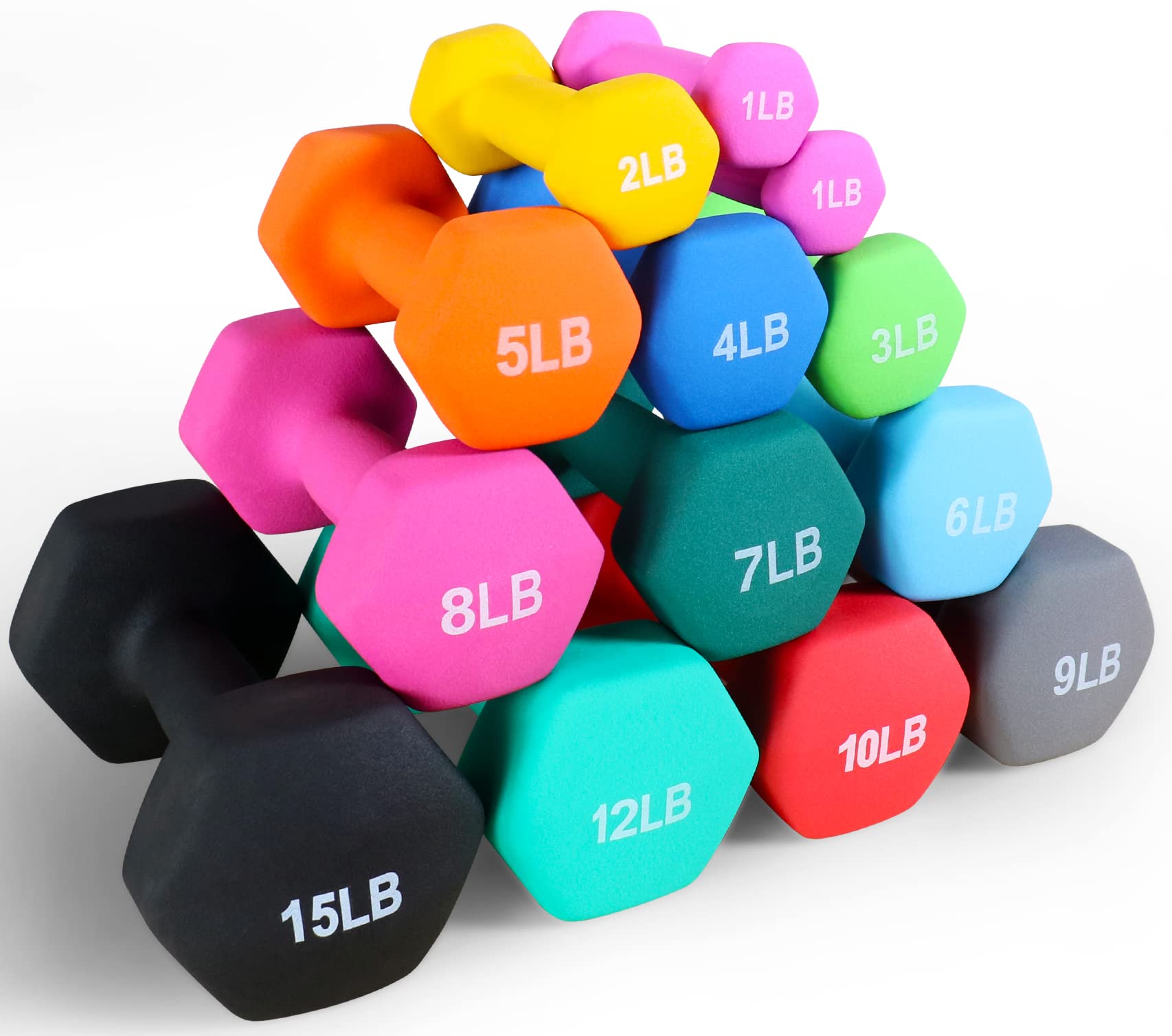
Colour-coded neoprene hex dumbbells, 1LB to 15LB — the most common home-gym range.
Home gym buyers choose neoprene for three reasons. It is quiet. It does not scratch hardwood or tile. And it costs less than a comparable rubber-coated set. Most neoprene dumbbells sell in weights from about 1 to 15 pounds, which is exactly the range where neoprene performs best. Our gym fitness equipment guide explains where neoprene fits across a full home gym.
Bulk buyers are fitness brands, gyms, and retailers ordering custom colours and logos in sets. A colour-coded set lets a class pick up the right weight at a glance, and a printed logo turns a basic weight into a branded product.
How Thick Should the Neoprene Coating Be?
3 mm is the standard. CAP Barbell dips its iron cores in exactly 3 mm of neoprene, and factory guides list 2.8–3.5 mm as the normal working range. CAP's published spec and the WLI Fitness sourcing guide agree on this range.
Below 2 mm, the coating wears through fast and the iron shows. Above 4 mm, the dumbbell gets bulky without gripping any better. The coating is there for grip and floor protection, not for adding weight — the iron core does that job.
We dip each core twice so the coating lands at 3–3.5 mm, and we check the thickness on every production run. A coating that peels after a few weeks is almost always a single thin dip with poor bonding, not a material problem.
What Is Inside: Solid Cast Iron or Sand-Filled Core?
Buy solid cast iron. A one-piece grey iron core (ASTM A48 Grade 20) will not crack, rattle, or snap at the neck. Sand-filled plastic shells feel light and cheap, and they break apart after repeated drops.
Weight tolerance is the number to check. Good factories hold ±1.5% of the marked weight, while budget suppliers drift ±5% to 8%. On a 10 lb dumbbell, ±8% means 9.2 to 10.8 lb — two "10 lb" dumbbells in one pair can feel different in your hands. The WLI Fitness guide lists ±1.5% as the strict commercial standard.
The coating itself is chloroprene rubber, the same CR neoprene we use for wetsuits and protective gear. For lighter, softer gear we also work with SBR neoprene sheets, but dumbbell coatings are CR for grip and durability.
Hex Heads, Handles and Grip: What Stops Rolling and Slipping?
Hex heads stop rolling. The six flat sides hold the dumbbell still on the floor during renegade rows and push-ups, and they stack neatly in studio storage. Round heads roll away the moment you set them down.
Handle size matters more than most buyers think. A handle diameter of 28–32 mm suits most hands for high-repetition work. CAP's coated handle measures 1.57 in (40 mm) including the neoprene, which suits larger hands and two-handed moves. Try the grip before you order in bulk — a handle that is too thick causes forearm fatigue in long classes.
Colour-coded ends are not decoration. In a class of twenty people, one colour per weight means nobody wastes time reading numbers. Pair your dumbbells with our neoprene wrist wraps and neoprene weightlifting belts for a full gym set with one material story.
Core Data: Neoprene vs Rubber vs Vinyl vs Bare Iron
Choosing the right coating decides noise, durability, and who the dumbbell is for. Here is the comparison buyers actually check before ordering:
| Coating | Typical Weight Range | Noise | Durability | Best For |
|---|---|---|---|---|
| Neoprene | 1–15 lbs | Very quiet | Good if not dropped hard | Beginners, cardio / HIIT, rehab, apartments |
| Rubber hex | 5–125 lbs | Quiet | Excellent, drop-tolerant | Strength training, progressive overload |
| Vinyl | 1–12 lbs | Quiet | Can crack in cold; slick when sweaty | Very light toning, travel |
| Bare cast iron | 1–100+ lbs | Loud | Nearly indestructible, but rusts | Budget lifters, garages |
Your Trusted Custom Neoprene Dumbbell Manufacturer
Stop buying generic sets that peel, roll, or weigh wrong. We are a specialized custom neoprene factory. We manufacture neoprene dumbbells, knee sleeves, and fitness gear for brands worldwide.
When you partner with our factory for custom OEM dumbbells, you get precision production. We build weights from 1 to 15 lb (0.5 to 10 kg) with Pantone-matched colours, printed logos on the hex ends, and low minimum order quantities for brand runs.
Do you want to launch a branded line of neoprene dumbbells? We accept custom OEM orders with full branding options, tailored weights, and low minimum order quantities.
- True 3 mm neoprene coating, double-dipped for a non-slip grip.
- Solid ASTM A48 Grade 20 cast iron core, ±1.5% weight tolerance.
- Low Minimum Order Quantities (MOQ) for custom brand runs.
Learn more about our OEM production capabilities on our official website: https://source.neoprenecustom.com
Ready to design a custom dumbbell set? Contact our team directly: kevin@neoprenecustom.com
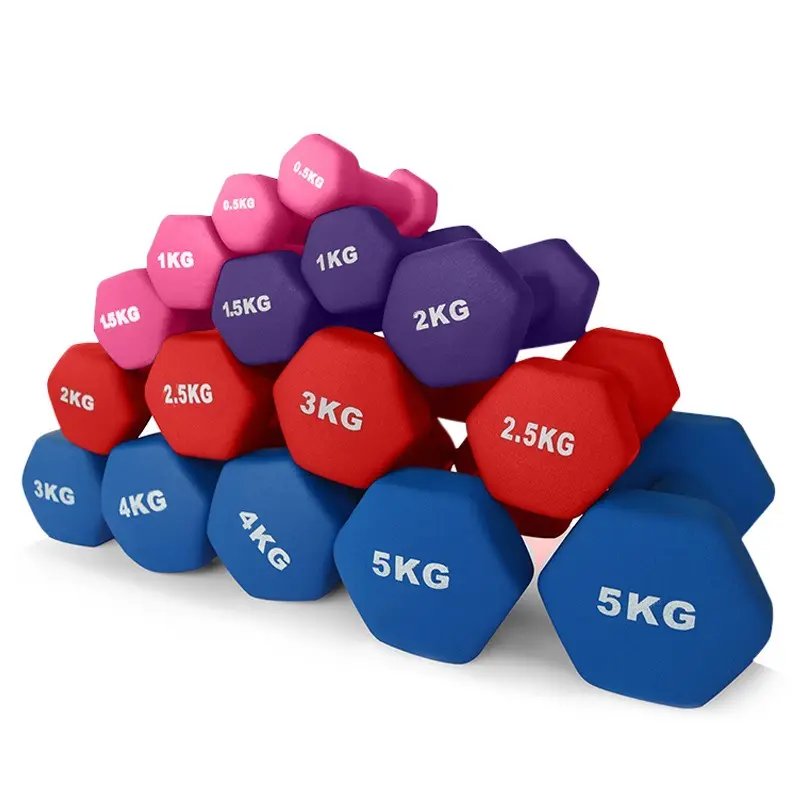
A full colour-coded set, 0.5KG to 5KG — one colour per weight for fast picking.
Frequently Asked Questions (FAQ)
Q: What weight neoprene dumbbells should a beginner buy?
A: Start with 1–5 lb pairs for toning, aerobics, and rehab. Move to 8–12 lb for strength work. Most neoprene sets top out at 15 lb — above 12–15 lb, switch to rubber hex, because the soft coating adds bulk and tears if dropped repeatedly.
Q: Do neoprene dumbbells smell?
A: A new set has a light rubber smell. Air it out for 2–3 days before first use and the smell fades. A strong chemical smell that lasts weeks usually means cheap recycled coating — ask your supplier what grade they use.
Q: Can I drop neoprene dumbbells on the floor?
A: Light drops on rubber gym flooring are fine. Repeated drops from shoulder height on hard floors can tear the 3 mm coating. For drop-heavy training, choose rubber hex dumbbells instead.
Q: How do I clean neoprene dumbbells?
A: Wipe with a damp cloth and mild soap, then dry fully. Do not use harsh solvents or soak them — solvents soften the coating and loosen the bond to the iron core.
Q: How can we order custom colours and logos?
A: Send your weight range, Pantone colours, and logo file to kevin@neoprenecustom.com for a quotation. We print the logo on the hex ends and match one colour per weight, so a full set reads at a glance.