
Custom Neoprene Dive Boots: A Simple Buying Guide
A good custom neoprene dive boot is a soft, stretchy boot made from closed-cell neoprene foam, with a rubber sole and a snug ankle cuff. It keeps your feet warm, stops fins from rubbing, and gives you grip on wet decks and rocky shores. We make it to order in any size, thickness, and colour.
This guide explains what a dive boot does, how to pick thickness and sole, and how to size, clean, and order one.
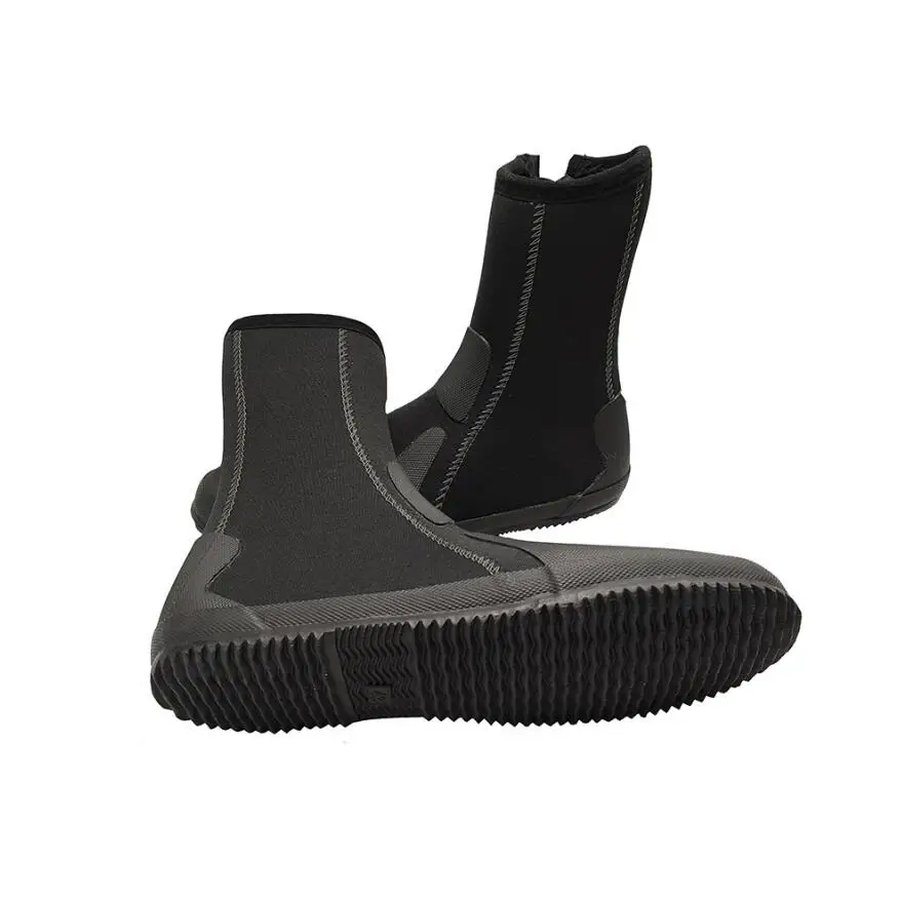
A pair of black custom neoprene dive boots — the smooth matte face, reinforced toe, and deep treaded sole on white.
What Is a Neoprene Dive Boot?
A dive boot is a soft boot you wear inside an open-heel fin. It covers your foot and ankle, and it does three simple jobs. First, it keeps your feet warm in cold water. Second, it stops the fin pocket from rubbing your skin raw. Third, its sole gives you grip when you walk across a wet boat deck, a slippery dock, or a rocky shore.
The boot is made from CR neoprene foam sheet: closed-cell rubber foam with a fabric face on one or both sides. The foam is full of tiny sealed air cells that slow heat loss and cushion each step. See our ultimate guide to neoprene sheets for how the foam is made.
Most dive boots are ankle-high or a little higher. The cuff sits snug around the ankle and keeps sand and small stones out. A rubber sole is bonded to the bottom. On a hard-sole boot, the sole is thick and stiff, like a shoe. On a soft sock, the sole is thin and bends with your foot. The right one depends on where you dive.
How Thick Should the Neoprene Be?
Thickness is the first choice to make. A thicker boot holds heat longer. A thinner boot feels lighter and lets your foot move more freely. There is no single best choice. It depends on the water you dive in.
| Thickness | Feel | Warmth | Best for |
|---|---|---|---|
| 3 mm | Light and flexible | Warm water | Tropical diving, snorkelling, warm seas |
| 5 mm | Snug and warm | Cool water | Most diving, the common choice |
| 7 mm | Thick and firm | Cold water | Cold seas, long dives, winter diving |
For most divers, 5 mm is the safe middle ground. It is warm enough for cool water and still easy to walk in. See our neoprene sheet thickness guide for how to pick the right mm for any product. For a soft, light boot we use a soft SBR grade — our SBR 5–7° foam is the soft grade for sewn accessories. If you dive only in warm seas, 3 mm feels lighter. If you dive in cold water, 7 mm is worth the extra bulk.
Think about the fin too. A thick boot needs a fin pocket with room to spare. Always try the boot and the fin together before you order in bulk.
Hard Sole or Soft Sock?
A hard-sole boot has a thick rubber sole with a deep tread. It works like a shoe. You can walk across a boat deck, a car park, or a rocky beach in it. The sole protects your foot from sharp stones and hot sand, and it lasts longer on rough ground. Most dive shops sell this style first, because it suits boat diving and shore diving alike.
A soft sock has a thin sole, or no hard sole at all. It is light and packs small, and it fits easily inside a tight fin pocket. It is a good pick for warm-water diving from a boat, where you step straight from the deck into the water. It is less suited to long walks over rocks, where a thin sole wears through fast.
The foam itself does not soak up water — our waterproof vs water-resistant guide explains the difference between the foam and the finished boot. If you are not sure which sole to pick, ask where your divers walk. Boat divers do well with a soft sock. Shore divers need a hard sole.
How to Pick the Right Size and Fit
A dive boot should fit like a sock, not like a shoe. A loose boot lets water flush in and out, which makes your feet cold. A tight boot cuts off blood flow and makes your feet ache.
Measure your foot before you order. Stand on a sheet of paper and trace around your foot. Measure the length from heel to the longest toe, then the width across the widest part. Compare both numbers with the size chart.
Here are a few fit tips that work for most people:
- Try them with fins. Put the boot on, then slide your foot into the fin. The fin should feel snug but not crushing.
- Check the heel. The heel should sit in the heel cup with no gap. A heel that lifts when you walk will rub a blister.
- Wiggle your toes. You should be able to move your toes a little. Toes pressed flat against the front mean the boot is too short.
- Walk a few steps. The boot should stay in place and not slip at the heel.
If you fall between two sizes, pick the larger one and wear a thin neoprene sock inside. That fills the gap and adds a little warmth.
Zipper, Velcro Strap, or Slip-On?
A zipper sits on the side or the back of the boot. It opens the ankle wide, so the boot goes on and off fast. That helps when your hands are cold or wet. The trade-off is the zipper itself. It is the first part to fail, and it can let a little water in.
A Velcro strap wraps over the top of the ankle. It pulls the cuff snug and stops the boot from slipping. Some boots have a strap as well as a zipper. It is a simple part with little to go wrong.
A slip-on boot has no zipper and no strap. You pull it on like a sock. It has no hard parts to break and no gaps for water to enter. It suits warm-water diving and rental fleets, where simple gear lasts longer.
For a first custom order, most brands start with a side zipper and a Velcro strap. It is easy to use, easy to size, and easy to sell. A slip-on suits a low-cost rental boot.
How to Clean and Care for Your Dive Boots
Salt water and sand are hard on neoprene. Rinse your boots in fresh water after every dive. Turn them inside out if you can, and rinse the inside too. Salt left inside the seams can dry into sharp crystals that wear the stitching. Sand left in the boot will rub your skin on the next dive.
Wash them by hand with mild soap and cool water. Do not use bleach. Do not put them in a washing machine. Do not dry them in direct sun or with heat. Heat can make neoprene stiff and crack over time. Air-dry them in the shade, with the opening facing down so the water drains out.
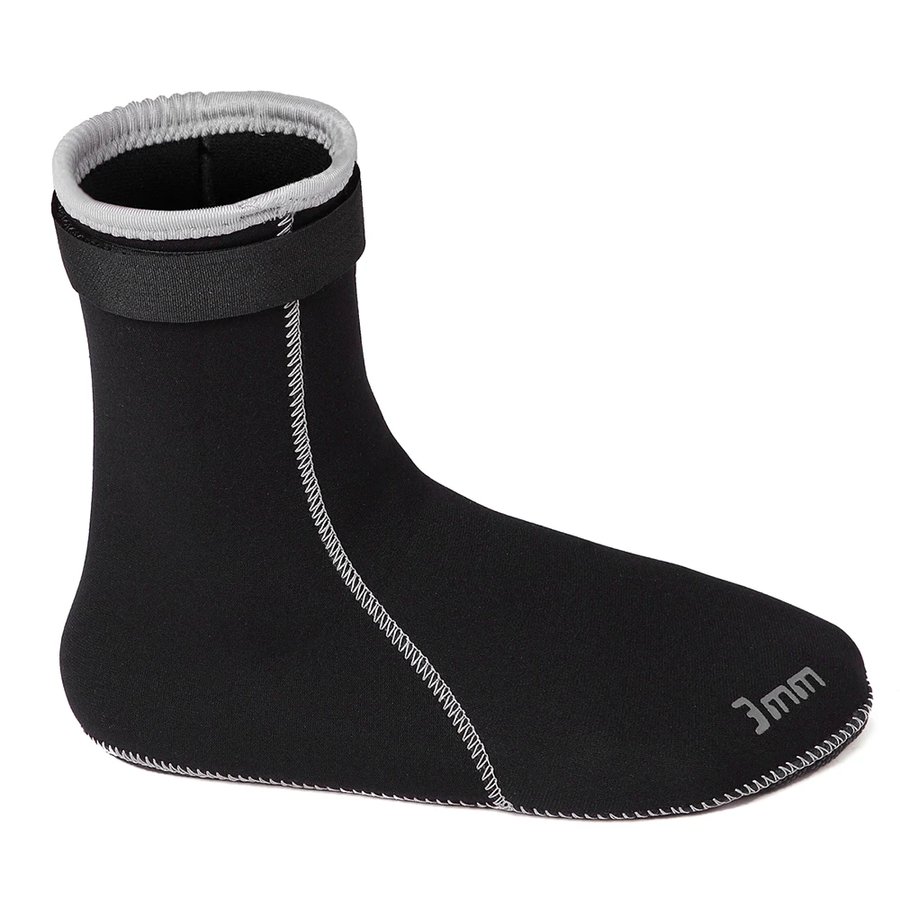
A black 3mm custom neoprene dive sock — the smooth matte face, flatlock seams, and soft grey cuff on white.
Check the sole and the seams before each trip. Store the boots in a dry place, away from sharp fins and weights. You can see more neoprene dive gear on our source site, where we list boots, socks, and other soft gear made from the same material.
Your Trusted Custom Neoprene Dive Boot Manufacturer
A custom order starts with a few simple choices. First, pick the thickness and the sole: 3 mm, 5 mm, or 7 mm, hard sole or soft sock. Then pick the height and the closure: ankle or calf height, zipper, Velcro strap, or slip-on. Then pick the colour. Black is the most popular, but many dive shops add a bright trim colour so their rental boots are easy to spot.
Next, think about the logo. A printed logo on the side is the most common option. A woven label sewn on the cuff looks smarter and lasts longer. Our colour matching and printing guide explains how we match Pantone colours and print designs on neoprene.
When you are ready, visit www.neoprenecustom.com and send your size list, colour choice, and logo file.
Learn more about our OEM production capabilities on our official website: https://source.neoprenecustom.com
Ready to design a custom dive boot? Contact our team directly: kevin@neoprenecustom.com
A good dive boot is simple: soft neoprene, a firm sole, and a fit that stays put. Pick the right thickness, measure before you order, and rinse it after every dive.
Frequently Asked Questions (FAQ)
Q: What thickness dive boot do I need for cold water?
A: Use 7 mm for cold water. For cool water, 5 mm is enough. For warm tropical water, 3 mm feels lighter and dries faster.
Q: Do I wear socks inside neoprene dive boots?
A: You can, but you do not have to. A thin neoprene sock adds warmth and stops rubbing. A cotton sock is a bad idea — it soaks up water and stays cold.
Q: How do I clean dive boots after salt water?
A: Rinse them in fresh water right after the dive, inside and out. Hand wash with mild soap and cool water, rinse well, and air-dry in the shade. No bleach, no machine wash, no dryer.
Q: What size should I order if I am between sizes?
A: Pick the larger size. A boot that is a little loose can be fixed with a thin neoprene sock inside. A boot that is too tight will hurt your feet.
Q: Can I get my own logo on the boots?
A: Yes. Most custom orders add a printed logo on the side or a sewn woven label on the cuff. Send your logo file with your size and colour choices.
Q: How can we order custom colours and logos?
A: Send your boot sizes, Pantone colours, and logo file to kevin@neoprenecustom.com for a quotation.