
Custom Neoprene Camping Mat: Lightweight Comfort for the Outdoors
A custom neoprene camping mat is a closed-cell foam pad, typically 8–15 mm thick, that rolls up small for sleeping and sitting outdoors. It insulates you from cold ground, stays dry in rain, and never punctures like an air pad. We make it to order in any size, thickness and colour.
What Is a Neoprene Camping Mat — and Why Closed-Cell Foam Beats an Air Pad
A neoprene camping mat is a flat pad made from closed-cell chloroprene rubber foam, laminated with fabric on one or both faces, cut to a sleeping or sitting size and rolled up with elastic straps for carrying. The foam is full of tiny sealed gas bubbles. Those bubbles cushion the body against hard ground, block cold from rising up through the pad, and stop water from soaking in. An air pad is light and packs small, but one sharp stone or thorn punctures it — and a punctured air pad is a flat sheet of plastic for the rest of the trip. A thin yoga mat is cheap but too thin to sleep on. Neoprene is the only one of the three that stays padded, stays warm, and never goes flat.
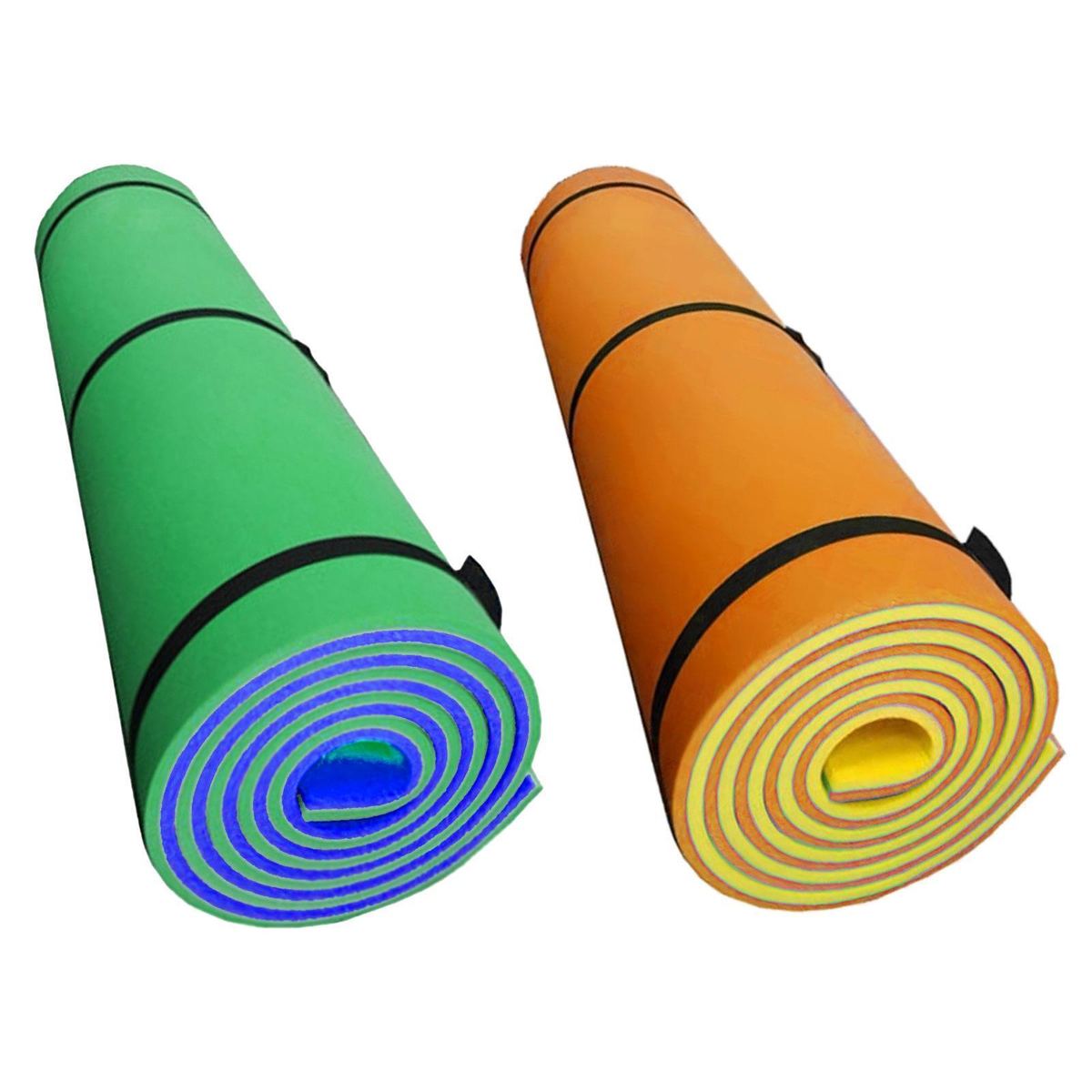
Two rolled neoprene camping mats — the green roll with a blue spiral core and the orange roll with a yellow spiral core, foam layers visible at the cut ends.
The material is the same CR neoprene foam sheet we use across our wetsuits and sports supports — see our ultimate guide to neoprene sheets for how the foam is made. Bulk buyers are outdoor brands, camping retailers, corporate gift buyers and event organisers. A printed mat turns a basic pad into a branded product, and one size range covers a whole customer base.
How Thick Should a Neoprene Camping Mat Be?
8–15 mm is the typical range for a camping mat. Below 8 mm, the mat is a sitting pad — fine for a picnic or a beach, but too thin to sleep on over stones and roots. At 10 mm, the mat cushions a night on firm ground and still rolls up small. At 15 mm, the mat handles rough ground and cold nights, with a clear step up in comfort. Above 15 mm, the mat gets heavy and bulky to carry. For most camping we use 10 mm for sitting and light sleeping, and 15 mm for overnight sleeping on rough ground.
Our factory splits foam from 1.5 mm to 45 mm, so any thickness is possible — but for camping mats we use a soft SBR grade. Our SBR 5–7° foam is our soft grade for sewn accessories: tensile strength 247 kPa and elongation 199% on its technical data sheet. That stretch is what lets the mat roll up tight again and again without cracking at the fold. See our neoprene sheet thickness guide for how to pick the right mm for any product.
Thickness is only half the story. The foam must be closed-cell. Open-cell foam is softer and cheaper, but it absorbs rain and ground moisture, holds the smell, and tears more easily at the edges. Ask your supplier which foam they use — and ask for the data sheet, not just a claim.
Size, Weight and Roll-Up: What to Expect
A single-person camping mat rolls up into a compact bundle you can strap to a pack. The mat is cut to a sleeping length, rolled from one end, and held with elastic straps — no pump, no valve, no inflation. Unroll it and it lies flat in seconds. Fold it in half and it becomes a sitting pad for a campfire or a beach. The closed-cell foam springs back after every roll, so the mat keeps its thickness trip after trip.
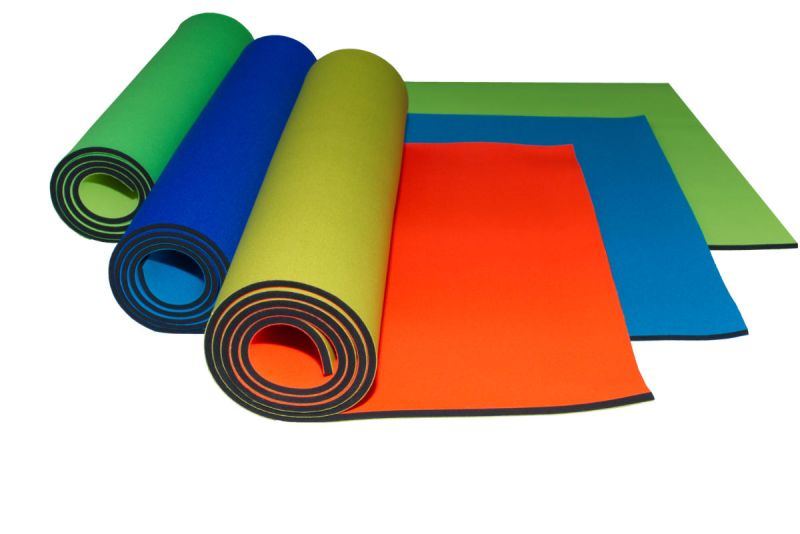
Three rolled neoprene camping mats in green, blue and orange, partly unrolled — the smooth matte faces and the foam layers at the rolled ends.
Size is a custom choice. A single-person mat is the standard, a double mat suits two sleepers, and a short sitting pad suits a day pack. Tell your supplier who will use the mat and how it will be carried, so the size fits the pack and the sleeper.
The foam is waterproof. The mat is water-resistant. Closed-cell neoprene does not absorb water — it beads and wipes off the surface. Our waterproof vs water-resistant guide explains the difference: the foam blocks liquid, but water can sit in the fabric face and at the cut edges. For a normal trip — rain on the tent floor, a wet beach — the mat stays dry enough and dries fast in the sun.
Print, Colours and Custom Options
A neoprene camping mat takes full-colour print on its fabric face. Print a logo, a brand pattern, a trail map or a Pantone-matched brand colour — the fabric face holds a sharp, bright design. Our colour matching and printing guide explains how we match Pantone colours and print full-colour designs on neoprene. A printed mat is a walking billboard: the camper carries your brand to every campsite, and the mat itself is the advertisement.
Custom options go beyond print. Pick the mat colour, the thickness, the size, and the strap style. Add a brand label on the mat edge or a woven tag on the strap. One size range covers a whole shop — single, double and sitting pads from the same order.
Rinse, soap, air dry — no heat. Rinse the mat in fresh water, wash with mild soap and cool water, and hang it up to air dry away from direct sun. Do not machine wash and do not tumble dry: heat damages the foam and shrinks the fabric face. Do not leave it in direct sun for days — UV ages neoprene faster than anything else. A rinsed mat is dry enough to use again in a few hours, because the foam holds no water.
Your Trusted Custom Neoprene Camping Mat Manufacturer
Stop buying plain mats that soak up rain, go flat after one trip, or tear at the edge after one season. We are a specialized custom neoprene factory making camping mats, sports bags, and protective sleeves for brands worldwide.
When you partner with our factory for custom OEM camping mats, you get 8–15 mm closed-cell neoprene, single, double and sitting sizes, elastic strap roll-up, Pantone-matched colours, and full-colour print.
Do you want to launch a branded line of neoprene camping mats? We accept custom OEM orders with full branding options, tailored sizes, and low minimum order quantities.
- True 8–15 mm closed-cell neoprene, padded body and waterproof face that stays dry in rain and ground moisture.
- Single, double and sitting sizes, with elastic strap roll-up on request.
- Low Minimum Order Quantities (MOQ) for custom brand runs.
Learn more about our OEM production capabilities on our official website: https://source.neoprenecustom.com
Ready to design a custom camping mat? Contact our team directly: kevin@neoprenecustom.com
Frequently Asked Questions (FAQ)
Q: What size camping mat should I order?
A: A single-person mat is the standard for one sleeper. A double mat suits two sleepers, and a short sitting pad suits a day pack. Tell your supplier who will use the mat and how it will be carried, so the size fits the pack and the sleeper.
Q: Is a neoprene camping mat really waterproof?
A: The foam is waterproof — it does not absorb water. The mat as a whole is water-resistant: rain and ground moisture bead off, but water can sit in the fabric face and at the cut edges. For normal camping the mat stays dry.
Q: Will the mat puncture like an air pad?
A: No — closed-cell foam has no air chamber to puncture. Stones, thorns and rough ground cannot flatten a neoprene mat, so it works on the same ground trip after trip.
Q: How do I clean a neoprene camping mat?
A: Rinse it in fresh water, wash with mild soap and cool water, and air dry away from sun and heat. A rinsed mat is dry enough to use again in a few hours. Do not machine wash or tumble dry — heat damages the foam.
Q: How can we order custom colours and logos?
A: Send your mat style, 1–2 Pantone colours, and logo file to kevin@neoprenecustom.com for a quotation. We print the full-colour design on the fabric face of the mat.