
Custom Neoprene Baby Bottle Sleeves: Warmth, Grip and Safety Guide for Parents and Brands
A custom neoprene baby bottle sleeve is a soft chloroprene rubber cover, usually 3 to 5 mm thick, that slides over a baby bottle. It slows heat loss by 20 to 40 minutes, stops the bottle slipping from small hands, and cushions glass bottles against drops. Brands order them in custom colours, for 4 oz and 9 oz bottles.
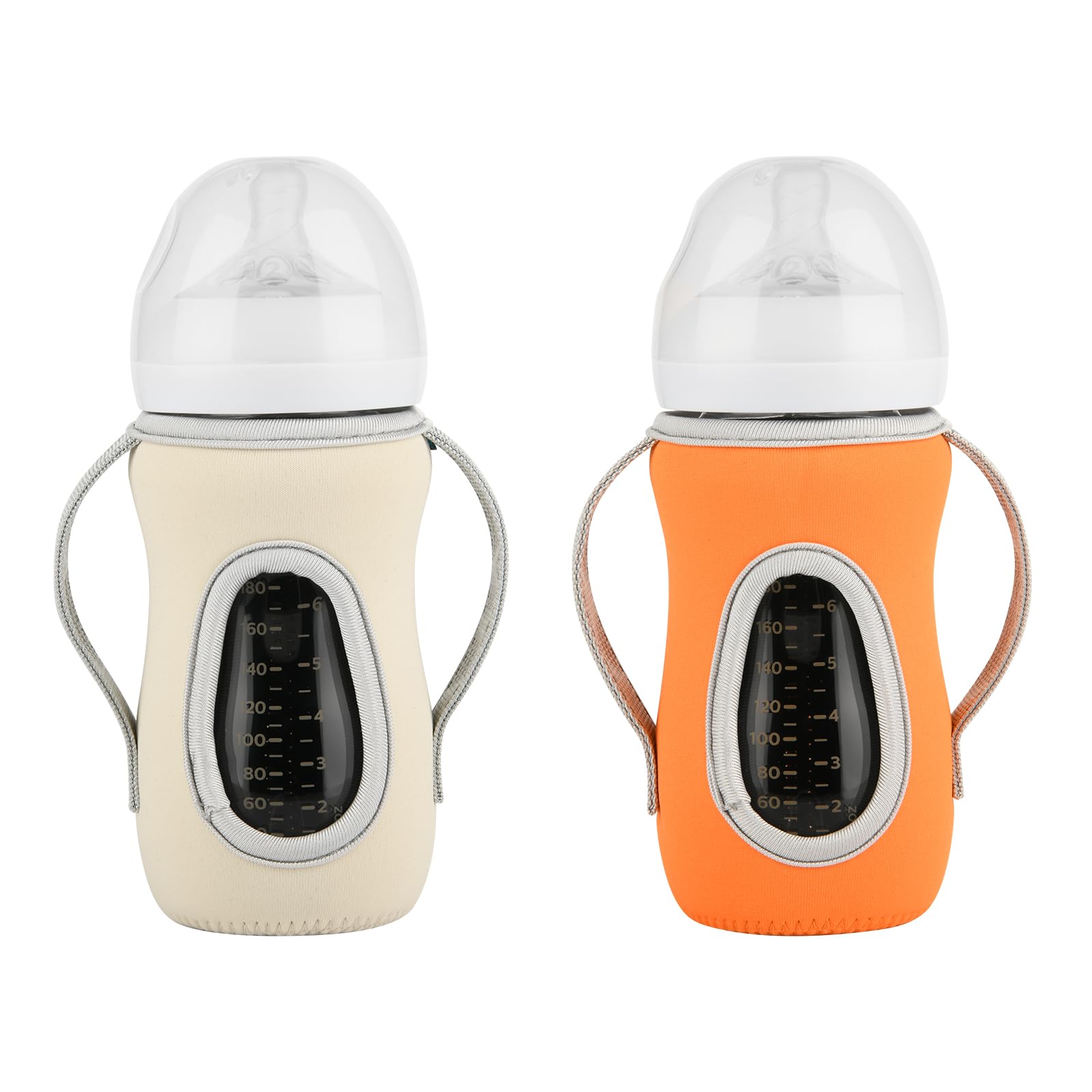
Cream and orange neoprene sleeves — the measurement window keeps the scale visible.
What Is a Neoprene Baby Bottle Sleeve, and How Does It Work?
A neoprene baby bottle sleeve is a stretchy cover made from closed-cell foam rubber. Tiny air bubbles trapped inside the foam slow heat loss and stop condensation wetting the parent's hand. It is the same material family we use across our custom neoprene baby bottle sleeves range.
The sleeve does three jobs at once. It insulates. It grips — wet and small hands hold soft rubber better than smooth glass or plastic. And it protects: a glass bottle in a 4–5 mm sleeve can survive a fall from a high chair.
How Long Does a Neoprene Sleeve Keep Milk Warm?
A single sleeve adds 20 to 40 minutes of warmth, per the CradleCheck bottle warmer guide — it slows heat loss, but it cannot add heat. A double-layer bag does more: the Philips Avent ThermaBag keeps milk cold or water hot for up to 4 hours.
The right expectation matters. A baby takes 5 to 30 minutes to finish a bottle, and a thermal cover holds the feed steady for about 30 minutes, up to 60 minutes, at 36 to 37 °C, according to US patent application 20070289982. It is not a thermos, and it is not a substitute for a bottle warmer on a long trip.
The CDC says that once breast milk is warmed, it should be used within 2 hours — leftover milk from a feeding, too. Freshly expressed milk keeps up to 4 hours at room temperature. A sleeve buys time inside that window — it does not extend it. Our thermal insulation guide for bottle sleeves explains how thickness and fit change the result.
How Thick Should the Neoprene Be: 3 mm or 5 mm?
3 mm is right for everyday grip and light insulation; 4 to 5 mm is right for real warmth and glass protection. The foam is chloroprene rubber — the same CR neoprene used for wetsuits. Retail best-sellers use 4.5 mm: Beautyflier sleeves for Philips Avent bottles are listed at 4.5 mm in the LoveMama insulator roundup.
Thicker neoprene insulates better and cushions harder, but it also adds bulk. A 5 mm sleeve may not fit in a bottle warmer or a car cup holder. A 3 mm sleeve is slim and light, and it is enough if the main job is grip and drop protection rather than long warmth. Most custom orders land at 3 mm or 4 mm.
Ask your supplier to state the thickness in the quotation — the foam thickness before lamination, not after. A sleeve quoted as "5 mm" that measures 3 mm of foam plus fabric will not insulate the way you expect. The same rule applies to our water bottle sleeves.
Which Bottles Fit? Sizes, Brands and the Measurement Window
Most sleeves fit one bottle size, so measure first. The two standard sizes are 4 oz (120 ml) for newborns and 8 to 9 oz for older babies — HEVEA sells a 120 ml / 4 oz glass bottle, while Beautyflier sleeves fit 9 oz Philips Avent bottles. A wide sleeve will slide on a narrow bottle, and a narrow sleeve will not stretch over a wide one.
Neoprene stretches a little and hugs the bottle, but it is not one-size-fits-all. Before ordering, measure the bottle's diameter and height, and tell the supplier the brand and model — a supplier who quotes without these numbers is guessing. See our baby bottle sleeve application page for the sizes we make.
Two details make a sleeve easy to live with. A measurement window — the oval cut-out in the photo above — lets parents read the scale without pulling the sleeve off mid-feed. Carry handles let a toddler hold the bottle alone and let a parent hook it to a stroller or diaper bag.
Is Neoprene Safe for Babies? What Standards Should You Check?
Ask for test reports before you order — do not take "baby-safe" on trust. The European standard is EN 14350:2020+A1:2023, covering feeding bottles and related parts for children from birth to 48 months. In the United States, the CPSIA caps lead at 90 ppm in coatings and 100 ppm in substrates, and phthalates (DEHP, DBP, BBP) at 0.1% in children's toys and care articles.
A sleeve touches the bottle, not the milk, but it touches hands and sometimes mouths all day. Ask your supplier for BPA-free and phthalate-free confirmation in writing, plus the test report number — a real report has a lab name, a date, and a standard number. For the softest baby products we also work with hypoallergenic SBR neoprene. Our washable neoprene baby gear guide covers how we handle baby-product materials.
Neoprene Sleeve vs Insulated Bag vs Bare Bottle: What Should You Buy?
The right choice depends on the trip:
| Option | Extra Warmth | Grip | Drop Protection | Best For |
|---|---|---|---|---|
| Neoprene sleeve | 20–40 minutes | Excellent | Good for glass bottles | Daily feeds, daycare, stroller |
| Insulated bag | Up to 4 hours | No grip help | Good, padded | Long trips, 2–3 bottles |
| Bare bottle | None | Slippery when wet | None — glass breaks | Home, short feeds |
Sources: CradleCheck, "Bottle Warmer That Keeps Bottle Warm"; Philips Avent ThermaBag listing, BIG W
Your Trusted Custom Neoprene Baby Bottle Sleeve Manufacturer
Stop buying generic sleeves that do not fit your bottle. We are a specialized custom neoprene factory making baby bottle sleeves, baby bath kneelers and safe baby toys for brands worldwide.
When you partner with our factory for custom OEM sleeves, you get 3 mm or 4.5 mm neoprene, sizes for 4 oz and 9 oz bottles, a measurement window, carry handles, Pantone-matched colours, and a printed logo.
Do you want to launch a branded line of baby bottle sleeves? We accept custom OEM orders with full branding options, tailored sizes, and low minimum order quantities.
- 3 mm or 4.5 mm neoprene, 20–40 minutes of extra warmth.
- Measurement window and carry handles as standard custom options.
- Low Minimum Order Quantities (MOQ) for custom brand runs.
Learn more about our OEM production capabilities on our official website: https://source.neoprenecustom.com
Ready to design a custom baby bottle sleeve? Contact our team directly: kevin@neoprenecustom.com
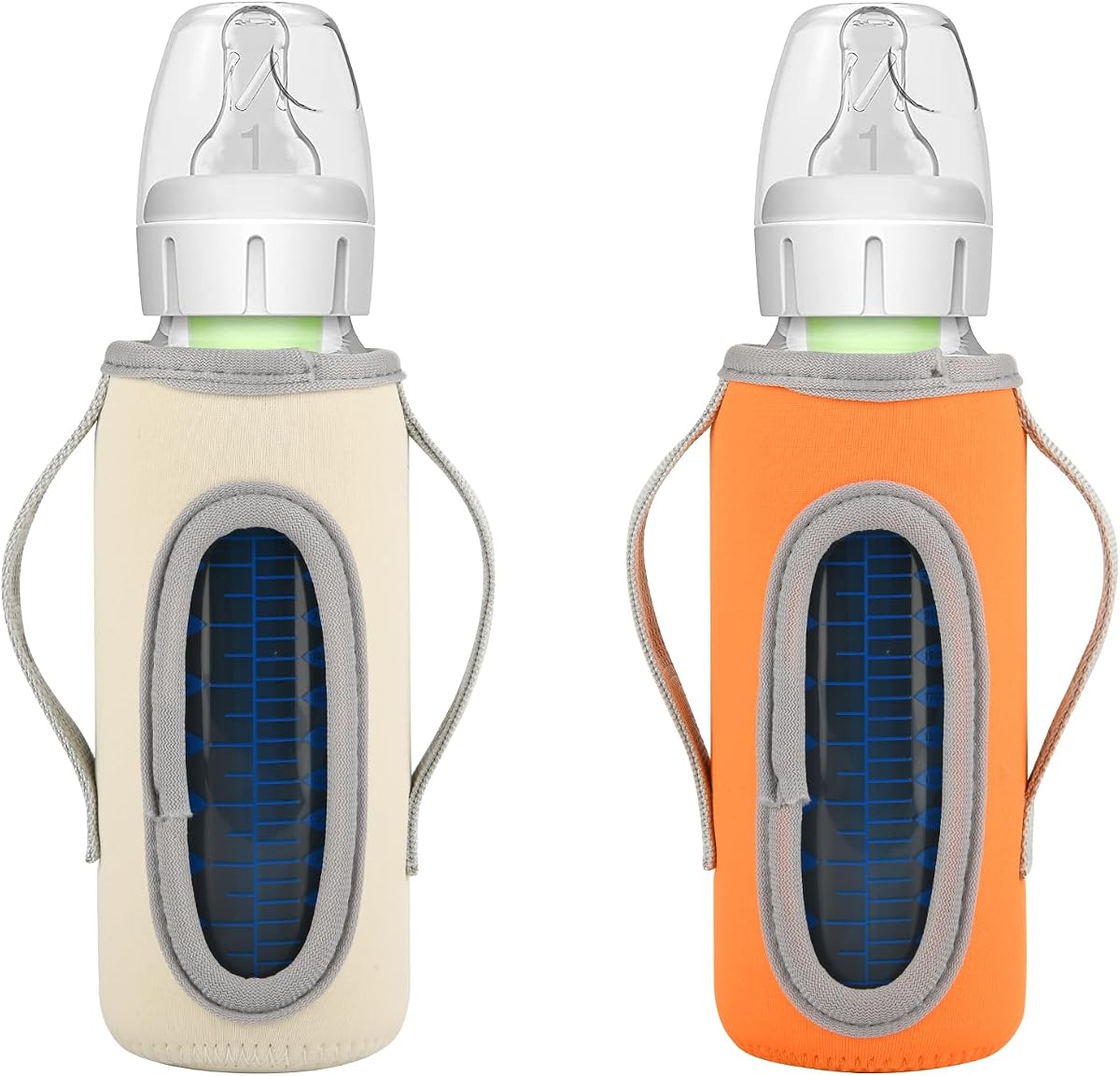
Cream and orange sleeves — the blue scale stays readable through the window.
Frequently Asked Questions (FAQ)
Q: How long does milk stay warm in a neoprene baby bottle sleeve?
A: A single sleeve adds 20 to 40 minutes of warmth after the bottle is warmed. Use warmed breast milk within 2 hours, per the CDC — the sleeve buys time inside that window, it does not extend it.
Q: Will a neoprene sleeve fit my baby's bottle?
A: Only if it is made for your bottle's size. Measure the diameter and height first — most sleeves fit either 4 oz (120 ml) or 8–9 oz bottles. Tell the supplier the brand and model.
Q: Can I use a neoprene sleeve with a bottle warmer?
A: Yes. Warm the bottle first, then slide the sleeve on — the sleeve slows heat loss after warming, it does not heat the milk. A 5 mm sleeve may not fit inside a narrow warmer, so check the fit before ordering.
Q: Is neoprene safe for babies?
A: Ask for the test reports. The sleeve should be BPA-free and phthalate-free, and meet EN 14350:2020+A1:2023 in Europe and CPSIA limits (lead 90 ppm in coatings, 100 ppm in substrates, phthalates 0.1%) in the United States.
Q: How can we order custom colours and logos?
A: Send your bottle size, Pantone colours, and logo file to kevin@neoprenecustom.com for a quotation. We print the logo on the sleeve and match one colour per size.