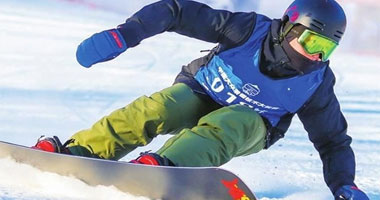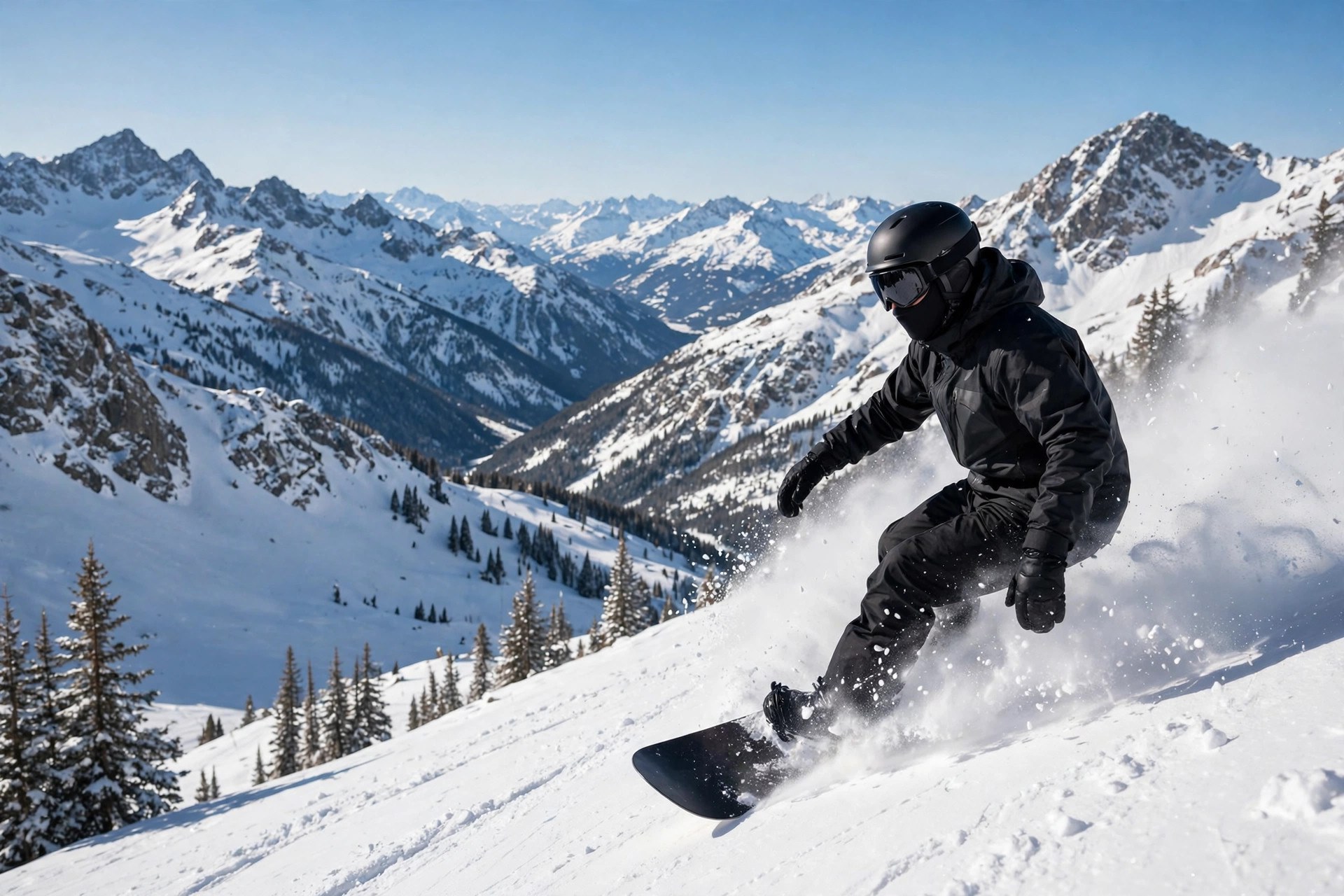
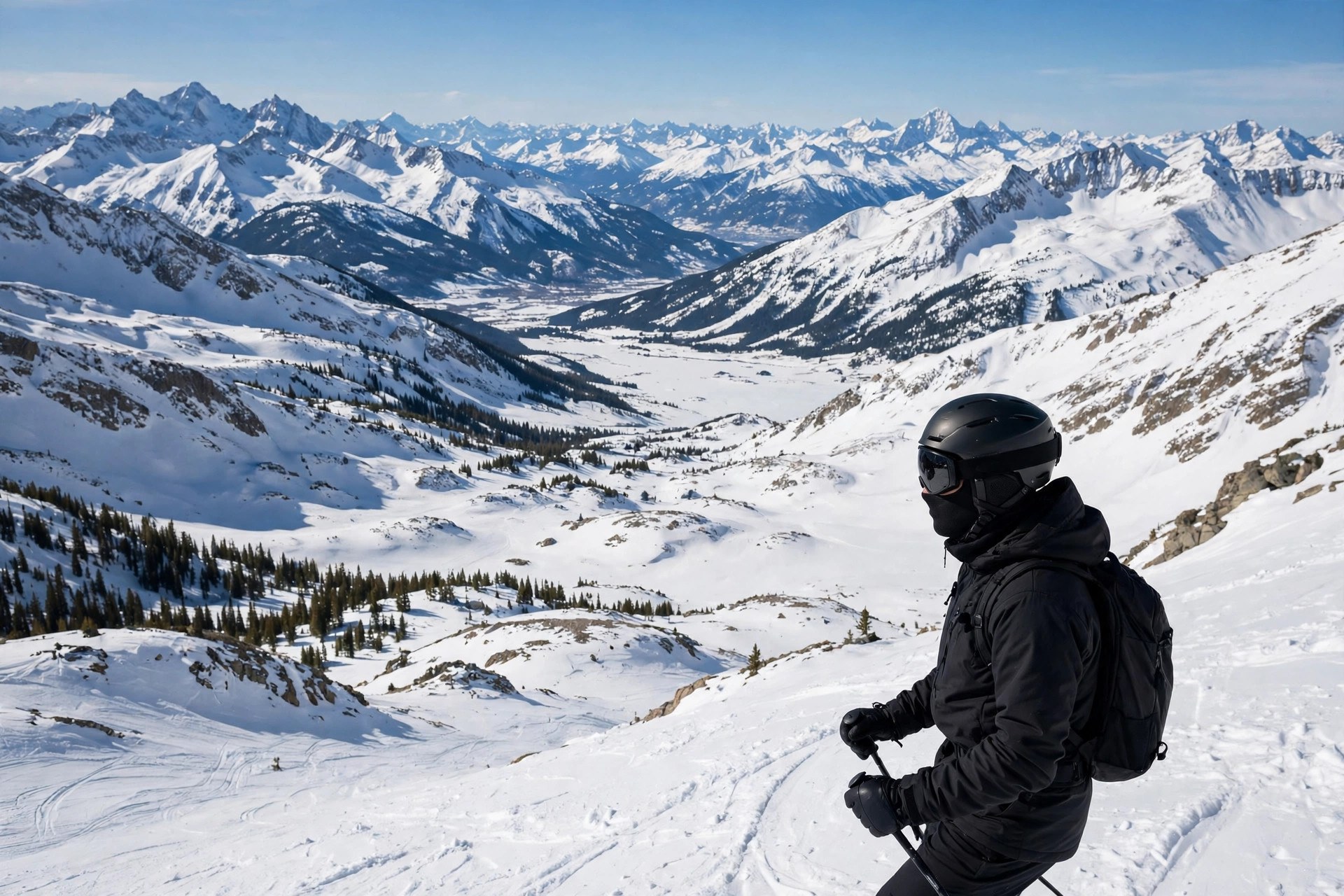
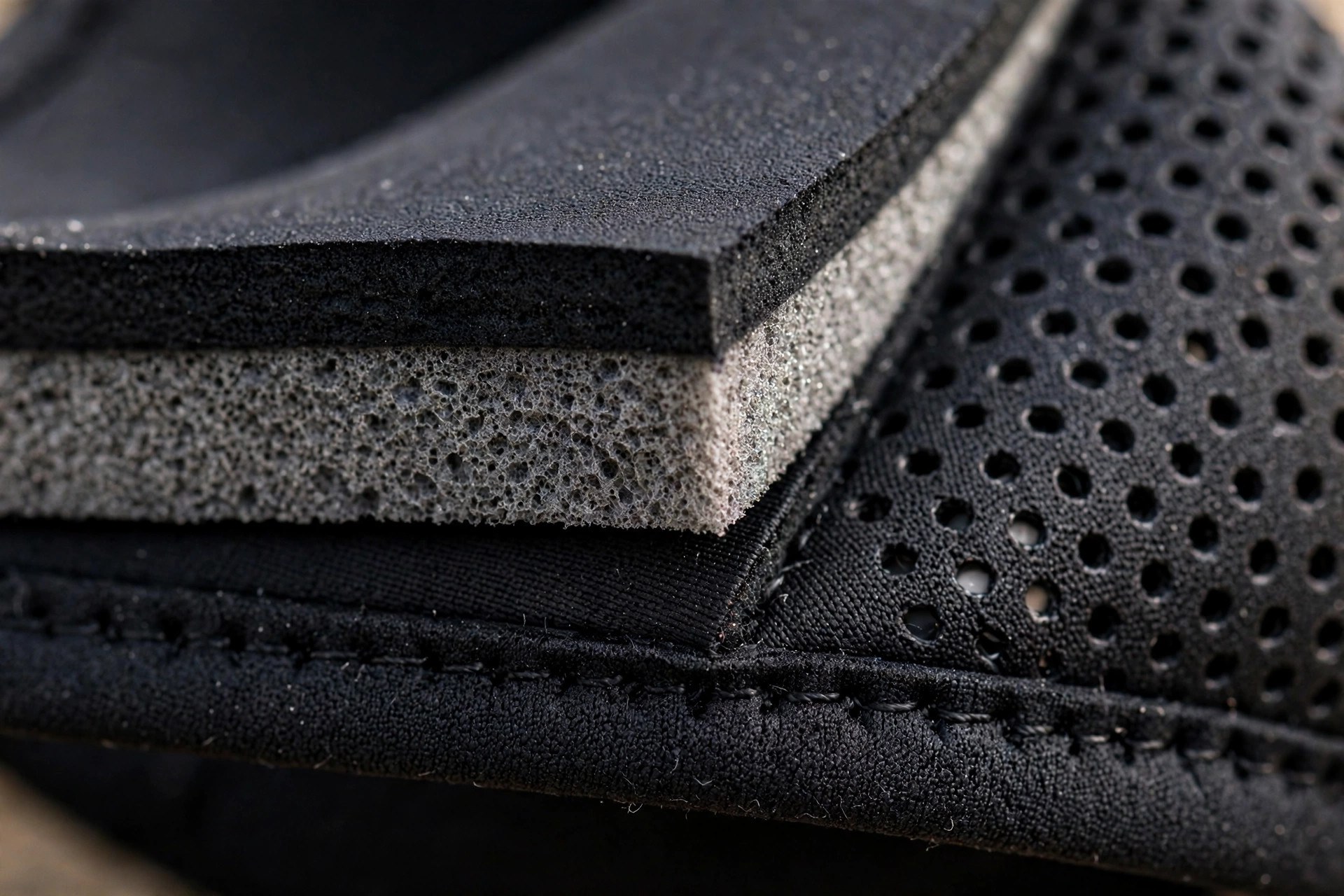
A neoprene winter face mask is a shaped mask of laminated neoprene (SBR, SCR or CR foam + fabric), usually 3 mm thick, that covers the nose, cheeks, mouth and chin and fastens behind the head with hook-and-loop. The closed-cell foam blocks the wind and holds a layer of warm air against the skin, and a perforated or mesh panel over the mouth lets the wearer breathe without pulling the mask down. It is cold-weather sports wear for skiing, snowboarding, motorcycle riding and winter cycling — not a medical, filtration or safety product. Send us your design drawing and the sizes you need, and we will confirm the best material and thickness.
We manufacture custom neoprene winter face masks in our own factory in China, where we have made neoprene products for 15 years. We cut the foam, laminate the fabric face and stitch the finished masks under one roof, so a change to the coverage, the breathing panel or the size run can be checked on a sample before bulk production starts.
The face is where winter bites first. Fingers and toes get thick gloves and boots, but the cheeks and nose sit in the full wind on every lift ride and every descent, and the wind chill at riding speed is far below the air temperature on the thermometer. That is why face coverage on the mountain is a foam product. It is made with the same approach as the gear in our guide to neoprene for ski and snowboard gear: closed-cell foam where the weather hits, a fabric face that takes a print, and nothing promised that the material cannot do.
Neoprene earns its place here over a fleece or knitted mask for three reasons. Wind passes through a knit, however thick, but the foam panel stops it at the surface; the shaped panel keeps its form all day instead of sagging as it picks up breath moisture; and the mask keeps its fit season after season, because the foam and its hook-and-loop strap do not stretch out the way a tired elastic mask does. The flat cheek panel is also a full print surface, so a brand's logo sits where it is seen in every photo taken on the slope.
Fit is the detail that decides whether a winter mask gets worn or left in the lodge. The panel is shaped over the nose so goggles seal on top of it instead of leaking air onto the eyes, the back strap is wide hook-and-loop that fastens over a hat or under a helmet, and the breathing panel sits exactly over the mouth. The same fit-first thinking runs through the rest of the winter kit — hands are covered the same way, as our article on CR neoprene liners in winter cycling gloves explains. We cut to the size run you sell — send the head measurements or your size chart — and check the fit on a sample before bulk production.
3 mm is the standard for most neoprene winter face masks. It blocks the wind and holds warmth against the face while the panel still flexes as the wearer talks and breathes, which is why most of the masks we make are cut in 3 mm. For the full range, see our neoprene sheet thickness guide.
| Thickness | Best for | Trade-off |
|---|---|---|
| 3 mm | Most masks — skiing, snowboarding and winter cycling | Lightest on the face and easiest to breathe and talk in |
| 5 mm | Coldest resorts, snowmobile use and motorcycle riding | Warmer at speed; slightly firmer feel on the face |
| 7 mm | Extreme cold and expedition use | Maximum warmth; the stiffest panel of the three |
Size the mask by head measurement, not by clothing size. Take the tape around the head at forehead height, tell us whether the run is the half-mask or the full-coverage style, and we will grade the panel and strap to match. Our standard runs cover adult S/M and L/XL, and we cut to a brand's own size chart on request.
SBR and SCR are the standard choices for most winter mask ranges, and CR is the choice for premium lines. SBR (styrene-butadiene rubber) is the firm, light foam that holds the panel's shape at the lowest cost. CR (chloroprene rubber) is softer and more elastic, so the mask follows the face's movement closely and springs back after a full season of being pulled on and off. SCR sits between the two on cost and stretch, and it is what most winter sports ranges choose.
The numbers show why the two foams feel different: our CR foam measures 3–5° Shore C hardness, 276.32 kg/m³ density, 860 kPa tensile strength and 550% elongation, while our SBR foam measures 10–15° Shore C, 158.34 kg/m³, 256 kPa and 185%. CR is the softer, springier foam; SBR is the firmer, lighter one. On the face, that means a CR mask hugs the nose and cheeks closely, while an SBR mask keeps a crisper panel shape through the day.
| SBR | CR | |
|---|---|---|
| Cost | Lower cost; the usual choice for everyday lines | Costs more than SBR |
| Feel on the face | Firm panel that keeps its shape | Soft and elastic; follows the nose and cheeks as the wearer moves |
| A season of daily use | Good; holds up through daily on-off use | Better; springs back after repeated stretching over the face |
For styles, sizes and ordering, see our custom neoprene winter face masks product page.
Ski and snowboard brands — the face line beside your gloves and neck warmers, in your colours and print.
Ski schools and rental fleets — durable masks with the fleet logo on the cheek panel, in mixed sizes that survive a season of daily washing.
Motorcycle and winter cycling accessory brands — face coverage cut to fit under helmets, sold alongside our custom neoprene bar mitts for the hands.
Online winter sports stores — a soft, flat product that photographs well, ships in a polybag and sizes clearly by head measurement.
When neoprene is NOT the right choice
Tell us which of these your winter face masks need, and we will build the sample to your drawing.
Is a neoprene winter face mask warm enough for skiing?
Yes — the closed-cell foam panel blocks the wind at the surface and holds warm air against the cheeks, nose and chin, which is where lift rides and descents chill the face. 3 mm covers most ski days; 5 mm is the choice for the coldest resorts.
Can the wearer breathe through the mask?
Yes. The mouth area is a perforated foam panel or a mesh insert, so breath escapes through the panel instead of travelling up into the goggles, and the wearer can talk without pulling the mask down.
Should we order the half-mask or the full-coverage style?
The half mask suits most ski, snowboard and cycling ranges and pairs with any helmet or hat. The full-coverage style adds forehead and side coverage for the coldest resorts and for snowmobile and motorcycle use.
What is the minimum order?
200 pieces per design as a general minimum, adjustable to your actual order.
Can I get a sample first?
Yes — we support sampling, usually in 5–7 days. Send us your design drawing and the size range you need.
How long does bulk production take?
Usually 15–18 days after sample approval, depending on the quantity and customisation.
We make custom neoprene winter face masks to your style, your size run and your branding, and we check the fit on a sample before bulk production. The general minimum order is 200 pieces per design, adjustable to your actual order; sampling is supported, usually in 5–7 days, and bulk production usually takes 15–18 days after sample approval.
Request a Quotation
To help us review your inquiry, please send:
Website: https://www.neoprenecustom.com/ Email: kevin@neoprenecustom.com
A winter mask is judged on the coldest lift of the day, by how the face feels at the top. Send us your design and we will make you a sample to ride-test.
Contact: Kevin
Phone: 13417385320
Tel: 0734-87965514
Email: kevin@neoprenecustom.com
Add: Intersection of Zhangjialing Road and Science and Technology Road, Guiyang Industrial Park, Guiyang Town, Qidong County, Hengyang City, Hunan Province./Dongguan Factory(GUANXIN): Shixin Street, Fushan Village, Liaobu Town, Dongguan, Guangdong Province.