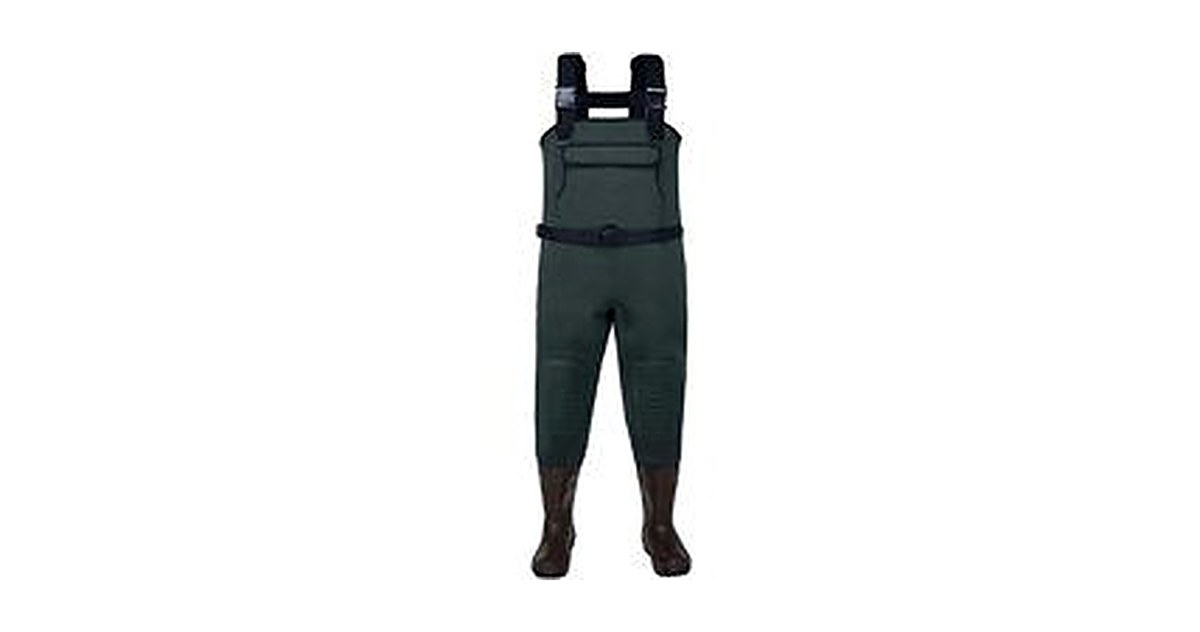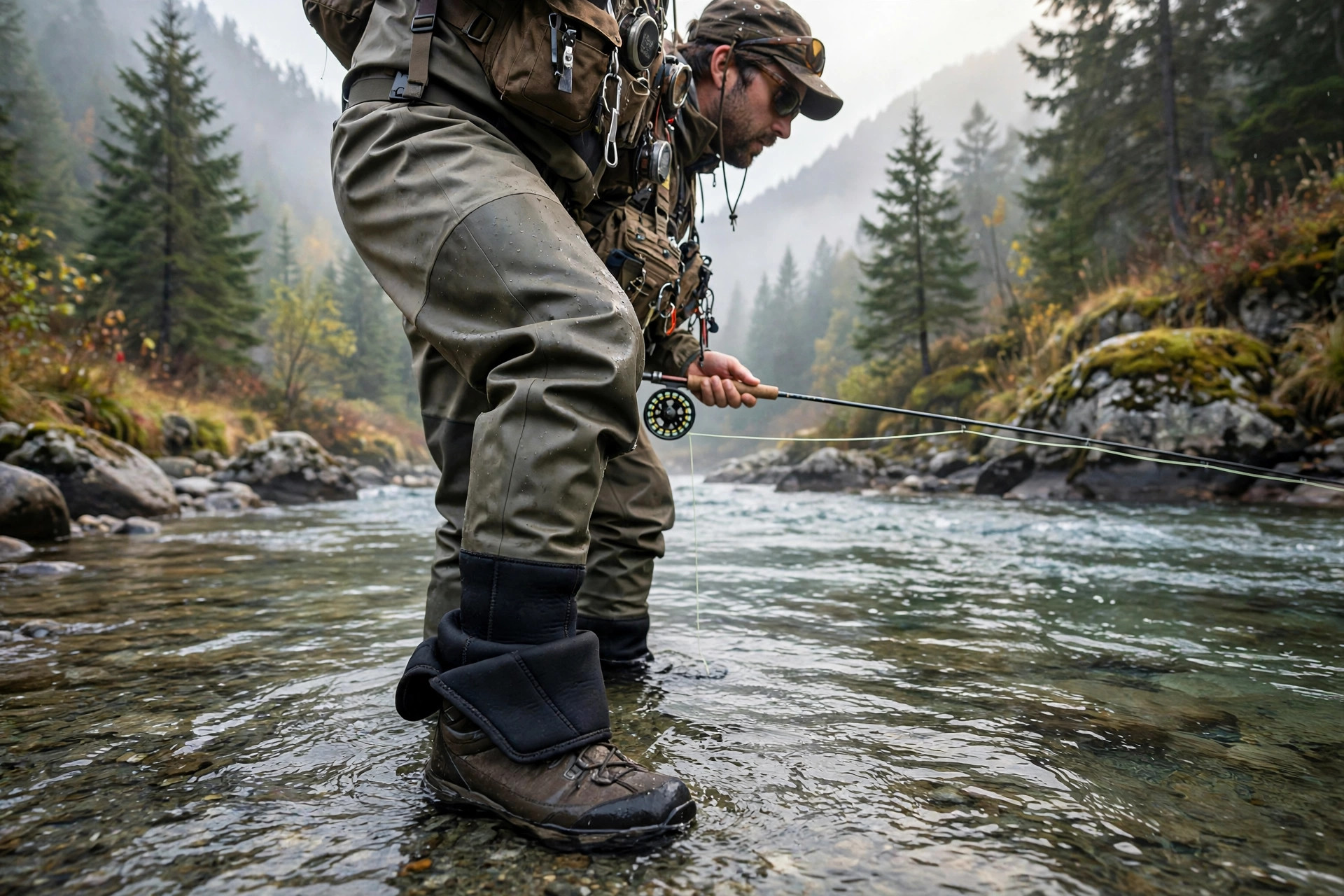
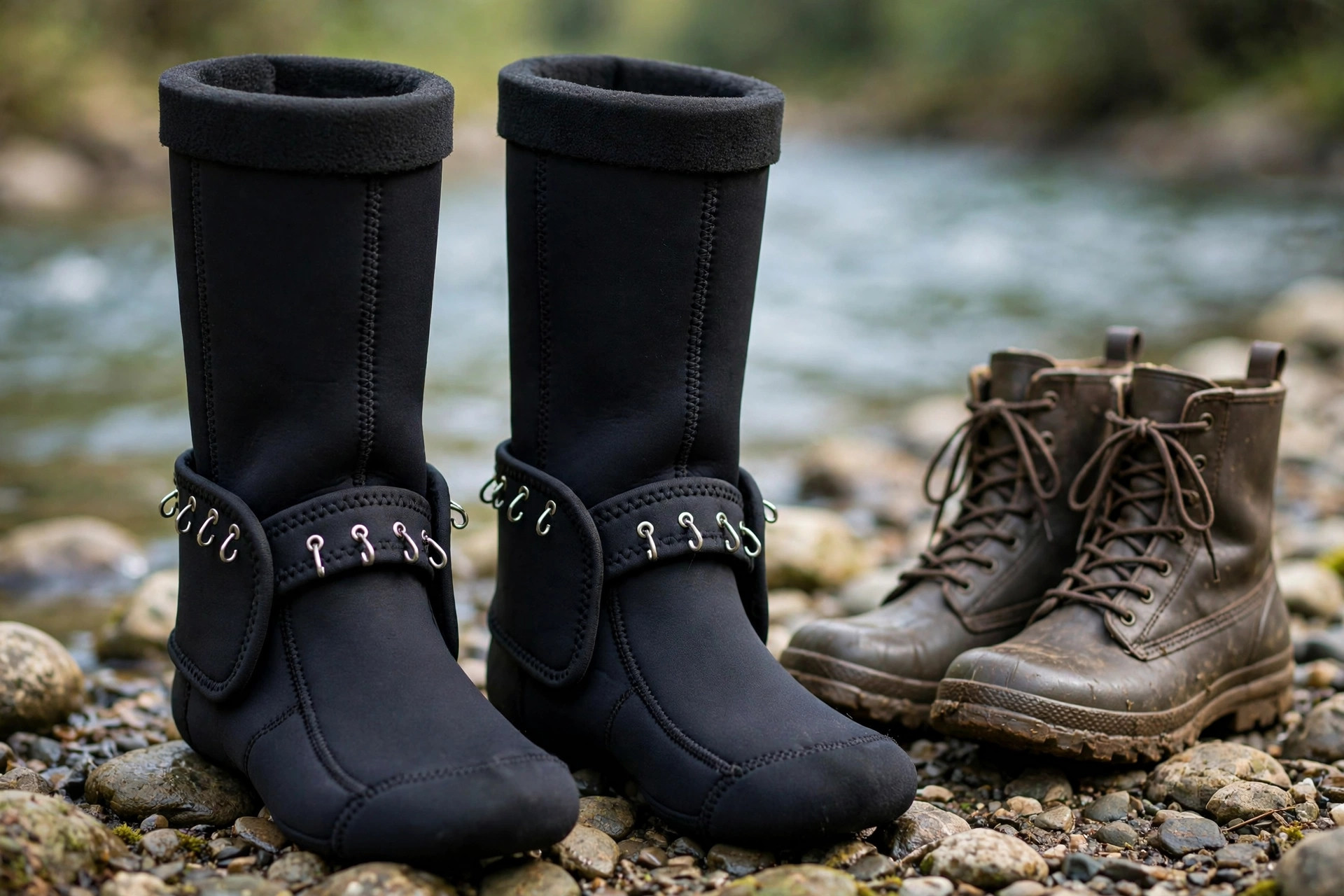
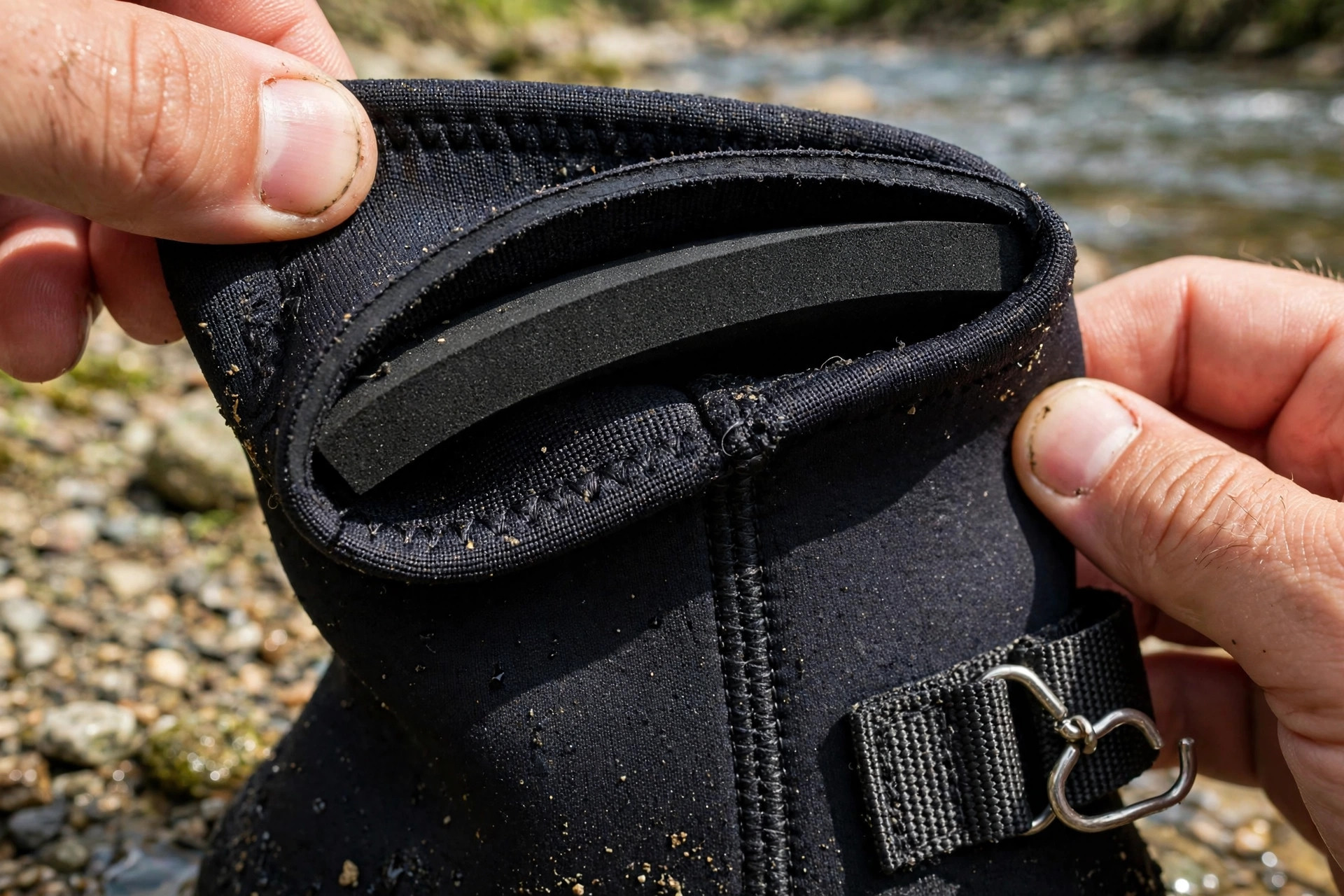
A neoprene wading sock is a below-knee sock cut from laminated neoprene (SBR, SCR or CR foam + fabric) that an angler wears inside a wading boot, usually over a thin liner sock. Its job is warmth and fit: the closed-cell foam insulates the foot in cold river water, fills the boot so the foot does not slide, and its gravel guard folds down over the boot top to keep grit and stones out of the boot. Send us your design drawing, foot size range and thickness, and we will confirm the best material and build.
We manufacture custom neoprene wading socks in our own factory in China, where we have made neoprene products for 15 years. We laminate the foam, cut the panels and stitch the finished socks under one roof, so a change to the height, the guard or the print can be checked on a sample before bulk production starts.
Cold feet end a fishing day faster than anything. An angler stands still in the current for hours, and river water pulls heat out of a boot steadily; a cotton or wool sock inside a wading boot gives almost nothing back once it is wet. Neoprene answers the way a wetsuit does: the foam insulates even when soaked, holding a thin layer of water against the foot that the body warms, and the foot stays comfortable through a long morning in the river.
The sock does two more jobs in the boot. First, fit: wading boots are bought a size up to leave room, and a neoprene sock fills that room so the heel stops lifting and the toes stop sliding into the front on a downhill bank — fewer blisters, surer footing. Second, protection: the attached gravel guard folds down over the boot laces and top, sealing the gap where gravel, sand and sharp grit wash in and grind inside the boot all day.
For fishing brands and outfitters, the sock is also the branded layer the angler sees every trip. The jersey face takes printed logos and camouflage along the leg, the guard carries the brand where it shows above the boot, and a guided operation can run the same sock across its whole client size range. They are cut to match our neoprene wading socks product range, from summer wet-wading socks to full winter weights.
3.5 mm is the most popular thickness for neoprene wading socks. It gives real insulation for cold rivers while still fitting inside a standard wading boot over a liner sock — which is why most of the wading socks we make are cut in 3.5 mm. For the full range, see our neoprene sheet thickness guide.
| Thickness | Best for | Trade-off |
|---|---|---|
| 2.5 mm | Summer wet wading and warm rivers — the lightest sock that still cushions | Least warmth for cold water and early season |
| 3.5 mm | The standard wading sock — cold rivers, stockingfoot waders and all-season use | Best balance of warmth and boot fit for most anglers |
| 5 mm | Winter steelhead and cold-water seasons — maximum warmth in the boot | Fills the boot most; needs a roomier boot to stay comfortable |
Size by the foot, not by guesswork. Length from heel to toe and the calf circumference at the top of the sock set the fit, and the sock should be snug without squeezing — a loose sock folds inside the boot and rubs. Send the shoe sizes your range must cover and whether the sock is for summer wet wading or winter rivers, and we will grade the panels and set the guard height to suit.
SBR is the standard choice for most wading socks, because a sock's working life is inside a boot, in the dark, in the water, where the firmer, lighter, lower-cost foam does everything the job asks. CR (chloroprene rubber) earns its higher price on premium and winter lines — socks that live in near-freezing water season after season — where its softness, elasticity and weather resistance show. SCR, a blend of the two, sits between them where a brand wants a softer hand-feel than SBR at a lower cost than CR.
The figures behind the two foams show why they feel different: our CR foam measures 3–5° Shore C hardness, 276.32 kg/m³ density, 860 kPa tensile strength and 550% elongation, while our SBR foam measures 10–15° Shore C, 158.34 kg/m³, 256 kPa and 185%. CR is the softer, springier foam; SBR is the firmer, lighter one. Inside a boot, that means a CR sock stretches on over the heel more easily and gives as the ankle flexes on the bank, while an SBR sock holds a crisper shape and takes daily guiding-season handling at a lower unit cost.
| SBR | CR | |
|---|---|---|
| Cost | Lower cost; the standard for most wading socks | Costs more than SBR |
| Sun and weather resistance | Fair; fine for rivers, boots and daily guiding | Better; the choice for winter and premium lines |
| Feel | Firm and light, holds a crisp sock shape | Soft and elastic, stretches on and flexes at the ankle |
For heights, guards and printing, see our neoprene wading socks product page. The belt that keeps the wader top sealed is covered by our neoprene wading belts.
Fly-fishing brands — your own sock in your colours and print, cut to your foot size range with your guard and height specification.
Outfitters and guide services — the same sock across the whole client size range, hard-wearing enough for a season of daily use.
Tackle retailers — a warmth range from summer wet-wading socks to winter weights, sold with the boots they fit inside.
E-commerce sellers — mixed sizes and thicknesses in one order, packed ready for the shelf with a barcode label.
When neoprene is NOT the right choice
Tell us which of these your wading socks need, and we will build the sample to your drawing.
Do neoprene wading socks keep feet warm in cold rivers?
Yes. The closed-cell foam insulates even when wet, holding a thin layer of water against the foot that the body warms — the same way a wetsuit works — and it fills the boot so the foot stays still instead of sliding and chilling.
What do I wear under a neoprene wading sock?
A thin liner sock. The liner manages sweat and stops any rubbing at the seams, while the neoprene sock over it does the insulating and the boot-filling. Thick socks underneath defeat the fit.
What does the gravel guard do?
The guard is a flap at the top of the sock that folds down over the top of the wading boot and hooks to a lace. It seals the gap where gravel, sand and grit would otherwise wash into the boot and grind against the wader's stocking foot all day.
What is the minimum order?
200 pieces per design as a general minimum, adjustable to your actual order.
Can I get a sample first?
Yes — we support sampling, usually in 5–7 days. Send us your design drawing and the foot sizes you need.
How long does bulk production take?
Usually 15–18 days after sample approval, depending on the quantity and customisation.
We make custom neoprene wading socks to your size range, your guard specification and your print, and we check the fit inside a boot on a sample pair before bulk production. The general minimum order is 200 pieces per design, adjustable to your actual order; sampling is supported, usually in 5–7 days, and bulk production usually takes 15–18 days after sample approval.
Request a Quotation
To help us review your inquiry, please send:
Website: https://www.neoprenecustom.com/ Email: kevin@neoprenecustom.com
A wading sock is judged at the end of a cold morning in the river, not in the shop. Send us your foot sizes and we will make you a sample pair to fish in. For the shorter sock worn inside a fin, see our neoprene fin socks.
Contact: Kevin
Phone: 13417385320
Tel: 0734-87965514
Email: kevin@neoprenecustom.com
Add: Intersection of Zhangjialing Road and Science and Technology Road, Guiyang Industrial Park, Guiyang Town, Qidong County, Hengyang City, Hunan Province./Dongguan Factory(GUANXIN): Shixin Street, Fushan Village, Liaobu Town, Dongguan, Guangdong Province.