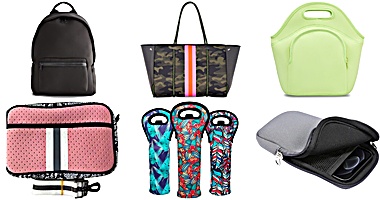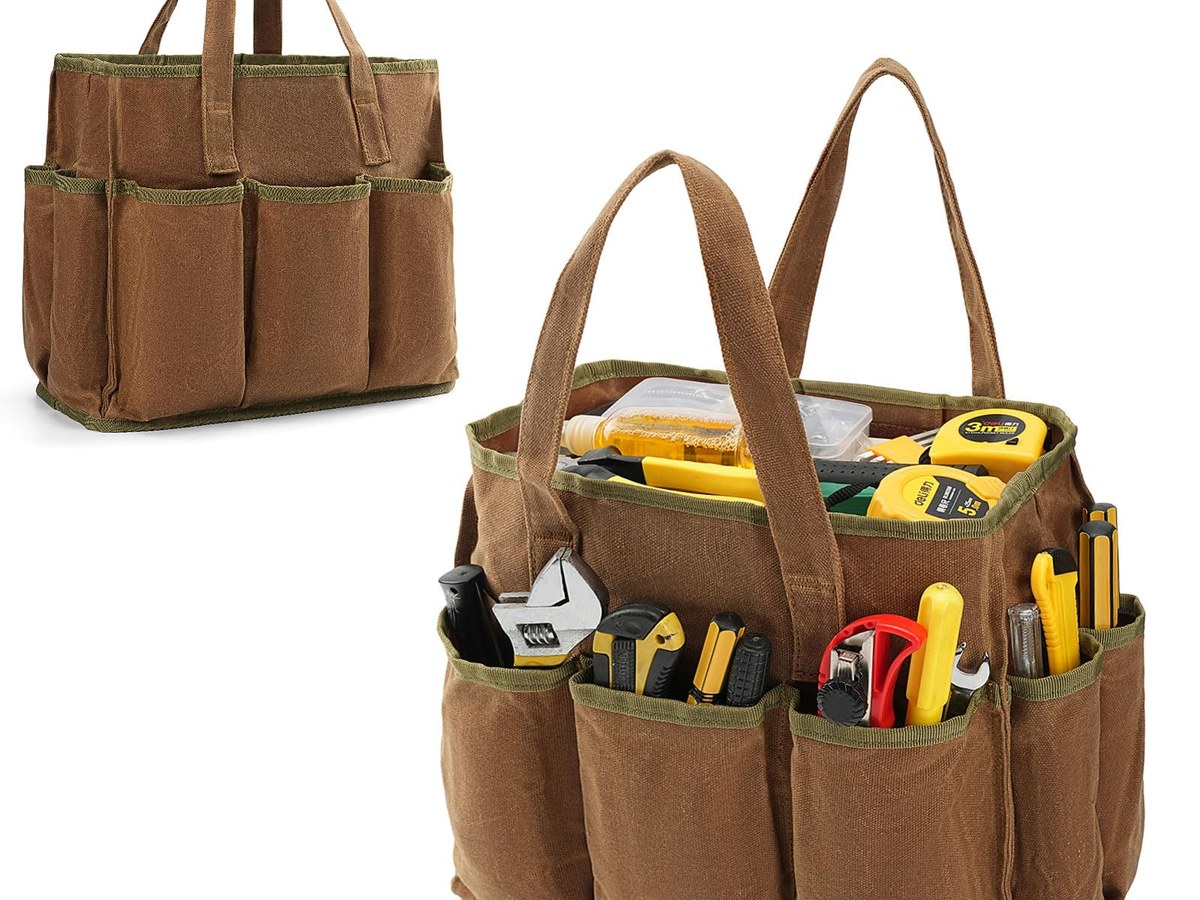
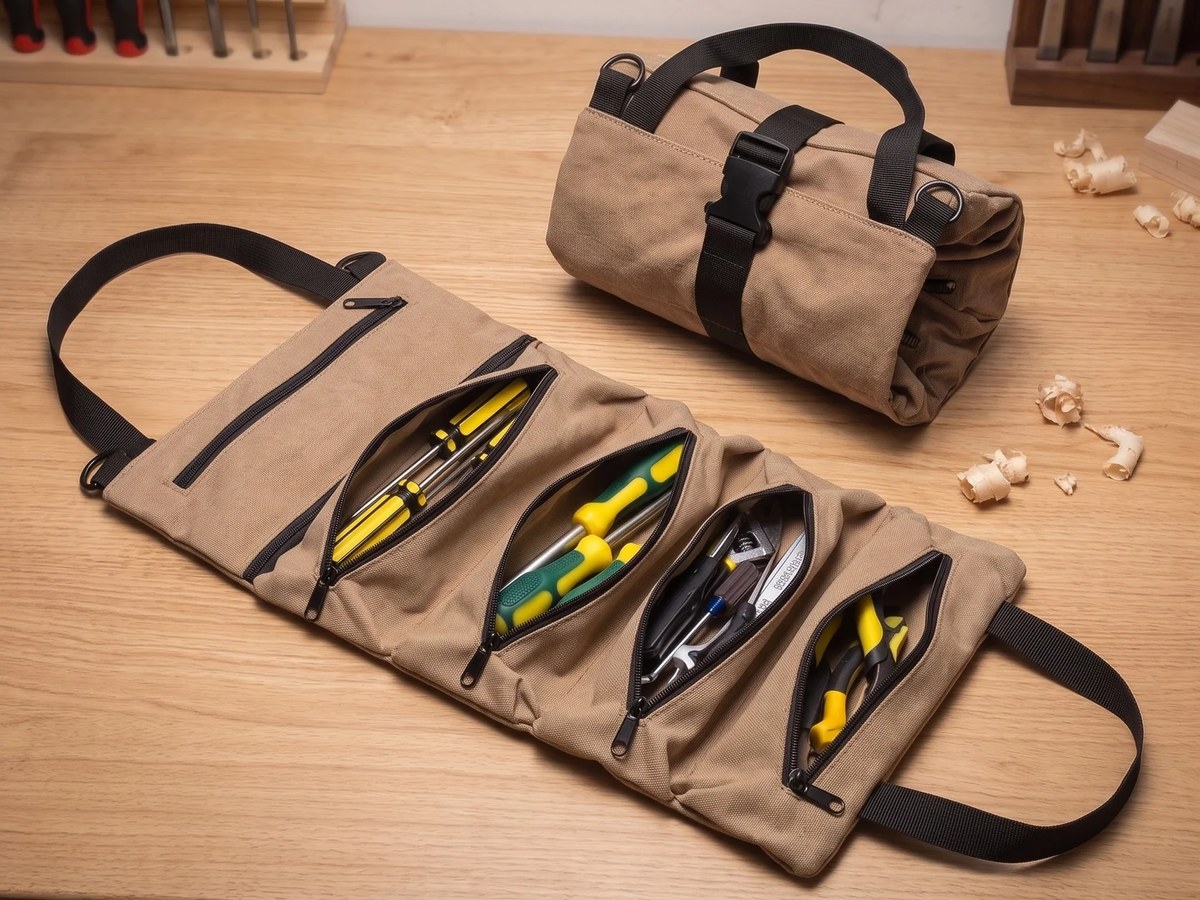
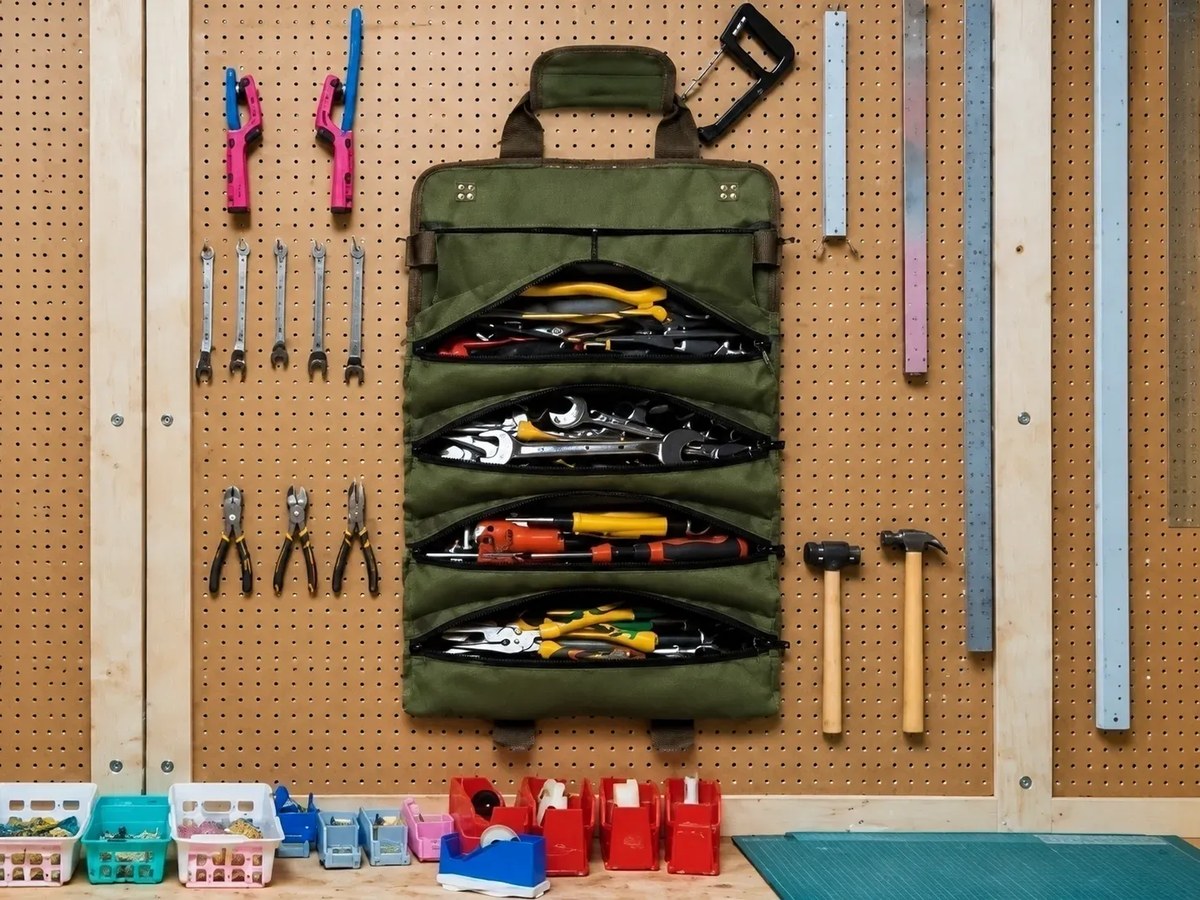
A neoprene tool bag is an organiser of laminated neoprene (SBR / SCR / CR foam + fabric), usually 5 mm thick, made to carry hand tools to a job — spanners, screwdrivers and pliers, in loops or pockets. It is not a hard toolbox: it folds, rolls and fits where a rigid box will not. Send us your design drawing, the tool list and the layout, and we will confirm the material and thickness.
We manufacture custom tool bags in our own factory in China, where we have made neoprene products for 15 years. Every bag starts as a sheet of laminated neoprene foam, cut to your layout, then stitched with loops and pockets sized to each tool. Because the foam, the fabric face and the finished bag are all made under one roof, we can change the pocket layout, the roll size or the handle on a sample and see the result the same week.
A tool bag has to keep a set together, and the pockets are where that happens. We size each loop and pocket to the tool that goes in it — the diameter of the handle, not just the length of the tool — because a pocket cut to length alone lets a slim screwdriver slide to the bottom and disappear. The pocket openings are bound, so tools slide in and out without catching on a raw edge, and the binding is what keeps the opening from stretching out of shape after a year of daily use.
The failure we watch for is a handle that pulls away from a bag full of metal tools. The handle is stitched and reinforced at the fixing points, through both layers of the bag body, with a second row of stitching, because a bag full of tools is heavy and a handle fixed to the fabric face alone will not last a month on site. A tool roll version unrolls flat on the workbench, so every tool is visible at once, while a tool bag opens like a bag.
5 mm is the standard for a tool bag. It cushions metal tools, gives the bag enough body to stand open on the job, and still rolls or folds for storage. A thinner bag is lighter to carry but lets tools knock against each other; a thicker bag protects more but is heavier and harder to roll. For the full range of choices, see our neoprene sheet thickness guide.
| Thickness | Best for | Trade-off |
| 3 mm | Light tool rolls, small hand-tool sets, a roll that lives in a drawer | Least cushioning; tools clatter in a full bag |
| 5 mm | Workshop and job-site use — the standard tool bag | Best balance of cushioning, shape and easy rolling |
| 7 mm | Heavy tools, daily site use, bags thrown in a van | Most protection, but heaviest to carry and hardest to roll |
Measure the longest tool, not the bag you already own. Lay the tools out in a row, measure the longest one and the widest handle, and count how many loops the set needs — then we lay out the pockets to those numbers. A tool list on paper is enough to start, but a photo of the tools laid out flat, with a ruler beside them, prevents the most common mistake: a bag with pockets for ten tools and a set of twelve. See our custom neoprene tool bags — tool bag or tool roll, pockets sized to your tools, 3–8 mm for the bag this page is about.
SBR is the usual choice for a tool bag. It is the lower-cost foam, it cushions metal tools well, and it is tough enough for workshop and job-site use. Most tool bags we make are SBR, because the bag works indoors and in normal weather, and SBR is strong enough for that job. CR is the tougher foam: it resists UV and ozone better and keeps its spring for longer, so choose CR for a premium bag, or for a bag that will live outdoors on a site in sun and rain.
| SBR | CR | |
| Cost | Lower cost; the usual choice for tool bags | Costs more; chosen for premium or outdoor bags |
| UV and ozone resistance | Good enough for workshop and site use | Better; holds up outdoors in sun and rain |
| Water use | Fine for damp workshops and rain | Better for wet outdoor conditions |
| Best for | Standard tool bags and tool rolls | Premium bags and heavy outdoor use |
On our own technical data sheet, SBR foam at 10–15° hardness measures 158.34 kg/m³ density, 256 kPa tensile strength and 185% elongation, while CR foam measures 3–5° hardness, 276.32 kg/m³ density on a 51″×130″ sheet, 860 kPa and 550% elongation. Those are foam-sheet figures, and the higher CR tensile strength is what lets a CR bag survive sharp tool edges catching the pocket openings day after day. SCR sits between the two on cost and on resistance to sun and ozone, and it is worth asking about if your bag must be tougher than SBR without moving to CR.
Tradespeople — an electrician keeps screwdrivers and pliers in loops, and a plumber carries spanners to a job in one organised bag, with the set complete every time it is opened.
Workshops — a tool bag for a team that shares tools on a job, with loops sized to the tools your workshop actually uses, not a generic set.
DIY stores — a tool roll bag for home users who want their tools organised in one place, sold with your other DIY gear, in a size that fits a kitchen drawer.
Tool brands — your logo on a bag sold with your tools, made to fit the tool set your customers already buy. Tradespeople who also kneel all day on site should look at our neoprene work knee pads — the bag carries the tools, the pad protects the knees.
When neoprene is NOT the right choice
Tell us the tools, the layout and the carry, and we will cut the bag to your drawing. These are the choices most buyers change.
How do I stop heavy tools from tearing the pockets?
Size the pocket to the tool, and bind the opening. A pocket cut too tight forces the tool in and out against the same edge every time, and that edge is where the tear starts. We bind every pocket opening, and we cut the pocket to the handle diameter, not just the tool length, so the tool slides in without stretching the opening.
Can one bag hold both a roll layout and a carry handle?
Yes. A tool roll can be made with a carry handle fixed at one end, so it carries like a bag when it is rolled up and unrolls flat on the workbench. The handle must be fixed to the roll with reinforced stitching, because it carries the full weight of the tools — tell us in your drawing whether you want a handle, a shoulder strap, or both.
What is the minimum order?
200 pieces per design as a general minimum, adjustable to your actual order. Mixed tool sets can share one design if the pocket layout is the same.
Can I get a sample first?
Yes — we support sampling, usually in 5–7 days. Send us your design drawing and tool list and we will confirm the sample cost and time.
How long does bulk production take?
Usually 15–18 days after sample approval, depending on the quantity and customisation.
How do I order?
Send us your design drawing, the tools, the layout you want and the quantity. We confirm the material, thickness and price, then make a sample for your approval before bulk production.
If your buyers carry their tools to a job every day, the pockets are what make the bag work — a set that is complete every time the bag opens is a set that gets used. The general minimum order is 200 pieces per design, adjustable to your actual order; we support sampling, usually in 5–7 days, and bulk production usually takes 15–18 days after sample approval. Request a quote for custom neoprene tool bags and send your drawing with it — we will confirm the best material and thickness for your tools before we cut the sample.
Request a Quotation
To help us review your inquiry, please send:
Website: https://www.neoprenecustom.com/ Email: kevin@neoprenecustom.com
Send the drawing, and we will come back with a bag where every tool has a pocket of its own.
Contact: Kevin
Phone: 13417385320
Tel: 0734-87965514
Email: kevin@neoprenecustom.com
Add: Intersection of Zhangjialing Road and Science and Technology Road, Guiyang Industrial Park, Guiyang Town, Qidong County, Hengyang City, Hunan Province./Dongguan Factory(GUANXIN): Shixin Street, Fushan Village, Liaobu Town, Dongguan, Guangdong Province.