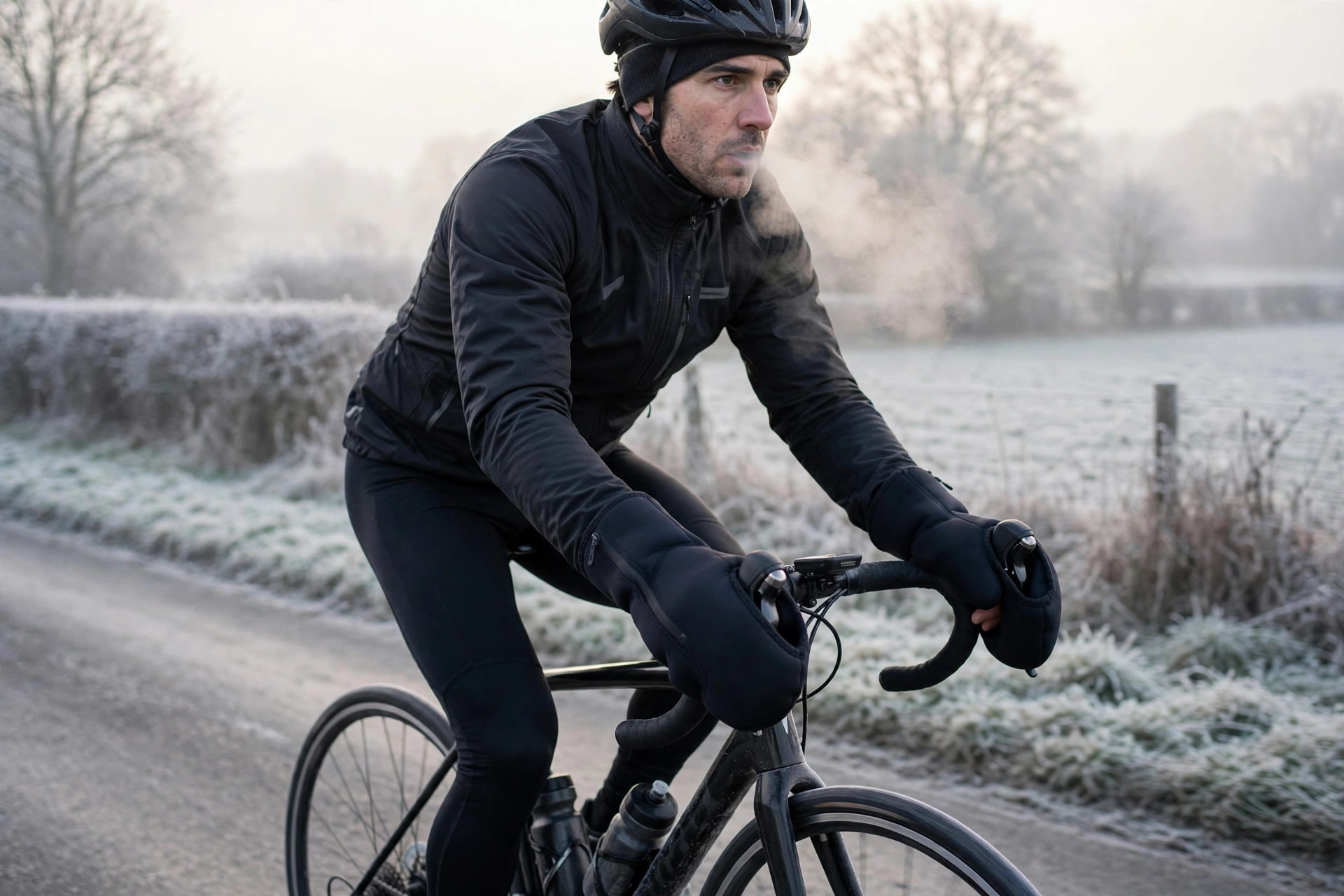
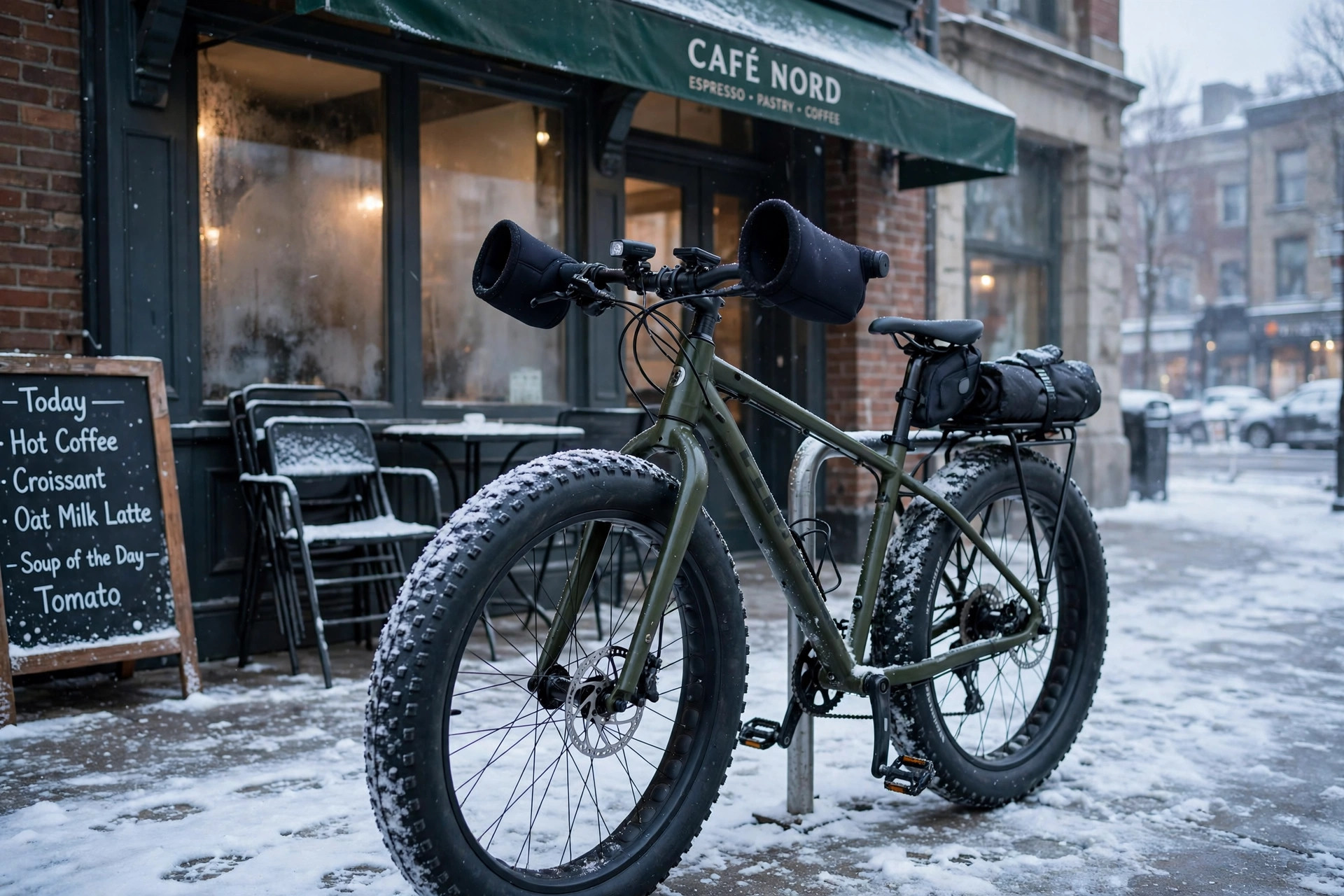
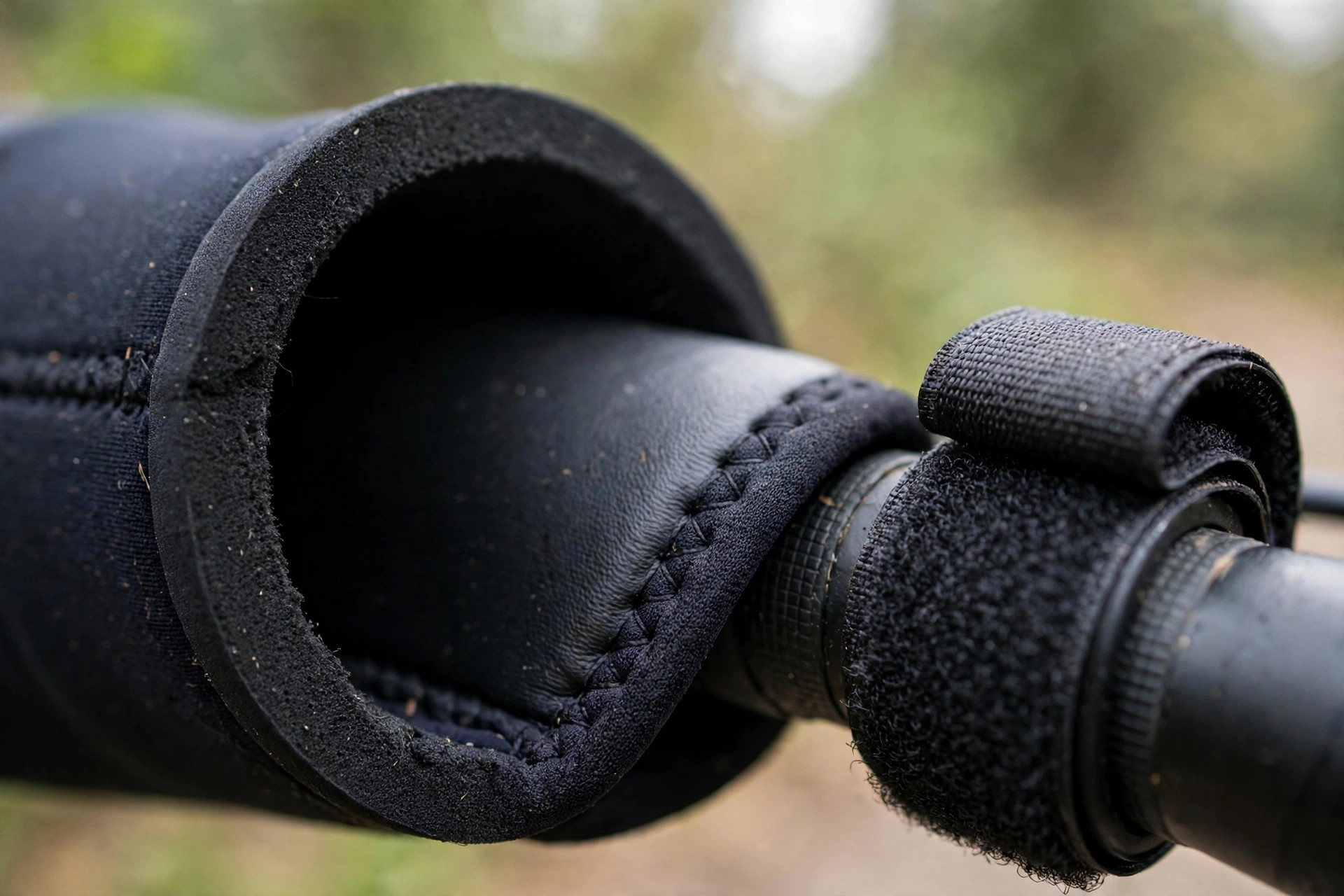
A neoprene bar mitt — also called a pogie — is a fitted mitt of laminated neoprene (SBR, SCR or CR foam + fabric), usually 5 mm thick, that fixes to a bicycle handlebar and stays on the bike. The rider slides a hand inside and grips the bar directly, so the hand rides inside a windproof foam shell instead of out in the airflow, and the fingers share one warm space around the grip. Bar mitts are made for flat bars, drop bars and fat bikes, each pattern shaped around its levers and cables. Send us your design drawing and handlebar type, and we will confirm the best material and thickness.
We manufacture custom neoprene bar mitts in our own factory in China, where we have made neoprene products for 15 years. We cut the foam, laminate the fabric face and stitch the finished mitts under one roof, so a change to the pattern, the cuff opening or the print can be checked on a sample before bulk production starts.
Cycling is hard on hands. The hands sit almost still on the bars, out at the front of the bike in the full airflow, wrapped around cold metal — and unlike the legs, they do almost no work to warm themselves. A winter glove insulates each finger on its own, but separated fingers lose heat one by one, and the thicker the glove, the duller the brake and shifter feel becomes, right when control matters most on wet, icy roads.
The mitt answers the problem from the other side. The foam shell takes the wind and road spray, the still air inside stays around the hand, and the fingers keep each other warm in one shared space. Because the hand holds the bar itself, lever feel is the same as riding bare-handed, and a thin liner glove is all most riders add underneath — the same liner gloves covered in our guide to CR neoprene liner winter cycling gloves, which pair with the mitt on the coldest days.
The riders who buy bar mitts are the ones who cannot simply wait for spring: commuters who ride to work every day of the year, road riders holding their winter training, and fat-bike riders crossing snow, where the hands are out in the wind for hours at low speed. For all three, warm hands are not comfort for its own sake — cold fingers brake late and shift badly, so a mitt that keeps hands working is a control product as much as a warmth product.
5 mm is the standard for most neoprene bar mitts. It gives real insulation for everyday winter riding in a shell that still leaves the hand free to move between positions on the bar, which is why most of the bar mitts we make are cut in 5 mm. For the full range, see our neoprene sheet thickness guide.
| Thickness | Best for | Trade-off |
|---|---|---|
| 3 mm | Cool-weather commuting — autumn and spring rides where wind chill, not deep cold, is the problem | Least insulation; a mid-winter ride will still end with cold hands |
| 5 mm | Everyday winter commuting and road training — the standard working mitt | Best balance of warmth, hand movement and easy fitting |
| 7 mm | Deep-winter riding and fat bikes on snow, with hours in the wind at low speed | Thickest and bulkiest around the bars; costs more than 5 mm |
Measure the bar, not the hand. A drop-bar mitt wraps the hoods and the tops and has to clear the lever blades; a flat-bar mitt is a straighter tube shaped around trigger shifters. Brake and cable routing decides where the cuff opening sits, so send us the bar type and a photo of the cockpit, and we will cut the pattern to that layout rather than to a generic bar.
CR is the standard choice for bar mitts, because a winter mitt lives outdoors in wet cold — spray, frost and road salt — and CR is the softest, most elastic foam we make, so the shell flexes as the hand moves on the bar instead of fighting it. SBR (styrene-butadiene rubber) is the firmer, lighter, lower-cost foam, and it has a place on cool-weather commuting lines for milder climates, where the mitt is a wind shell more than deep insulation. SCR, a blend of the two, sits between them where a brand wants more give than SBR at a lower cost than CR.
The figures behind the two foams show why they feel different: our CR foam measures 3–5° Shore C hardness, 276.32 kg/m³ density, 860 kPa tensile strength and 550% elongation, while our SBR foam measures 10–15° Shore C, 158.34 kg/m³, 256 kPa and 185%. CR is the softer, springier foam; SBR is the firmer, lighter one. On a handlebar, that means a CR mitt gives a little as the rider changes grip, while an SBR mitt holds a stiffer shape around the bar.
| SBR | CR | |
|---|---|---|
| Cost | Lower cost; suits cool-weather commuting lines | Costs more than SBR |
| Cold, wet and UV resistance | Fair; best for milder winters and dry cold | Better; the standard for gear that works outdoors all winter |
| Feel | Firm and light, holds a stiffer shape around the bar | Soft and elastic, flexes with the hand as it moves on the bar |
For patterns, cuff openings and printing, see our custom neoprene bar mitts product page.
Cycling accessory brands — your own mitt line to sell beside your gloves and shoe covers, in your colours and prints, for flat and drop bars.
Bike shops and winter-cycling retailers — a seasonal product with a clear story for the winter wall, in the bar fits your local riders actually use.
Bicycle brands and OEMs — branded mitts matched to your commuter and winter models, packed with the bike or sold under your label.
Courier and delivery fleets — mitts in fleet colours for riders who spend the whole working day on the bike, whatever the weather does.
When neoprene bar mitts are NOT the right choice
Tell us which of these your bar mitts need, and we will build the sample to your drawing.
How is a bar mitt different from a winter cycling glove?
A glove wraps each finger separately and comes off the bike with the rider; a bar mitt stays fixed to the handlebar and the hand grips the bar inside it, so the fingers share one windproof space and lever feel stays direct. Many riders use both — a liner glove inside the mitt.
Will the mitts fit my customers' handlebars?
Yes — send us the bar type, flat or drop, and a photo of the cockpit, and we cut the pattern around that lever and cable layout. Fat-bike bars and non-standard setups are made to your drawing.
What is the minimum order?
200 pieces per design as a general minimum, adjustable to your actual order.
Can I get a sample first?
Yes — we support sampling, usually in 5–7 days. Send us your design drawing and the handlebar types you need.
How long does bulk production take?
Usually 15–18 days after sample approval, depending on the quantity and customisation.
How do I order?
Send us your design drawing, the bar types and the quantity. We confirm the material, thickness and price, then make a sample for your approval before bulk production.
We make custom neoprene bar mitts to your handlebar patterns, your colours and your print, and we check the fit on a real bar sample before bulk production. The general minimum order is 200 pieces per design, adjustable to your actual order; sampling is supported, usually in 5–7 days, and bulk production usually takes 15–18 days after sample approval.
Request a Quotation
To help us review your inquiry, please send:
Website: https://www.neoprenecustom.com/ Email: kevin@neoprenecustom.com
Bar mitts are judged at the first set of traffic lights on a frosty morning, not on the shelf. Send us your bar type and we will make you a sample to ride with. For the rest of the winter kit, see our neoprene bicycle seat covers for the saddle end of the same bike, and our guide to custom neoprene cycling overshoes for the feet.
Contact: Kevin
Phone: 13417385320
Tel: 0734-87965514
Email: kevin@neoprenecustom.com
Add: Intersection of Zhangjialing Road and Science and Technology Road, Guiyang Industrial Park, Guiyang Town, Qidong County, Hengyang City, Hunan Province./Dongguan Factory(GUANXIN): Shixin Street, Fushan Village, Liaobu Town, Dongguan, Guangdong Province.